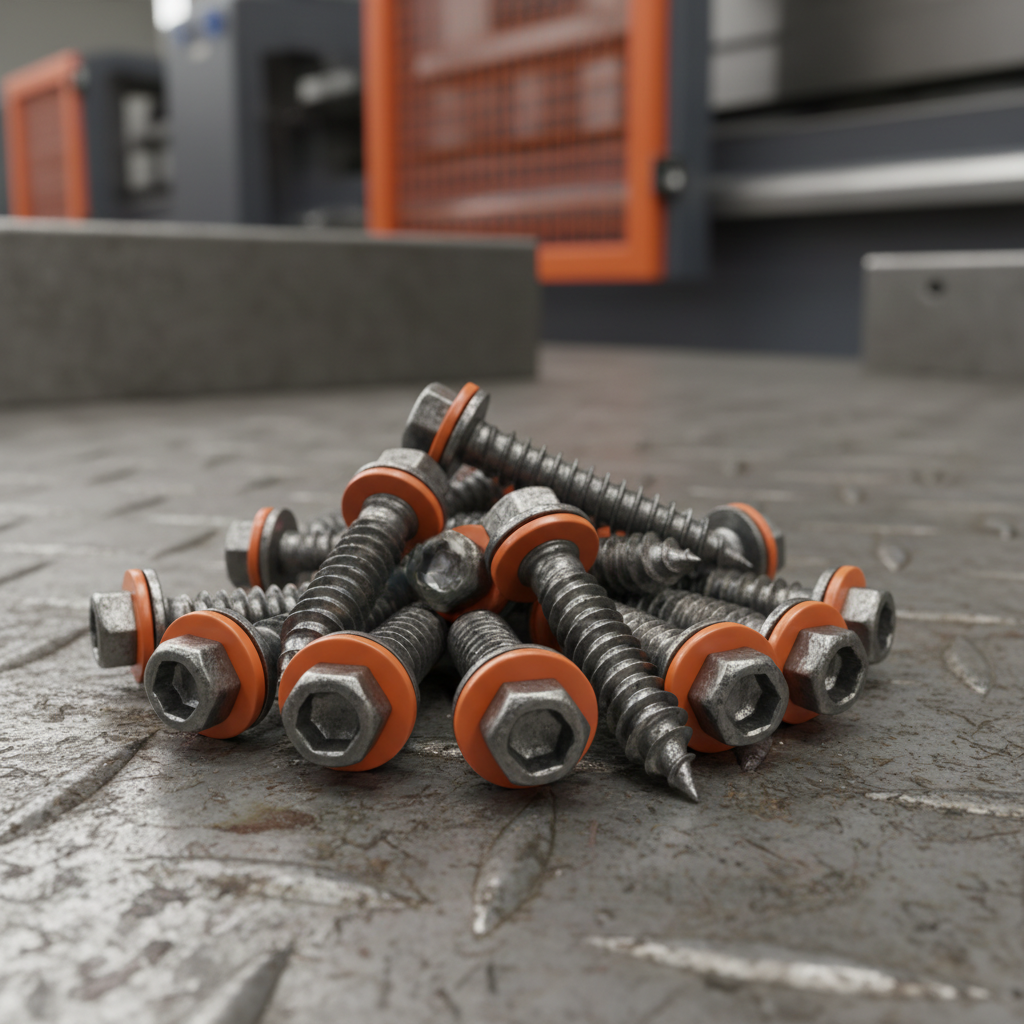
The global industrial landscape relies heavily on the integrity of its fasteners, where the efficiency of anchoring systems determines the safety and longevity of massive structures. In the realm of heavy-duty construction and precision engineering, the demand for reliable fastening solutions has led to the widespread adoption of high-performance hardware designed to withstand extreme stress and environmental degradation.
Modern manufacturing requires components that reduce installation time without sacrificing structural strength. The evolution of fastener technology has transitioned from basic nails and screws to precision-machined carbon steel solutions that ensure a secure fit in complex industrial applications, ranging from t-track jig building to large-scale repair projects.
When selecting a self drilling anchor, professionals prioritize materials that offer both high tensile strength and superior corrosion resistance. By utilizing zinc-plated carbon steel and fully threaded designs, these fasteners provide the necessary grip and durability required for heavy-duty industrial functions and intricate woodworking.
Global Relevance of High-Strength Anchoring
On a global scale, the infrastructure sector is under immense pressure to build faster and more sustainably. According to ISO standards for mechanical fasteners, the precision of the thread and the quality of the base metal are critical in preventing structural failures in high-load environments. The implementation of advanced anchoring systems helps industries mitigate the risks associated with vibration and thermal expansion.
The primary challenge facing modern construction is the balance between installation speed and permanent stability. By employing high-grade carbon steel fasteners, engineers can ensure that joints remain secure under heavy-duty industrial loads, effectively addressing the vulnerabilities found in lower-grade hardware.
Defining the Modern Fastening Solution
In simple terms, a high-performance fastening system like a self drilling anchor is a precision-engineered component designed to create a secure mechanical bond between two or more materials. Unlike standard screws, these fasteners are often fully threaded, allowing them to be inserted completely into threaded holes for maximum grip and stability.
These components serve as the backbone of modern industrial assembly, where the ability to anchor heavy machinery or build rigid jigs is essential. Their design focuses on reducing the number of steps in the assembly process, combining the functions of drilling and fastening into a more streamlined operation.
From a humanitarian and safety perspective, the reliability of these fasteners is non-negotiable. Whether used in the construction of emergency shelters or the reinforcement of industrial warehouses, the use of zinc-plated, carbon steel hardware prevents sudden failures that could lead to costly downtime or dangerous accidents.
Core Components of Heavy-Duty Fasteners
Durability is the foremost requirement for any self drilling anchor. The use of solid carbon steel ensures that the fastener can withstand significant shear and tensile forces without deformation, making it ideal for heavy-duty industrial functions.
Corrosion resistance is achieved through high-quality zinc-plated protection. This critical layer prevents rust and oxidation, ensuring that the self drilling anchor maintains its structural integrity even when exposed to humid or chemically aggressive industrial environments.
Precision machining of the large hexagon head allows for better torque application during installation. This improved version of the bolt provides superior performance, ensuring that the fastener is driven deep into the substrate without stripping the head or damaging the material.
Industrial Performance Metrics
Evaluating the effectiveness of a fastening system requires a look at the load-bearing capacity and the installation efficiency. When comparing different methods of securing industrial jigs or anchors, the fully threaded carbon steel approach consistently outperforms traditional options in terms of pull-out strength and vibration resistance.
The following data illustrates the performance ratings of various fastening configurations across key industrial dimensions, highlighting why precision-machined steel is the preferred choice for critical anchoring tasks.
Comparative Performance of Fastening Systems
Global Applications and Use Cases
In real-world industrial zones, these high-strength fasteners are indispensable for t-track jig building and precision woodworking. The ability of the fully threaded shaft to be inserted completely into a hole allows for a flush finish, which is critical in creating smooth surfaces for manufacturing guides and repair templates.
Beyond the workshop, these components are utilized in heavy-duty anchoring for industrial machinery in regions with high seismic activity or extreme temperatures. In such environments, the combination of carbon steel's strength and the zinc coating's protection ensures that the machinery remains securely fastened to the foundation regardless of external stressors.
Long-Term Value and Reliability
The long-term value of investing in precision-machined hardware lies in the reduction of maintenance costs. By using a self drilling anchor that is resistant to corrosion, companies avoid the frequent replacement of rusted bolts, which not only saves material costs but also prevents unexpected equipment failure.
Safety and trust are the emotional drivers behind the selection of high-grade fasteners. When a technician knows that a bolt is made from solid carbon steel and precision-machined, there is a higher level of confidence in the assembly's stability, which is paramount in high-risk industrial settings.
Furthermore, the efficiency gained during the installation process—thanks to the improved large hexagon head—translates directly into labor savings. The ability to achieve a secure, tight fit quickly allows projects to move from the assembly phase to the operational phase with minimal delay.
Future Trends in Fastener Innovation
The future of the fastening industry is leaning heavily toward "smart" materials and sustainable coating technologies. We are seeing a shift toward nano-coatings that provide even greater corrosion resistance than traditional zinc plating, potentially extending the lifespan of an anchor in saltwater or highly acidic environments.
Automation and digital transformation are also playing a role, with CNC machining allowing for even tighter tolerances in thread production. This ensures that every self drilling anchor fits perfectly every time, reducing the manual effort required for installation and eliminating the risk of cross-threading.
As green energy projects like wind turbine installation and solar array anchoring grow, there is an increasing demand for fasteners that can be recycled without losing their structural properties. The focus is shifting toward high-strength carbon steels that can be efficiently reprocessed at the end of their industrial lifecycle.
Analysis of Fastener Material and Performance Dimensions
| Material Grade |
Corrosion Resistance |
Load Capacity |
Application Suitability |
| Solid Carbon Steel |
High (Zinc-Plated) |
Extreme |
Heavy Industrial |
| Standard Steel |
Medium |
Moderate |
General Repair |
| Alloy Steel |
Very High |
Very High |
Aerospace/Auto |
| Stainless Steel |
Maximum |
High |
Marine/Medical |
| Zinc-Alloy |
High |
Low |
Light Hardware |
| Plastic Hybrid |
Immune |
Very Low |
Interior Decor |
FAQS
Carbon steel offers significantly higher tensile strength and hardness, which is essential for anchors that must support heavy loads without stretching or snapping. When precision-machined and zinc-plated, it provides the perfect balance of strength and environmental protection for industrial use.
A fully threaded design allows the fastener to be inserted completely into the threaded hole. This ensures that the maximum amount of surface area is in contact with the substrate, providing superior grip and allowing the head of the bolt to sit flush against the surface.
For most heavy-duty industrial and outdoor applications, zinc plating provides an excellent barrier against rust and corrosion. It creates a sacrificial layer that protects the underlying carbon steel, significantly extending the lifespan of the anchor in various weather conditions.
Yes, they are highly effective for woodworking, specifically for building t-track jigs. The precision machining ensures they fit snugly into pre-drilled holes, providing a rigid and professional-grade anchor for jigs and fixtures.
The large hexagon head allows for the application of higher torque during the tightening process. This prevents the head from stripping and ensures that the anchor is driven securely into the material, which is critical for heavy-duty anchoring tasks.
You should select the size based on the load requirements and the thickness of the material being fastened. Ensure the threaded shaft is compatible with the hole diameter and that the length allows for complete insertion if a flush finish is required.
Conclusion
In summary, the integration of high-strength carbon steel and precision machining transforms a simple fastener into a critical engineering tool. By focusing on durability, corrosion resistance, and installation efficiency, these anchoring solutions provide the stability required for everything from industrial machinery to precision woodworking jigs. The combination of a fully threaded shaft and a large hexagon head ensures that every connection is secure and long-lasting.
Looking forward, the industry will continue to evolve toward even more resilient materials and sustainable manufacturing processes. For professionals seeking to optimize their structural integrity and reduce long-term maintenance costs, investing in high-quality, zinc-plated carbon steel hardware is the most reliable path forward. Explore our full range of professional fastening solutions today. Visit our website: www.hbxzfastener.com