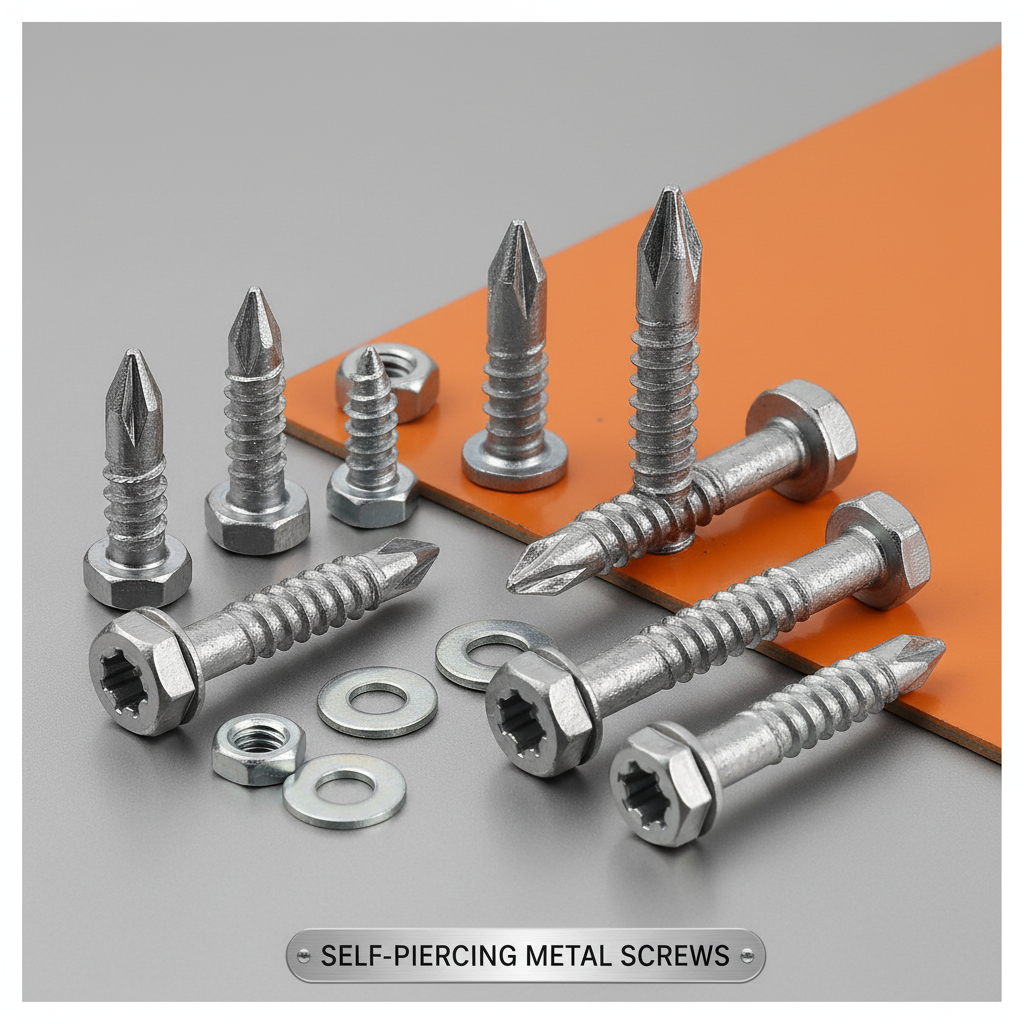
Selecting the right fastening solution for engineered wood requires a precise understanding of material density and shear strength. When assembling cabinetry or modular furniture, the choice of hardware determines not only the immediate structural integrity but also the long-term stability of the finished product.
The procurement process for high-volume manufacturing often centers on finding chipboard screw suppliers who can provide consistency in thread geometry and coating quality. As construction standards evolve, the demand for fasteners that resist deformation under load and withstand environmental moisture has intensified.
This analysis explores the technical criteria for evaluating fasteners in the wood-processing industry, focusing on performance metrics that ensure durability and ease of installation in professional settings.


Chipboard and particle boards differ significantly from solid timber due to their composite nature. The fastening process relies on the screw's ability to displace and compress the glue-bonded particles without causing the board to split or "mushroom."
Effective fastening requires a balance between the cutting edge of the screw and the grip of the threads. If the thread is too aggressive, it strips the material; if it is too shallow, the pull-out strength is insufficient for load-bearing applications.
The efficiency of a fastener is primarily dictated by its pitch and thread angle. In chipboard applications, a coarse thread is typically preferred to maximize the surface area contact within the porous composite material. This ensures that the load is distributed across a larger volume of particles, reducing the risk of localized failure.
Head design also plays a critical role in the final assembly quality. Countersunk heads are the industry standard for flush finishes, but the angle of the cone must match the driving tool to prevent head stripping. Precision in the manufacturing of these components reduces installation time and material waste.
When evaluating options from various chipboard screw suppliers, engineers must verify that the thread start is clean and the point is sharp enough to pierce the surface without pre-drilling, which accelerates production cycles in high-volume factories.
Beyond geometry, the metallurgical properties of the fastener determine its lifespan. In construction and furniture manufacturing, fasteners must exhibit high tensile strength to avoid snapping during high-torque installation, especially when dealing with denser high-pressure laminates.
Industrial fasteners must achieve a synergy of corrosion resistance and mechanical stability; the ability to remain undeformed after loading while providing moisture-proof insulation is essential for long-term structural safety.
Hebei Xizhuo Fastener Co., Ltd. addresses these needs by producing fasteners that comply with national construction industry standards. Their focus on weather-resistant coatings ensures that screws used in humid environments or exterior wall insulation applications do not oxidize, which would otherwise compromise the bond between the screw and the wood fiber.
To quantify the effectiveness of different fastener types, we utilize a relative performance index. This model compares standard fasteners against high-performance variants across five critical dimensions: installation speed, pull-out resistance, corrosion stability, load deformation, and noise-absorption characteristics.
The data below illustrates how specialized construction fasteners outperform generic alternatives in demanding environments, particularly where vibration reduction and insulation are required to meet modern building codes.
In a typical industrial setting, the integration of fasteners into an automated assembly line requires high dimensional tolerance. Any slight variation in the screw's diameter or head height can lead to machine jams or uneven surfaces in the final product. This is why manufacturers prioritize suppliers who utilize professional quality testing equipment to ensure every batch is identical.
Practical application also involves choosing the right auxiliary fasteners. For instance, while chipboard screws handle the primary joints, expansion bolts or plastic anchors may be required for mounting the finished furniture to masonry walls, creating a comprehensive fastening system that ensures safety and stability.
The industry is shifting toward "smart fastening," where the focus is on reducing the physical effort of installation while increasing the grip. This includes the development of self-drilling screws that eliminate the need for pilot holes entirely, significantly reducing the production time for large-scale construction projects.
Another emerging trend is the use of advanced anti-corrosion coatings that go beyond standard zinc plating. These new chemical treatments allow fasteners to be used in high-humidity environments—such as bathrooms or kitchens—without the risk of rust streaks bleeding into the wood surface over time.
Furthermore, the demand for sustainable manufacturing is driving suppliers to optimize their production processes. By integrating research and design, companies are creating fasteners that provide maximum hold with minimum material usage, aligning industrial efficiency with environmental responsibility.
Selecting the right partner among various chipboard screw suppliers requires a systematic approach. Buyers should not base decisions solely on unit price but rather on the Total Cost of Ownership (TCO), which includes installation speed, failure rates, and the cost of potential replacements.
A robust evaluation framework considers the supplier's ability to handle non-standard fasteners. Customization is often necessary for specialized industrial applications where standard dimensions do not meet the specific load requirements of a unique architectural design.
The following table provides a comparison framework for evaluating different fastening solutions based on the specific requirements of the assembly project.
| Application Scenario | Critical Requirement | Recommended Fastener | Primary Limitation |
|---|---|---|---|
| Modular Cabinetry | Flush Finish | Countersunk Chipboard Screw | Material Splitting Risk |
| Exterior Cladding | Weather Resistance | Coated Self-Drilling Screw | Higher Material Cost |
| Heavy-Duty Shelving | Shear Strength | High-Strength Steel Bolt | Requires Pre-drilling |
| Drywall Installation | Quick Penetration | Drywall Specialized Screw | Low Pull-out Strength |
| Wall Anchoring | Base Stability | Expansion / Wedge Anchor | Permanent Modification |
| Lightweight Partitions | Easy Assembly | Plastic Expansion Anchor | Limited Load Capacity |
Industrial chipboard screws are specifically engineered for composite materials. Unlike standard wood screws designed for solid timber, they feature a coarser thread and a sharper cutting tip to grip the bonded particles of chipboard without stripping the hole or splitting the board. They also typically feature specialized coatings to prevent corrosion in varied environments.
To prevent splitting, it is essential to use fasteners with the correct thread pitch for the board's density. Using screws with a specialized cutting point reduces the internal pressure on the wood fibers. Additionally, ensuring the screw is driven perpendicular to the surface and avoiding over-torquing can significantly reduce the risk of material failure.
Key evaluation criteria include adherence to national construction industry standards, the availability of professional quality testing equipment, and the ability to provide corrosion-resistant coatings. You should also assess their capacity for non-standard production and their experience in exporting to diverse international markets, which often indicates a high level of quality control.
Not necessarily. Self-drilling screws are superior for speed as they create their own hole, making them ideal for metal-to-wood or hard-composite connections. However, self-tapping screws can sometimes provide a tighter grip in softer chipboard materials. The choice depends on the material density and the required speed of the assembly process.
The coating directly impacts the lifespan of the assembly. Standard fasteners can rust, leading to structural weakening and aesthetic stains. Weather-resistant and corrosion-resistant coatings ensure that the fastener maintains its integrity in humid conditions, reducing maintenance costs and extending the product's life cycle, which increases the overall value for the end user.
Load deformation occurs when a fastener bends or loosens under constant pressure. If the fastener is prone to deformation, joints will become unstable, leading to "wobble" in furniture. Using high-strength series fasteners that are designed not to deform after loading ensures that the structure remains rigid and safe over years of use.
The stability of any engineered wood structure is only as reliable as the fasteners holding it together. By focusing on thread geometry, material science, and environmental resistance, manufacturers can ensure that their products meet the rigorous demands of the modern construction and furniture markets.
Ultimately, the transition toward high-performance fasteners—such as those provided by Hebei Xizhuo Fastener Co., Ltd.—allows for a more efficient production process and a superior end product. Investing in precision-engineered hardware is not merely a procurement choice, but a strategic decision to ensure long-term structural integrity.