


Regional Analysis
The Construction Fastener Landscape in Uganda
Understanding the intersection of urban growth and industrial requirements in East Africa.
The Ugandan construction market is currently characterized by a surge in urban infrastructure, particularly in Kampala and surrounding metropolitan areas. With an increasing number of multi-story commercial buildings and industrial warehouses, the demand for reliable concrete anchoring systems has shifted from basic fasteners to specialized structural components. The local environment, marked by high humidity and varied soil compositions, requires fasteners that can withstand significant environmental stress without compromising the load-bearing capacity of the concrete structures.
Current market trends show a clear movement toward high-strength chemical anchors and precision-engineered expansion bolts. Modern Ugandan engineers are increasingly prioritizing long-term safety and compliance over low initial material costs. This shift is driven by the adoption of international building codes and a growing awareness of the risks associated with fastener failure in seismic or high-wind conditions. Consequently, there is a rising preference for manufacturers who integrate design, research, and production to provide tailored solutions for non-standard fastening requirements.
Despite the growth, the market faces constraints in the form of fragmented supply chains and a reliance on inconsistent imports. This creates a significant opportunity for integrated manufacturers to establish trust through verified quality testing and technical support. The outlook for the industry remains positive, with upcoming government-led infrastructure projects and private real estate developments creating a sustainable demand for specialized structural fasteners that meet rigorous global safety standards.
Industry Progression
Evolution of Anchoring Technology
From basic mechanical fixing to high-precision structural engineering.
Early Phase
Mechanical Basics
Reliance on simple friction-based bolts and basic plastic plugs for light-duty fixing, often lacking standardized load certifications.
Growth Phase
Standardization
Introduction of heavy-duty wedge anchors and galvanized coatings to combat corrosion in humid climates, improving structural longevity.
Modern Phase
Precision Engineering
Integration of chemical anchoring, non-standard custom fasteners, and rigorous quality testing for high-load urban infrastructure.
Shift to Chemical Bond Systems
The transition from purely mechanical expansion to chemical adhesives allows for higher load capacities and reduced stress on the concrete substrate, essential for fragile or aged structures.
Material Science Optimization
The use of advanced alloys and specialized surface treatments has significantly reduced the failure rate of fasteners in coastal and humid tropical environments.
Digital Load Calculation
Engineering firms are now using software to determine the exact number and type of anchors needed, reducing waste and increasing safety margins.
Future Outlook
Trends Shaping the Global Fastener Industry
Analyzing the technological and operational shifts in construction fastening.
Automated Precision Manufacturing
Increased use of CNC and automated forging reduces human error, ensuring that every bolt meets exact dimensional tolerances for critical structural use.
Sustainable Material Sourcing
Industry movement toward recyclable steel and low-emission production processes to meet green building certifications in urban development projects.
Modular Fastening Systems
Rise of "plug-and-play" anchoring systems that allow for faster assembly in prefabricated modular construction, reducing on-site labor time.
Smart Fastener Monitoring
Exploration of tension-sensing fasteners that can alert facility managers to structural loosening or stress overload in real-time.
The integration of these trends suggests a future where fastening is no longer a commodity purchase but a critical engineered component of a building's lifecycle. The focus is moving toward "Total Cost of Ownership," where higher quality materials reduce maintenance costs over decades. For markets like Uganda, this means a transition toward documented performance and verifiable material grades.
Moreover, the push for non-standard fastener production allows for higher flexibility in complex architectural designs. By combining research and production, manufacturers can now create customized anchor solutions that address specific geological or structural challenges, moving away from one-size-fits-all product catalogs to precision-fit engineering.
Practical Application
Fastening Solutions in Ugandan Infrastructure
Real-world implementation patterns for various construction needs.
01
Commercial Hubs in Kampala Urban Center
In the dense urban environment of Kampala, where multi-story commercial complexes are rapidly expanding, the use of high-strength concrete expansion bolt systems is critical for securing heavy HVAC units and facade panels. The local condition involves high-vibration environments due to traffic, necessitating anchors with superior grip and fatigue resistance to prevent loosening over time.
02
Industrial Warehouse Construction in Entebbe
Industrial facilities near Entebbe often deal with softer soil and variable concrete pouring quality. Implementing heavy-duty structural fasteners and chemical anchors provides a more reliable bond than simple mechanical expansion, ensuring that heavy racking systems and machinery remain securely bolted despite the underlying substrate challenges.
03
Exterior Wall Insulation for Residential Villas
For high-end residential projects, installing exterior wall insulation requires specific expansion anchor plastic components. These must resist the intense UV radiation and humidity of the Ugandan climate to prevent the insulation from sagging or detaching, requiring polymer materials with high thermal stability and weather resistance.
04
Bridge and Road Infrastructure Projects
Public works projects involving bridge railings and signage require corrosion-resistant anchor bolts. In these scenarios, the exposure to road salts and atmospheric moisture makes galvanized steel wedge anchors the preferred technology, preventing structural degradation and reducing the frequency of costly maintenance interventions.
05
Agricultural Processing Plant Equipment
In the installation of coffee or tea processing machinery, operators face the problem of intense operational vibration. Using specialized four-piece anchors or drop-in anchors provides the necessary clamping force to hold heavy machinery in place, preventing alignment shifts and enhancing overall plant operational safety.
Representative Use Cases
Industry Application Perspectives
How professional operators evaluate fastening reliability in practical deployments.
In large-scale commercial builds, the priority is always a combination of installation speed and certified load capacity. Transitioning to high-precision wedge anchors significantly reduces the risk of substrate cracking during installation while providing the necessary safety margins for heavy structural loads.
When dealing with humid tropical climates, the longevity of the fastener is determined by its coating. Using properly galvanized structural bolts prevents the common issue of rust streaks on concrete facades, maintaining both the aesthetic and structural integrity of the building.
For non-standard industrial equipment, the ability to source fasteners with exact dimensional requirements is a game-changer. It eliminates the need for on-site modifications, which often compromise the strength of the connection.
Our Heritage
Hebei Xizhuo Fastener Co., Ltd.
An integrated leader in the design, research, and production of high-performance fastening solutions.
Foundation
Integrated Manufacturing Setup
Established as a comprehensive fastener manufacturer integrating design, research, production, and sales, focusing on the "Mei rui an" and "Gongbing" registered trademarks.
Expansion
Global Market Penetration
Successfully expanded exports to the Middle East, Southeast Asia, South America, and Europe, building a reputation for first-class quality and loyal customer cooperation.
Current
Technical Solution Leadership
Now specializing in a full range of construction fasteners, including high-strength chemical anchors, wedge anchors, and custom non-standard solutions for global clients.
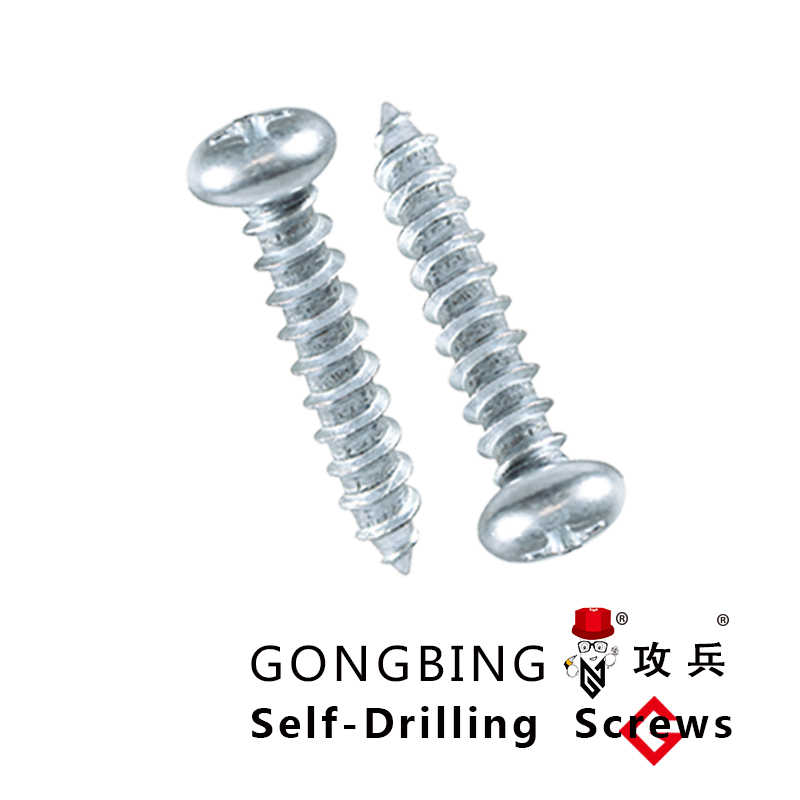
Self-tapping screw with round head

Foundation bolt suppliers/Foundation bolt specification

M12-M36 CARBON STEEL HDG METRIC HEAVY HEX HEAD STRUCTURAL BOLT

Five tail drill screw
Technical Support
Fastener Selection & Application FAQ
Expert answers to common questions regarding structural fastening in construction.
What is the primary difference between a wedge anchor and a drop-in anchor for concrete?
The primary difference lies in the installation and load mechanism. A wedge anchor is a through-bolt that expands as the nut is tightened, making it ideal for heavy structural loads. A drop-in anchor is a female-threaded sleeve inserted into the hole and expanded internally, allowing for the bolt to be removed and replaced. For structural stability in Ugandan commercial builds, wedge anchors are typically preferred for their higher shear strength.
How do I choose the correct grade of structural fasteners for humid tropical environments?
For humid environments, the choice depends on the level of exposure. For interior dry areas, standard zinc plating may suffice. However, for exterior walls or infrastructure exposed to rain and humidity, hot-dip galvanized or stainless steel fasteners are essential. This prevents oxidation and ensures the long-term mechanical integrity of the anchor, which is critical for maintaining safety standards in East African construction.
Can plastic expansion anchors be used for structural load-bearing applications in exterior walls?
Generally, no. Plastic anchors are designed for light-duty applications, such as fixing insulation or lightweight cladding. They do not provide the shear or tensile strength required for structural support. For any load-bearing element, metal expansion bolts or chemical anchors must be used. If plastic anchors are used for aesthetics or insulation, ensure they are UV-stabilized to prevent brittleness under intense sunlight.
What are the benefits of using chemical anchors over traditional mechanical expansion bolts?
Chemical anchors create a bond between the fastener and the concrete using a resin, which eliminates the expansion stress typically caused by mechanical bolts. This makes them ideal for use near the edges of concrete slabs or in older, weaker concrete where mechanical expansion might cause the substrate to crack. They also provide superior vibration resistance, making them the gold standard for heavy machinery installation.
How do I determine the required embedment depth for a concrete expansion bolt?
Embedment depth is determined by the expected load, the strength of the concrete, and the diameter of the bolt. A deeper embedment generally increases the pull-out strength. However, it must be balanced against the thickness of the concrete slab to avoid blow-outs. We recommend consulting technical load tables or a structural engineer to ensure the depth meets the specific safety requirements of your project.
Does Hebei Xizhuo provide non-standard fasteners for specific industrial project requirements?
Yes, we specialize in the production of non-standard fasteners. By integrating our design and production capabilities, we can manufacture bolts, threaded rods, and anchors to your exact specifications in terms of material, size, and coating. This is particularly useful for specialized industrial plants or architectural projects where standard off-the-shelf components do not meet the engineering requirements.
Ready to Secure Your Project
Ensure Structural Integrity with Professional Fastening Solutions
Whether you are managing a commercial development in Kampala or an industrial plant in regional Uganda, the quality of your fasteners determines the safety of your structure. Contact Hebei Xizhuo Fastener Co., Ltd. today to discuss your technical requirements, request a customized quote, or get expert advice on the best anchoring systems for your specific substrate and load conditions.
Discuss Your Requirements