
Comprehensive Guide to Structural Hex Bolts Applications and Selection
Understanding Structural Hex Bolts: A Comprehensive Guide
Structural hex bolts are fundamental fasteners utilized across a vast array of industries, from construction and infrastructure to machinery and automotive. Their strength, reliability, and standardized design make them ideal for critical load-bearing applications. This article will delve into the world of structural hex bolts, covering their properties, grades, applications, and crucial considerations for selection and installation. We'll explore why choosing the right bolt is paramount for ensuring the integrity and safety of any structure. For high-quality structural hex bolts, explore the offerings at HBXZ Fastener.

What are Structural Hex Bolts?
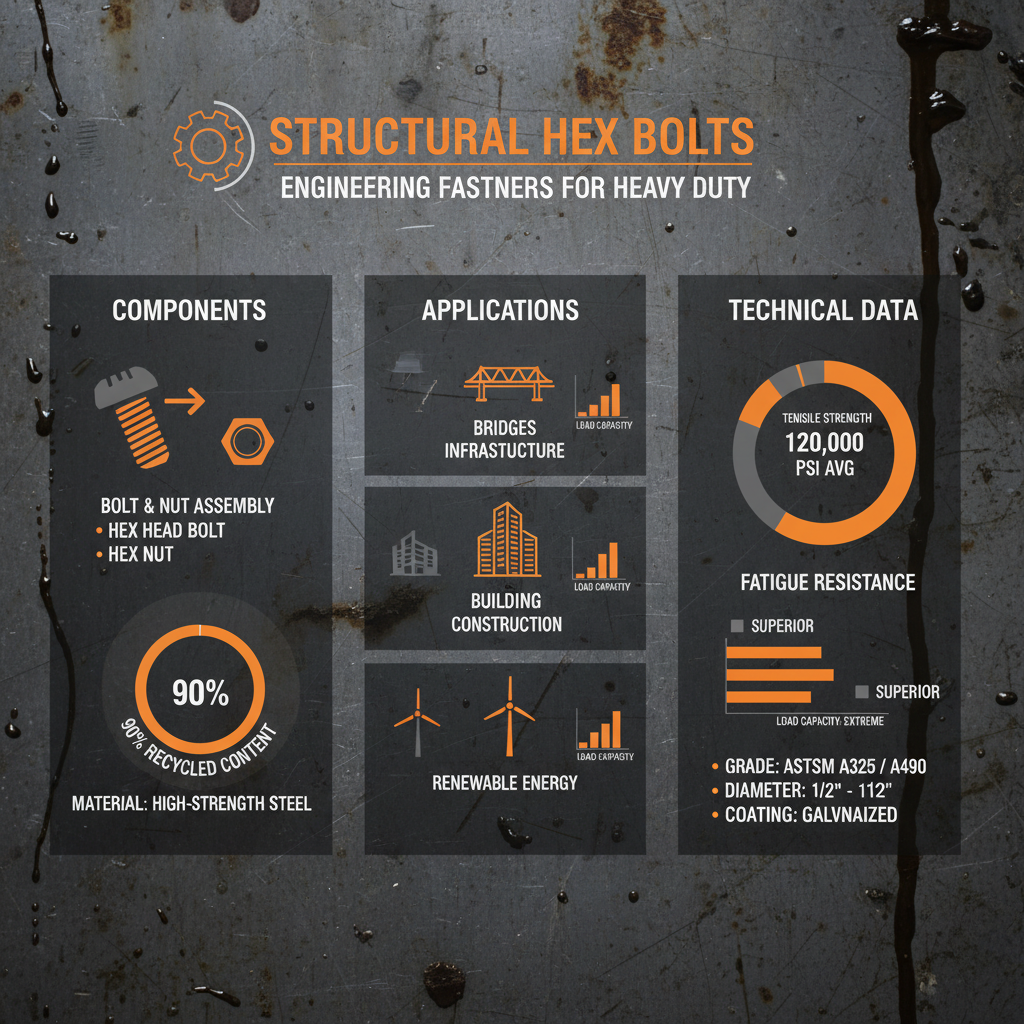
Structural hex bolts, also known as high-strength hex bolts, are externally threaded fasteners with a hexagonal head. They are designed for applications requiring high tensile strength and shear strength. Unlike ordinary bolts, structural hex bolts are manufactured from specific alloy steels and undergo rigorous quality control processes to ensure they meet stringent industry standards. These standards, like ASTM (American Society for Testing and Materials) and ISO (International Organization for Standardization), dictate material composition, mechanical properties, and dimensions. Selecting the correct grade of bolt is crucial for the intended application to prevent failures and ensure safety. They are typically used with a nut to create a bolted joint.
Key Highlights: Structural hex bolts are manufactured from specific alloy steels and undergo rigorous quality control processes to ensure they meet stringent industry standards.
Understanding Bolt Grades and Materials
The grade of a structural hex bolt indicates its tensile strength. Common grades include Grade 5, Grade 8, and Grade 10.9 (metric). Higher grade numbers denote higher strength. Materials commonly used in their construction include medium carbon steel, alloy steel, and stainless steel. The specific material chosen depends on the application's requirements, considering factors like corrosion resistance, temperature extremes, and loading conditions. For example, stainless steel bolts are ideal for marine environments, while alloy steel bolts are often used in high-stress mechanical applications. Proper material selection is critical for long-term reliability.
Grade Comparison:
• Grade 5: Lower strength, suitable for general-purpose applications.
• Grade 8: Medium strength, commonly used in automotive and construction.
• Grade 10.9 (Metric): High strength, ideal for critical structural applications.
Applications of Structural Hex Bolts
Structural hex bolts find widespread use in numerous industries. In construction, they are essential for connecting structural steel members in bridges, buildings, and towers. The automotive industry relies on them for critical engine and chassis components. Machinery manufacturing utilizes them for assembling heavy equipment and machinery. They are also prevalent in railway infrastructure, aerospace applications (where specific alloy grades are required), and even renewable energy projects like wind turbine construction. Their versatility and reliable performance make them a staple fastener in countless engineering projects. You can find a comprehensive selection of sizes and grades at HBXZ Fastener’s catalog.
Proper Installation Techniques for Structural Hex Bolts
Correct installation is just as important as selecting the right bolt. Proper torque application is critical – under-tightening can lead to loosening and failure, while over-tightening can damage the bolt or the joined materials. Using a calibrated torque wrench is essential. Additionally, proper lubrication of the threads can reduce friction and ensure accurate torque readings. Always follow the manufacturer's recommendations for torque specifications. Using the correct washers is also vital for distributing the load evenly and preventing damage to the joined surfaces. Before installation, ensure the threads are clean and free of debris. HBXZ Fastener provides detailed resources on proper installation techniques.
Choosing the Right Supplier for Structural Hex Bolts
Selecting a reputable supplier is critical for ensuring the quality and reliability of your structural hex bolts. Look for suppliers who adhere to industry standards (like ISO 9001), provide material certifications, and offer comprehensive testing reports. A reliable supplier will also offer a wide range of sizes and grades to meet your specific needs and provide excellent customer support. HBXZ Fastener is a trusted provider of high-quality structural hex bolts, committed to delivering superior products and exceptional service.
Conclusion: The Importance of Quality Structural Fasteners
Investing in high-quality structural hex bolts from a trusted supplier like HBXZ Fastener is paramount for ensuring the safety, integrity, and longevity of any structure or machine. Understanding bolt grades, materials, proper installation techniques, and sourcing from a reliable vendor are all crucial elements for success. Don't compromise on quality – choose fasteners you can depend on.
Frequently Asked Questions (FAQs)
What is the difference between a hex bolt and a carriage bolt?
While both are externally threaded fasteners with a hexagonal head, a carriage bolt has a rounded underside designed to prevent it from turning when a nut is applied. Hex bolts typically require a washer to distribute the load. Carriage bolts are often used in wood applications where a smooth, flush finish is desired, while hex bolts are more common in metal-to-metal connections. Structural hex bolts are specifically designed for high-strength applications and meet stricter standards than typical hex or carriage bolts.
What is the purpose of using washers with structural hex bolts?
Washers serve several crucial purposes. They distribute the load of the bolt over a wider area, preventing damage to the joined materials. They also provide a more even clamping force. Washers can also help protect the surface finish of the materials being joined. Using the correct type of washer (flat, lock, or conical spring) is essential for optimal performance and preventing loosening.
How often should structural hex bolts be inspected?
Regular inspection is vital, especially in critical applications. Bolts should be inspected for signs of corrosion, damage to the threads, loosening, or distortion. The frequency of inspection depends on the application and the severity of the environmental conditions. A visual inspection should be performed at least annually, and more frequent inspections are recommended for high-stress or corrosive environments. Detailed inspection reports should be maintained.
Are there any coatings available to improve corrosion resistance?
Yes, several coatings are available to enhance corrosion resistance. Common options include zinc plating, black oxide, and hot-dip galvanizing. Stainless steel bolts inherently offer excellent corrosion resistance. The choice of coating depends on the environment and the level of protection required. For marine applications or harsh chemical environments, hot-dip galvanizing or stainless steel are often preferred.
-
Best Self Drilling Drywall Screws for Metal Studs GuideNewsJul.01,2026
-
Industrial Guide to Using Self Drilling Expansion AnchorsNewsJun.29,2026
-
High Performance Self Drilling Fasteners for Industrial StabilityNewsJun.27,2026
-
High Performance Self Drilling Framing Screws Guide for ConstructionNewsJun.26,2026
-
High Performance Self Drilling Ground Screws for FasteningNewsJun.25,2026
-
Efficient Guide to Using Self Drilling Window Screws for ProsNewsJun.23,2026