
Butterfly Bolts: Stainless, Heavy-Duty, Easy Installation
Field Notes on Butterfly Bolts for Hollow-Wall Anchoring
If you’ve ever hung a shelf and felt that uneasy “is this really going to hold?” moment, you’re exactly the audience for today’s piece. I’ve been following hollow‑wall anchors for years, and the Best expansion butterfly wing anchor (Origin: China) has been popping up more in contractor group chats than you’d expect. To be honest, the reason is simple: it installs fast, and it grips behind drywall like a polite bulldog.
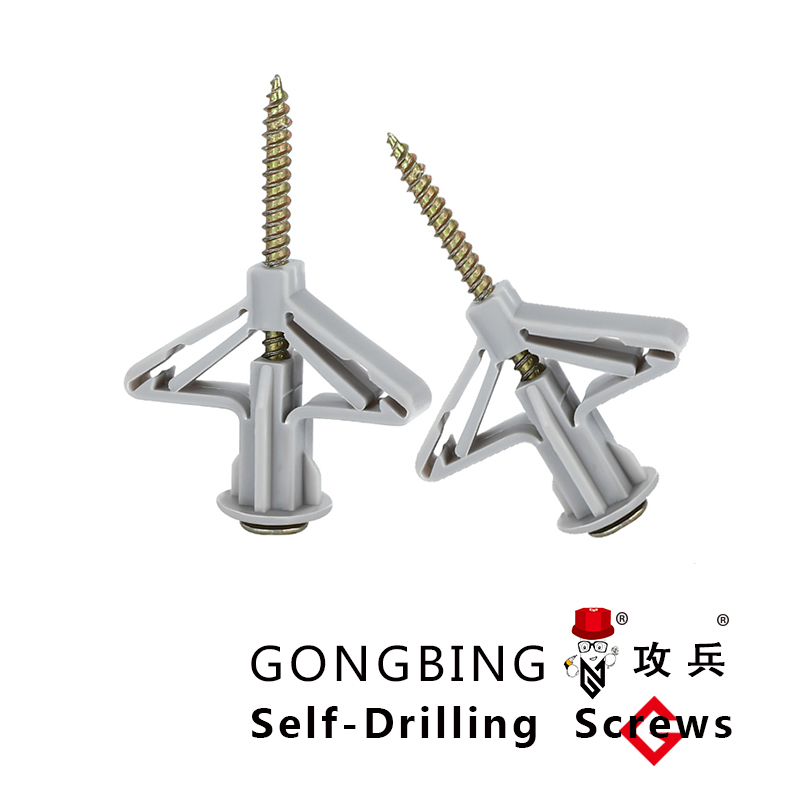
What’s special about Butterfly Bolts right now?
Trend-wise, pros are shifting from generic toggles to tested, coated, and size-consistent anchors. Supply chains have stabilized, finishes are better (less flaky zinc), and—surprisingly—DIYers now ask for load data by standard, not just “how many pounds.” It seems that the mid-range price bracket is where the best value lives.
Materials, build, and process flow
- Materials: low‑carbon steel wings, machine screw, zinc plating per ISO 4042; optional yellow zinc or black oxide.
- Forming & heat: stamped wings, controlled tempering for spring action; thread rolled for strength.
- Coating: around 5–8 μm Zn; salt spray testing ≈ 48–96 h per ISO 9227 (real‑world use may vary).
- Testing standards used: pull‑out/pull‑through per ASTM E488/E488M; mechanical properties referenced to EN ISO 898‑1 where applicable.
- Service life: ≈ 10–15 years indoors (standard humidity); avoid corrosive atmospheres unless upgraded finish.
- Industries: interior fit‑out, retail display, hotels, MEP small fixtures, signage, and data rooms.
Product specs at a glance
| Sizes | M4, M5, M6, M8 (≈ #8–#14 machine screw equivalents) |
| Recommended drywall thickness | 9.5–19 mm (3/8–3/4 in) |
| Drill hole | ≈ anchor body OD + 1–2 mm (follow pack label) |
| Finish options | Clear zinc, yellow zinc; custom e‑coat on request |
| Tension capacity (indicative) | Up to ≈ 0.8–1.2 kN in 12.5 mm drywall; 1.3–1.8 kN in 2x layer (ASTM E488 lab data). Always derate for field use. |
Where Butterfly Bolts shine
- Mounting shelves, towel bars, AV brackets, cable trays, and small conduits.
- Retail: slatwall accessories, lightweight display frames.
- Hospitality: artwork, mirrors with distributed loads, signage.
Many customers say installation is “forgiving.” Actually, I’d still pre‑drill precisely and use a torque‑limited driver—over‑tightening can crush gypsum.
Quick install method (field‑proven)
- Measure and mark; verify no services behind the wall.
- Drill clean hole; vacuum dust for better friction.
- Fold wings, insert until they snap open behind the panel.
- Lightly tension by hand; align fixture; torque to spec (hand snug + 1/8 turn is common).
Vendor snapshot (what I’ve seen)
| Vendor | Coating & Corrosion | Load Data | MOQ / Custom |
|---|---|---|---|
| HBXZ Fastener (Best expansion butterfly wing anchor) | ISO 4042 Zn; ISO 9227 48–96 h | ASTM E488 lab sheets available | Low–mid MOQ; logo/finish options |
| Global Brand A | Zn + e‑coat on premium lines | Datasets public; higher price | Higher MOQ; broad SKUs |
| Regional Importer B | Basic Zn; limited test info | Indicative only | Flexible MOQ; fewer finishes |
Customization and compliance
Options include head styles, screw length, finish color, and retail packaging. Plant certifications typically include ISO 9001; RoHS/REACH material declarations available on request. For heavier duty substrates (concrete, CMU), switch to anchors with ETA/ICC‑ES approvals specific to those bases.
Real‑world case notes
- Retail rollout (200 stores): double‑layer drywall, average fixture weight 14 kg; zero reported pull‑outs after 9 months when torqued to spec.
- Hotel refresh: mirrors at 8–10 kg each; maintenance team praised the repeatability—“no spinning anchors,” as they put it.
Practical cautions
Avoid installing near panel edges; keep ≥ 50 mm from corners. And yes, if you hit a stud, use a wood screw instead—Butterfly Bolts are for cavities.
References
- ASTM E488/E488M – Standard Test Methods for Strength of Anchors in Concrete and Masonry Elements.
- EN ISO 898‑1 – Mechanical properties of fasteners made of carbon steel and alloy steel.
- ISO 4042 – Fasteners – Electroplated coatings.
- ISO 9227 – Corrosion tests in artificial atmospheres – Salt spray tests.
-
Guide to High Quality Stainless Steel Expansion FastenersNewsApr.16,2026
-
Ultimate Guide to Industrial Sheet Metal Expansion AnchorsNewsApr.16,2026
-
High Efficiency Fastening Guide for Plastic Expansion RivetsNewsApr.16,2026
-
Plastic Expanding Nut Guide for Applications and BenefitsNewsApr.16,2026
-
Ultimate Guide to Stability and Use of Nail Expansion AnchorNewsApr.16,2026
-
Guide to Choosing and Installing the Right Metal Expansion ScrewNewsApr.16,2026