
Butterfly Bolts: Stainless Steel, Secure Hold—Why Buy?
Butterfly Bolts, Real-World Performance, and the Rise of Smarter Hollow-Wall Anchoring
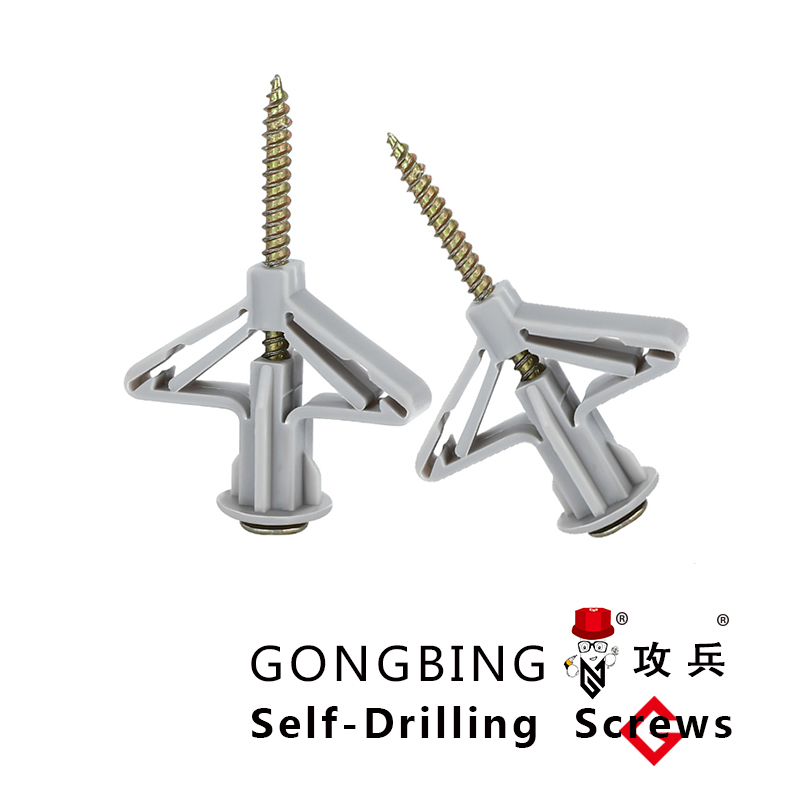
If you’ve ever hung a cabinet or leveled a heavy mirror, you’ve probably reached for butterfly bolts—or as this manufacturer calls them, the Best Expansion Butterfly Wing Anchor. To be honest, in the field people use “toggle,” “wing,” and “butterfly” interchangeably, and most of us only care about two things: will it hold and is it quick to install?
This model comes from China, and it’s built for pros and ambitious DIYers. The expanding wings open behind gypsum board or other hollow panels, creating a broad bearing surface. Installation is straightforward—drill, insert folded wings, tighten—and you get a surprisingly strong grip for its size. Many customers say the reliability per dollar is the big draw, especially on fast-paced retail fit-outs and MEP routing where time equals money.
Industry trends I’m seeing
- Shift to verified loads: contractors want data under recognized methods, not just brochure claims.
- Corrosion-awareness: even indoor jobs ask for coating specs and salt-spray hours.
- Customization at scale: lengths, thread sizes, and packaging tailored per project phase.
How it’s made (short version)
Materials: low-carbon steel body, spring steel wings; electro-galvanized per ISO 4042 with optional passivation. Methods: cold-heading for the screw/bolt, precision stamping for the wings, controlled heat-treatment for spring memory, then assembly and torque verification. Testing typically includes salt-spray (ISO 9227), dimensional checks, and batch load tests referencing ASTM E488/E1512-style procedures for anchors. Real-world service life indoors is around 10–15 years in dry environments; coastal humidity or chlorides reduce that—no surprise there.
Typical applications
- Hanging cabinets, shelves, handrails in drywall or plasterboard. - Mounting signage, cable trays, and light fixtures in retail and data centers. - HVAC straps and low-vibration brackets where you can’t find studs. In fact, butterfly bolts shine when backside access is impossible and you need a broad behind-the-wall clamping footprint.
Product specifications (indicative)
| Parameter | Spec (≈, real-world use may vary) |
|---|---|
| Thread sizes | M4–M8 (or #8–5/16") |
| Recommended board thickness | 9.5–19 mm (3/8"–3/4") |
| Material/coating | Steel, zinc plated per ISO 4042; optional yellow/passivated |
| Pull-out (tension) in 12.5 mm gypsum | ≈ 0.6–1.0 kN (safety factor 3:1 recommended) |
| Shear load in 12.5 mm gypsum | ≈ 0.8–1.5 kN depending on size and board quality |
| Salt-spray (neutral) | ≥ 72–96 h to red rust (ISO 9227) |
| Origin | China |
Vendor comparison (snapshot)
| Vendor | Certs | Load Data | Customization | MOQ |
|---|---|---|---|---|
| HBXZ Fastener (this product) | ISO 9001 plant; RoHS/REACH statements on request | Batch-tested; reports referencing ASTM E488/E1512 methods | Thread/length/packaging; private label | Around 5k–10k pcs |
| Local Brand A | ISO 9001; CE marking where applicable | Detailed shear/tension tables | Limited SKUs; fast delivery | Low (carton-level) |
| Marketplace Generic | Varies | Often unspecified | Minimal | Very low |
Installation notes and field feedback
Drill the recommended hole, fold and insert the wings, pull back slightly to seat, then tighten to spec torque (don’t crush the board—seen it too many times). Electricians tell me butterfly bolts save rework on cable ladder drops; retail teams like the predictable feel at final torque. One GC sent a note: “Zero pull-outs after weekend signage change—good sign.”
Customization and QC
Available in M4–M8 with different wing spans, knurled vs. smooth sleeves, and branded packaging. QC includes coating thickness checks, hardness on wings, proof-load trials per ISO 898‑1 fastener principles, and periodic salt-spray verification. For high humidity interiors, consider upgraded coating or stainless alternatives (with adjusted loads).
Two quick case notes
- Fashion retailer: 12.5 mm drywall, M6 anchors, 40 kg shelf modules in shear; no slippage over 6 months, nightly restocking and all. - Small data hall: ladder tray supports at 600 mm spacing; tension loads ≈ 0.5 kN each, inspected quarterly—no creep observed.
Standards and documentation
Ask for batch test summaries, coating certificates, and salt-spray reports. Where project specs demand it, align with ASTM E488/E1512 style testing, ISO 4042 coating, ISO 9227 corrosion, and ISO 898‑1 fastener properties. It seems standard practice now, and for good reason.
Citations
- ASTM E488/E488M – Standard Test Methods for Strength of Anchors in Concrete and Masonry Elements.
- ASTM E1512 – Standard Test Methods for Testing Bond Performance of Anchors (reference methods for comparative testing).
- ISO 4042 – Fasteners: Electroplated coatings.
- ISO 9227 – Corrosion tests in artificial atmospheres: Salt spray tests.
- ISO 898-1 – Mechanical properties of fasteners made of carbon steel and alloy steel.
-
Guide to High Quality Stainless Steel Expansion FastenersNewsApr.16,2026
-
Ultimate Guide to Industrial Sheet Metal Expansion AnchorsNewsApr.16,2026
-
High Efficiency Fastening Guide for Plastic Expansion RivetsNewsApr.16,2026
-
Plastic Expanding Nut Guide for Applications and BenefitsNewsApr.16,2026
-
Ultimate Guide to Stability and Use of Nail Expansion AnchorNewsApr.16,2026
-
Guide to Choosing and Installing the Right Metal Expansion ScrewNewsApr.16,2026