
Comprehensive Guide to M6 Hex Head Bolts Applications and Selection
Understanding the M6 Hex Head Bolt: A Comprehensive Guide
The M6 hex head bolt is a fundamental fastener widely used across numerous industries, from automotive and construction to machinery and electronics. Its versatility, strength, and ease of installation make it a staple in many applications. This article will provide an in-depth look at the M6 hex head bolt, covering its specifications, materials, applications, and key considerations when choosing the right bolt for your needs. We'll explore its advantages and compare it to other fastening options. Understanding the intricacies of this common fastener can significantly improve the efficiency and reliability of your projects.
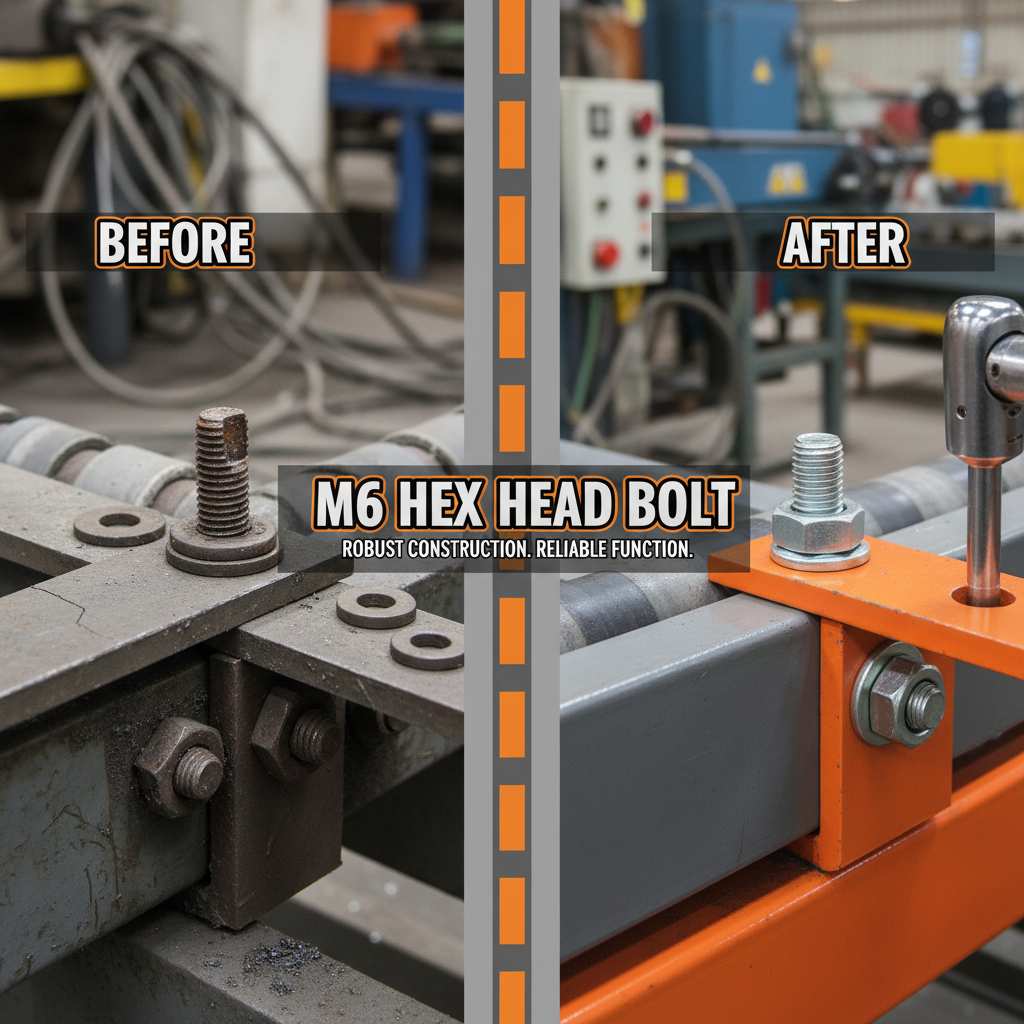
What Exactly is an M6 Hex Head Bolt?
An M6 hex head bolt is a fastener characterized by a 6-millimeter diameter thread and a hexagonal (six-sided) head. The 'M' denotes the metric thread standard. The hexagonal head allows for easy tightening and loosening with a wrench or socket. These bolts are available in various lengths and materials, making them adaptable to a wide range of applications. They are commonly used to secure components together by clamping them with a nut. A properly tightened M6 hex head bolt provides a strong and reliable connection. HBXZ Fastener offers a comprehensive selection of M6 hex head bolts to meet diverse requirements.
Key Highlights: A 6-millimeter diameter thread, hexagonal head for easy operation, and availability in various lengths and materials.
Common Materials Used in M6 Hex Head Bolts
M6 hex head bolts are manufactured from a variety of materials, each offering unique properties. Common materials include:
- Carbon Steel: The most common and cost-effective option, offering good strength and durability.
- Stainless Steel: Provides excellent corrosion resistance, ideal for outdoor or marine applications.
- Alloy Steel: Offers higher strength and toughness compared to carbon steel.
- Brass: Corrosion-resistant and often used in electrical applications.
The choice of material depends on the specific application and the environmental conditions the bolt will be exposed to. For example, stainless steel is crucial in environments where rust is a concern. HBXZ Fastener can help you select the optimal material for your needs.
Material Selection Guide:
• Carbon Steel: Cost-effective, general purpose.
• Stainless Steel: Corrosion resistance, outdoor applications.
• Alloy Steel: High strength, demanding applications.
• Brass: Electrical conductivity, corrosion resistance.
M6 Hex Head Bolt Applications Across Industries
The M6 hex head bolt is a versatile fastener used in countless applications. Some common examples include:
- Automotive: Securing engine components, chassis parts, and interior trim.
- Construction: Joining structural steel, wood, and other building materials.
- Machinery: Assembling industrial equipment, pumps, and motors.
- Electronics: Mounting circuit boards, enclosures, and components.
- Furniture: Assembling beds, tables, and chairs.
Its reliable clamping force and ease of use make it ideal for both small-scale and large-scale projects. HBXZ Fastener provides M6 hex head bolts for a broad spectrum of industries.
M6 Hex Head Bolt vs. Other Fasteners: A Comparison
While many types of fasteners exist, the M6 hex head bolt offers specific advantages. Here's a comparison to other common options:
Selecting the Right M6 Hex Head Bolt: Key Considerations
Choosing the appropriate M6 hex head bolt involves considering several factors:
- Material: Based on the environment and required corrosion resistance.
- Length: Ensure sufficient length to pass through the materials being joined and accommodate the nut.
- Grade: Higher grades offer greater strength and are suitable for demanding applications.
- Finish: Coatings like zinc plating can enhance corrosion resistance.
Proper selection is crucial for ensuring a secure and reliable fastening solution. Contacting HBXZ Fastener's experts can help streamline this process.
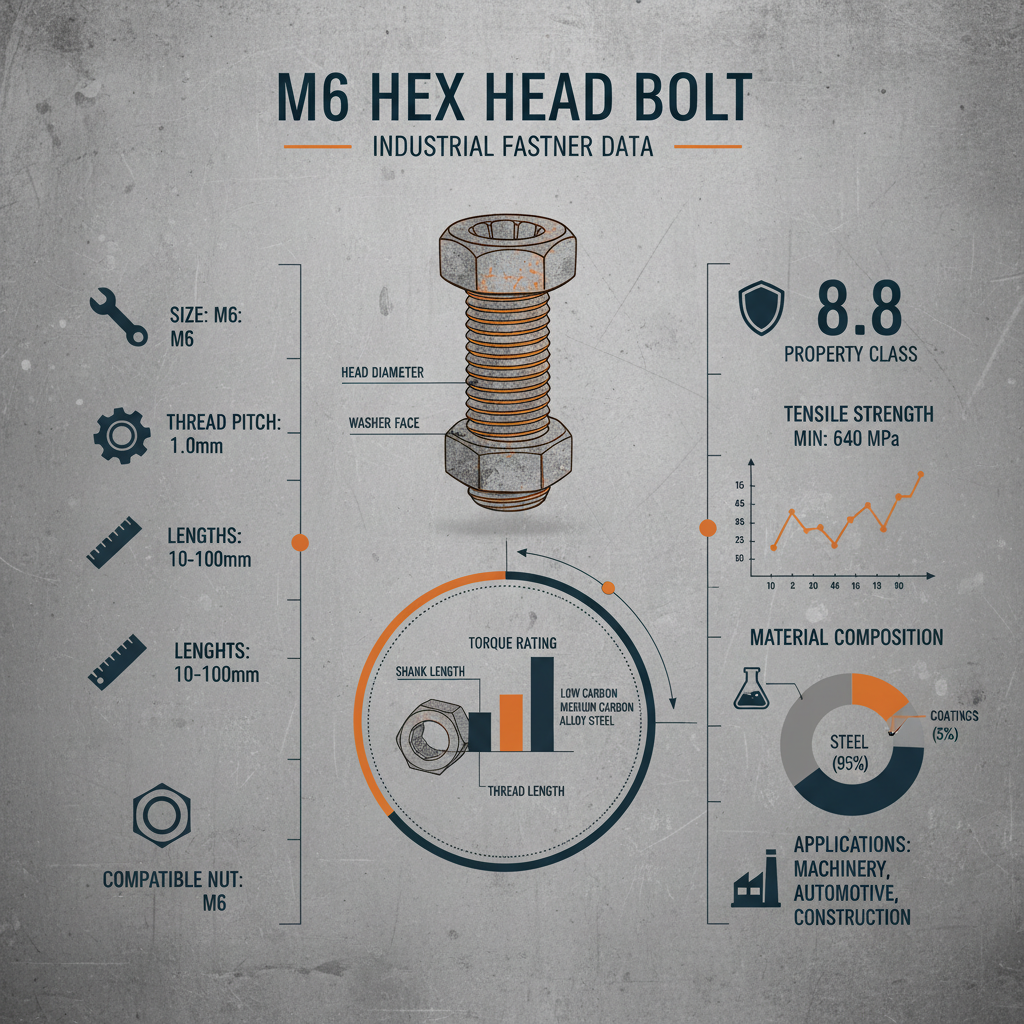
Conclusion: The Indispensable M6 Hex Head Bolt
The M6 hex head bolt remains a critical component in countless applications due to its reliability, strength, and versatility. Understanding its specifications, materials, and applications is key to ensuring optimal performance and longevity. By carefully considering your needs and selecting the right bolt for the job, you can achieve a secure and dependable fastening solution.
Frequently Asked Questions (FAQs)
What is the typical torque specification for an M6 hex head bolt?
The appropriate torque specification for an M6 hex head bolt varies depending on the material, grade, and surface finish. Generally, for a standard grade 8.8 carbon steel bolt, a torque range of 9.5 - 12 Nm (7.0 - 8.9 lb-ft) is recommended. However, it's crucial to consult the manufacturer's specifications or a torque chart for accurate values. Overtightening can damage the bolt or the materials being joined, while undertightening can lead to loosening and failure. Always use a calibrated torque wrench for precise application.
Can M6 hex head bolts be reused?
While M6 hex head bolts can be reused, it's generally not recommended, especially in critical applications. Each time a bolt is tightened and loosened, its mechanical properties can degrade. This is due to factors like plastic deformation of the threads and potential damage to the bolt head. If reuse is necessary, thoroughly inspect the bolt for any signs of damage, such as cracks, stripped threads, or corrosion. Consider replacing the bolt whenever possible to ensure a reliable connection.
What is the difference between a fully threaded and partially threaded M6 hex head bolt?
A fully threaded M6 hex head bolt has threads along its entire length, while a partially threaded bolt has threads only on a portion of its shank. Fully threaded bolts are often used with nuts close to the head and are suitable for applications requiring a clamping force along the entire length. Partially threaded bolts are typically used with a flat washer and are more common for general fastening where a specific clamping area is needed. The choice depends on the application's specific requirements.
Where can I find high-quality M6 hex head bolts?
You can find a wide range of high-quality M6 hex head bolts at HBXZ Fastener. We offer a comprehensive selection of materials, grades, and finishes to meet your specific needs. Our expert team can also assist you in selecting the right bolt for your application. We are committed to providing reliable and durable fasteners for diverse industries.
-
Guide to High Quality Stainless Steel Expansion FastenersNewsApr.16,2026
-
Ultimate Guide to Industrial Sheet Metal Expansion AnchorsNewsApr.16,2026
-
High Efficiency Fastening Guide for Plastic Expansion RivetsNewsApr.16,2026
-
Plastic Expanding Nut Guide for Applications and BenefitsNewsApr.16,2026
-
Ultimate Guide to Stability and Use of Nail Expansion AnchorNewsApr.16,2026
-
Guide to Choosing and Installing the Right Metal Expansion ScrewNewsApr.16,2026