
Comprehensive Guide to Standard Shear Stud Sizes for Steel Construction Projects
Understanding Standard Shear Stud Sizes for Effective Steel Construction
Shear studs are crucial components in composite steel construction, enabling a strong connection between steel beams and concrete slabs. Selecting the correct shear stud sizes is paramount for ensuring the structural integrity and safety of buildings and infrastructure. This article will provide a comprehensive guide to standard shear stud sizes, their applications, and the factors influencing their selection. We will cover common diameters, head styles, and installation considerations to help you make informed decisions for your projects.
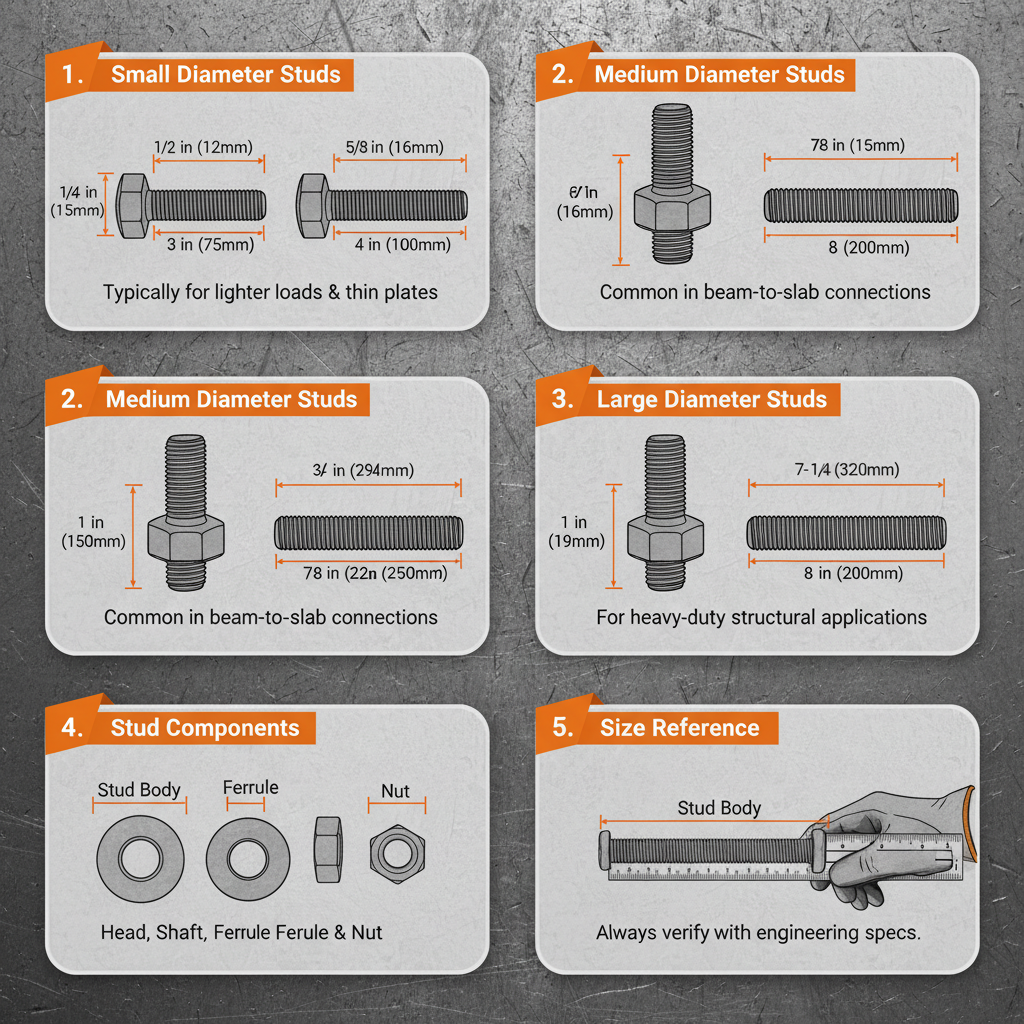
Common Shear Stud Diameters and Their Applications
Shear studs are available in a range of diameters, with the most common sizes being 3/4", 7/8", 1", 1 1/8" and 1 1/4". The selection of the appropriate diameter depends on the load requirements, the thickness of the concrete slab, and the steel beam’s dimensions. Smaller diameters, like 3/4”, are typically used in lighter-duty applications or where concrete slab thickness is limited. Larger diameters, such as 1 1/4", are used for higher load capacities in heavy construction projects. Understanding the load-bearing capacity of each diameter is crucial for structural engineers. Selecting a diameter that is too small could compromise the structural integrity, while an excessively large diameter could be uneconomical.
Standard Shear Stud Head Styles: A Comparative Overview
Shear studs come in various head styles, each designed for specific applications and connection performance. The most prevalent types include: Deformed Head Studs, offering superior pull-out resistance due to their textured surface; Undercut Head Studs, providing even higher pull-out resistance, often used in critical applications; and Flat Head Studs, primarily utilized for aesthetic purposes or when minimal obstruction is desired. The choice of head style directly affects the connection's strength and long-term reliability. Understanding the differences is critical for designing secure and durable composite structures.
Key Takeaway: The head style of a shear stud significantly impacts its pull-out resistance and suitability for different structural applications. Always consult structural engineering guidelines for the appropriate head style selection.
Shear Stud Size Selection Based on Load and Slab Thickness
Selecting the correct shear stud size requires a detailed assessment of the expected loads and the thickness of the concrete slab. Generally, thicker slabs can accommodate larger diameter studs, providing increased load capacity. Load calculations must consider both static and dynamic forces, including dead loads, live loads, and potential impact loads. Engineers utilize design codes and standards, such as AISC specifications, to determine the appropriate stud spacing and diameter based on these factors. Accurate load assessment is paramount to ensuring the long-term safety and performance of the composite structure. Factors like concrete strength and steel grade also play a role in the selection process.
Important Considerations for Size Selection:
• Load magnitude and type (static, dynamic)
• Concrete slab thickness
• Steel beam properties (grade, dimensions)
• Applicable design codes and standards (AISC)
Comparison of Common Shear Stud Sizes and Load Capacities
The following table illustrates the approximate ultimate shear capacities of common shear stud sizes. It's important to note that these values are estimates and can vary based on concrete strength, steel grade, and installation quality. Always refer to manufacturer's data and applicable design codes for precise load capacity calculations. This data is essential for making informed decisions during the design phase.
The Importance of Proper Installation for Shear Stud Performance
Even with the correct shear stud size selection, proper installation is critical to achieving optimal performance. Studs must be accurately positioned and welded to the steel beam using qualified welders and procedures. Insufficient weld penetration or improper spacing can significantly reduce the connection’s strength. Regular inspection of welds is essential to ensure quality and compliance with industry standards. Properly installed shear studs provide a reliable and durable connection that maximizes the composite action between the steel and concrete, enhancing the overall structural efficiency of the building.
Conclusion: Choosing the Right Shear Stud for Your Project
Selecting the appropriate shear stud sizes and ensuring proper installation are fundamental to the success of any composite steel construction project. By carefully considering load requirements, slab thickness, and applicable standards, engineers and contractors can create safe, durable, and efficient structures. Investing in quality shear studs from a reputable supplier, like HBXZ Fastener, ensures optimal performance and long-term reliability.
Frequently Asked Questions (FAQs)
What factors should I consider when selecting a shear stud size?
Several factors are crucial when selecting the correct shear stud size. These include the anticipated shear load, the thickness of the concrete slab, the grade of steel used in the beam, and the specific requirements of the building code or design specification. It’s also essential to consider the type of head style needed for the application. A thorough load analysis performed by a qualified structural engineer is highly recommended to determine the optimal size and spacing.
What is the role of weld quality in shear stud performance?
Weld quality is absolutely critical. The weld must provide full penetration around the shear stud to ensure a strong and reliable connection. Defective welds, such as those with porosity or incomplete fusion, can significantly reduce the shear capacity of the stud. Welding procedures should adhere to AWS D1.1 standards, and welders must be qualified to perform the required welds. Regular inspection and non-destructive testing (NDT) of welds are often required for critical applications.
How do undercut shear studs differ from deformed head studs?
Both undercut and deformed head studs offer enhanced pull-out resistance compared to standard studs. However, undercut studs are generally considered to provide higher pull-out capacity due to their unique geometry. The undercut creates a mechanical interlock with the concrete, making it more difficult for the stud to be pulled out. Deformed head studs rely on friction and mechanical deformation for resistance. The choice between the two depends on the specific load requirements and design considerations.
Where can I find more information about shear stud specifications and standards?
Several resources provide detailed information about shear stud specifications and standards. The American Institute of Steel Construction (AISC) publishes comprehensive design guides and specifications. AWS D1.1 provides guidelines for welding steel structures. Manufacturers like HBXZ Fastener offer technical data sheets and installation instructions for their products. Consulting with a qualified structural engineer is always recommended for complex projects.
-
Guide to High Quality Stainless Steel Expansion FastenersNewsApr.16,2026
-
Ultimate Guide to Industrial Sheet Metal Expansion AnchorsNewsApr.16,2026
-
High Efficiency Fastening Guide for Plastic Expansion RivetsNewsApr.16,2026
-
Plastic Expanding Nut Guide for Applications and BenefitsNewsApr.16,2026
-
Ultimate Guide to Stability and Use of Nail Expansion AnchorNewsApr.16,2026
-
Guide to Choosing and Installing the Right Metal Expansion ScrewNewsApr.16,2026