
Comprehensive Guide to the M8 Hex Head Bolt Specifications and Applications
Understanding the M8 Hex Head Bolt: A Comprehensive Guide
The M8 hex head bolt is a cornerstone fastener in countless industries, from automotive and construction to machinery and beyond. Its robust design and reliable performance make it an essential component for securing joints and assemblies. This article will delve into the intricacies of the M8 hex head bolt, covering its specifications, applications, materials, and advantages. We’ll provide a detailed overview to help you understand why this bolt remains a top choice for fastening needs. Choosing the right bolt is critical for structural integrity and safety.
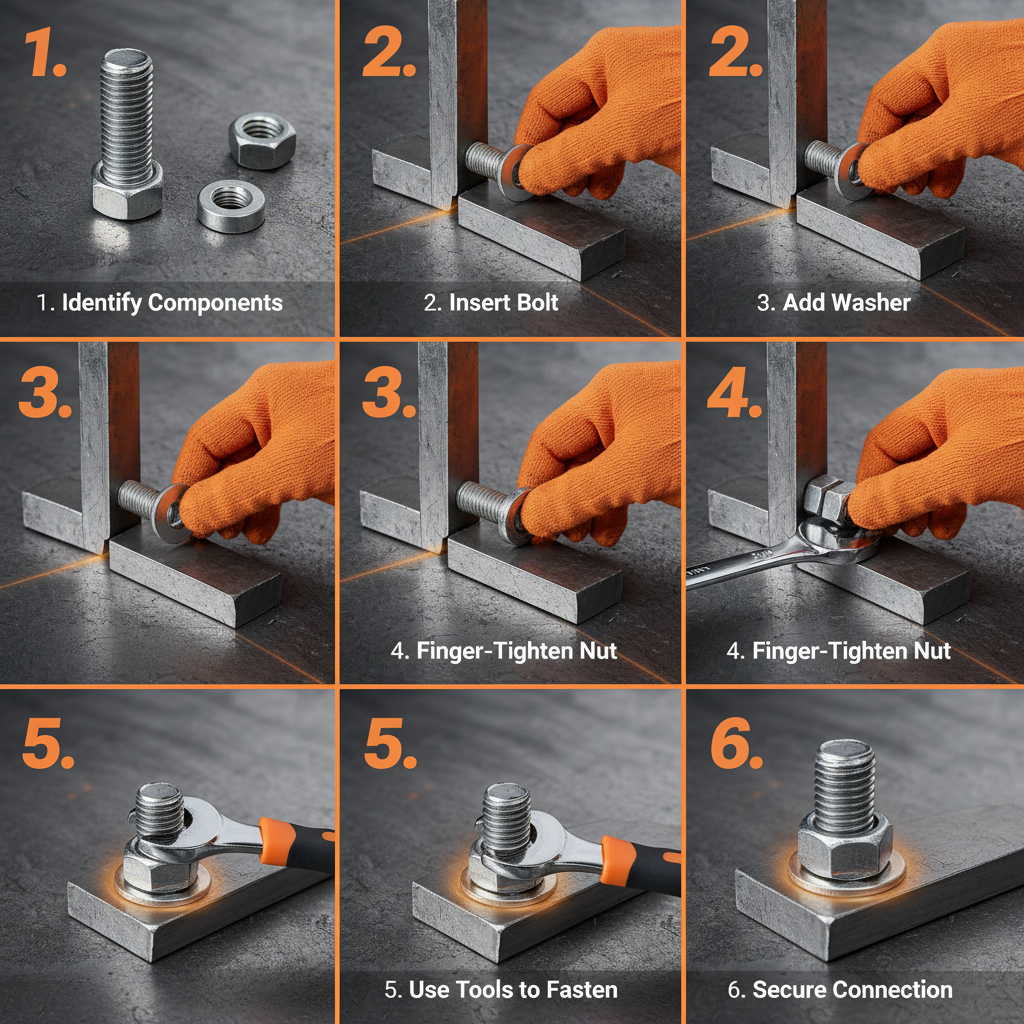
What Defines an M8 Hex Head Bolt?
The “M8” designation refers to the metric thread diameter of the bolt – in this case, 8 millimeters. The "hex head" indicates the shape of the bolt’s head, which is a six-sided hexagon. This hexagonal shape allows for easy tightening and loosening with a wrench or socket. HBXZ Fastener provides a diverse range of M8 hex head bolts, meticulously engineered to meet the highest quality standards. The standardized design ensures compatibility and interchangeability across different applications and industries, contributing to efficient assembly processes.
Key Highlights: The M8 designation signifies an 8mm thread diameter, while the hex head allows for easy tightening. These bolts are fundamental components in many assembly processes.
M8 Hex Head Bolt Materials: Choosing the Right Option
M8 hex head bolts are commonly manufactured from various materials, each offering unique properties suited for specific applications. Carbon steel is a prevalent choice due to its strength and cost-effectiveness. Stainless steel provides excellent corrosion resistance, making it ideal for outdoor or harsh environments. Alloy steel offers enhanced strength and durability for demanding applications. The selection of material directly impacts the bolt's performance and longevity. HBXZ Fastener offers M8 hex head bolts in a comprehensive array of materials, including various grades of steel, stainless steel, and alloy steel.
Material Benefits:
• Carbon Steel: High strength, cost-effective.
• Stainless Steel: Excellent corrosion resistance.
• Alloy Steel: Enhanced strength and durability.
M8 Hex Head Bolt Dimensions and Specifications
Understanding the dimensions and specifications of an M8 hex head bolt is crucial for ensuring proper fit and functionality. Here’s a breakdown of key parameters:
Applications of the M8 Hex Head Bolt
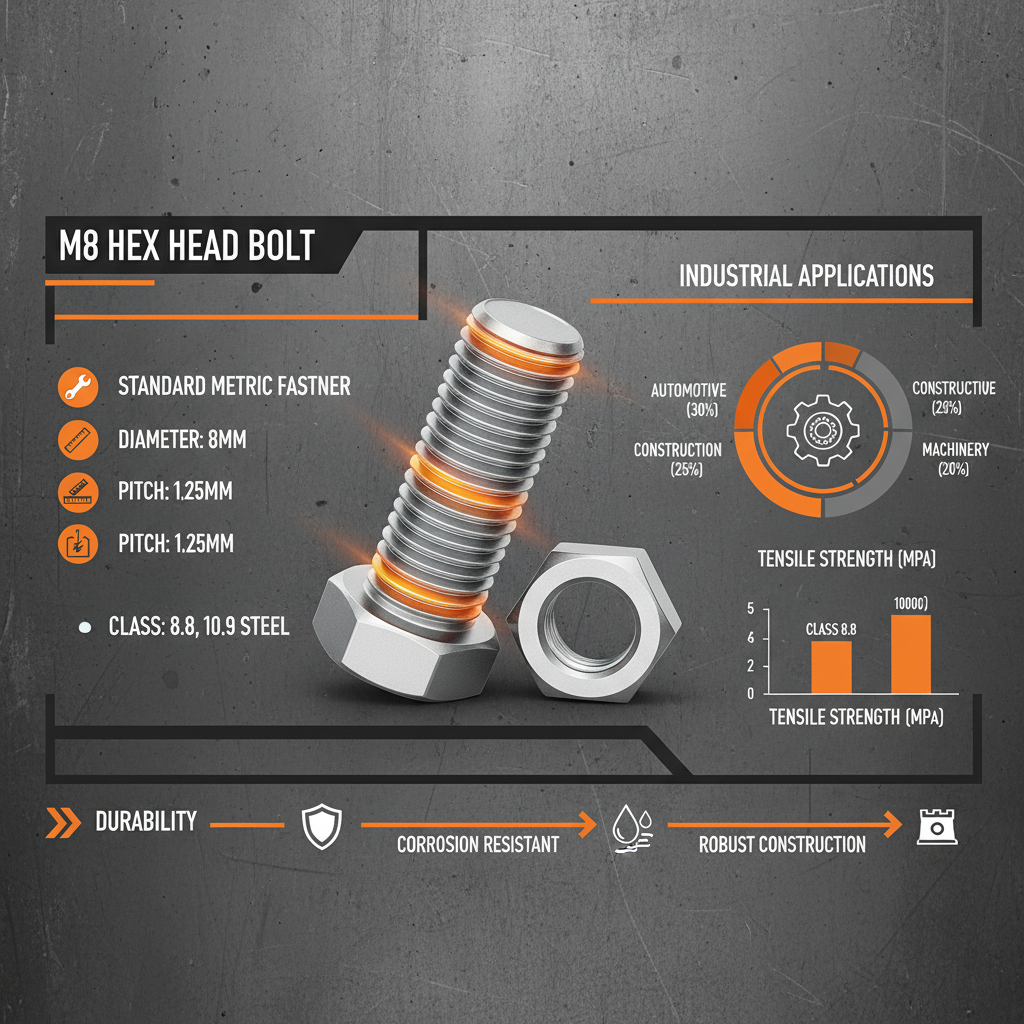
The M8 hex head bolt’s versatility allows for widespread use across diverse industries. In automotive manufacturing, they are crucial for assembling engine components, chassis parts, and suspension systems. Construction relies on these bolts for structural connections in buildings, bridges, and infrastructure projects. Machinery and equipment utilize M8 bolts for securing various parts, ensuring smooth and reliable operation. HBXZ Fastener supplies M8 hex head bolts for a multitude of applications, ensuring the highest standards of performance and reliability.
Benefits of Using M8 Hex Head Bolts
Using M8 hex head bolts offers several key advantages. Their standardized design ensures easy availability and compatibility. The hex head allows for efficient tightening and loosening, saving time and labor. The robust construction provides high clamping force, ensuring secure connections. Furthermore, the availability of various materials allows for tailoring the bolt to specific environmental and performance requirements. Selecting the appropriate M8 hex head bolt contributes to the overall reliability and durability of any assembly. HBXZ Fastener provides the quality and selection you need to succeed.
Conclusion: The M8 Hex Head Bolt – A Reliable Fastening Solution
The M8 hex head bolt remains a crucial fastener in countless applications. Its standardized design, robust construction, and versatility make it an ideal choice for securing joints and assemblies across diverse industries. When selecting M8 hex head bolts, consider the material, dimensions, and application requirements to ensure optimal performance and longevity.
Frequently Asked Questions (FAQs)
What grade of M8 hex head bolt should I use for a high-stress application?
For high-stress applications, it’s generally recommended to use a higher grade of M8 hex head bolt, such as Grade 8.8 or Grade 10.9. These grades indicate higher tensile strength and yield strength, providing greater resistance to deformation and failure under load. The specific grade required will depend on the exact load requirements and operating conditions. Consult with a fastening expert to determine the appropriate grade for your application. Using a lower grade bolt in a high-stress scenario could lead to premature failure and potential safety risks.
What is the difference between a fully threaded and partially threaded M8 bolt?
A fully threaded M8 bolt has threads along its entire length, while a partially threaded bolt has threads only on a portion of its shank. Fully threaded bolts are typically used for applications requiring a clamping force across the entire length of the bolt, such as securing thin materials. Partially threaded bolts are often used with nuts and washers, where the unthreaded portion of the shank provides greater shear strength and prevents the nut from damaging the clamped material. The choice between the two depends on the specific application requirements.
How do I prevent corrosion on M8 stainless steel bolts?
While stainless steel offers excellent corrosion resistance, it's not entirely immune. To prevent corrosion on M8 stainless steel bolts, avoid contact with dissimilar metals (like carbon steel) without proper insulation. Regularly clean the bolts to remove contaminants that can accelerate corrosion. In harsh environments (e.g., saltwater), consider using a marine-grade stainless steel (316) and applying a corrosion-inhibiting coating. Proper maintenance and material selection are key to ensuring long-term corrosion protection.
-
Guide to High Quality Stainless Steel Expansion FastenersNewsApr.16,2026
-
Ultimate Guide to Industrial Sheet Metal Expansion AnchorsNewsApr.16,2026
-
High Efficiency Fastening Guide for Plastic Expansion RivetsNewsApr.16,2026
-
Plastic Expanding Nut Guide for Applications and BenefitsNewsApr.16,2026
-
Ultimate Guide to Stability and Use of Nail Expansion AnchorNewsApr.16,2026
-
Guide to Choosing and Installing the Right Metal Expansion ScrewNewsApr.16,2026