
Double Head Bolts: Secure Fastening, Dual Threaded Strength
Understanding Double Head Bolts in Critical Industrial Applications
In high-performance industrial environments, the integrity and reliability of fastening solutions are paramount. Among the diverse array of industrial fasteners, double head bolts stand out for their unique design and robust performance, especially in applications demanding secure, adjustable, and resilient connections. These specialized fasteners, often referred to as double threaded stud bolts or simply studs, are engineered to provide exceptional clamping force and structural stability in critical infrastructure projects.
Industry Trends Driving Demand
The global industrial fastener market is experiencing consistent growth, propelled by expansion in sectors such as energy, petrochemicals, infrastructure, and heavy machinery. Key trends indicate a rising demand for fasteners capable of withstanding extreme conditions, including high temperatures, corrosive environments, and significant vibrational stress. This shift necessitates materials with enhanced tensile strength, superior fatigue resistance, and advanced corrosion protection, pushing manufacturers to innovate in material science and processing techniques. Furthermore, the increasing complexity of modern engineering projects often requires customized fastening solutions, where standard bolts fall short. The versatility of double head bolts in accommodating varying flange thicknesses and facilitating precise alignment makes them indispensable in these evolving industrial landscapes.
Digitalization and predictive maintenance are also influencing fastener design, with a growing interest in smart fasteners capable of real-time monitoring. While traditional double head bolts don't inherently possess smart capabilities, their fundamental role as reliable connectors in these systems remains critical. The emphasis on sustainability also drives the adoption of materials with extended service life and processes that minimize environmental impact.
Technical Specifications and Parameters
The performance of double head bolts is defined by stringent technical specifications, material properties, and manufacturing precision. These fasteners are typically specified according to international standards such as ASTM, ANSI, ASME, DIN, and ISO, ensuring interchangeability and performance consistency across various applications.
Material Grades and Properties
Common material grades for double head bolts include ASTM A193 B7 (alloy steel, heat treated for high-temperature service), A193 B7M (similar to B7 but with specified hardness for sour service applications), A193 B16 (for high-temperature service up to 1100°F), and various stainless steel grades like A193 B8 (304 SS) and A193 B8M (316 SS) for corrosion resistance. Each material possesses distinct mechanical properties, including tensile strength, yield strength, elongation, and hardness, which are critical for application-specific design. For instance, B7 material offers a minimum tensile strength of 125 ksi, making it suitable for high-pressure piping and valve applications.
Dimensional and Thread Specifications
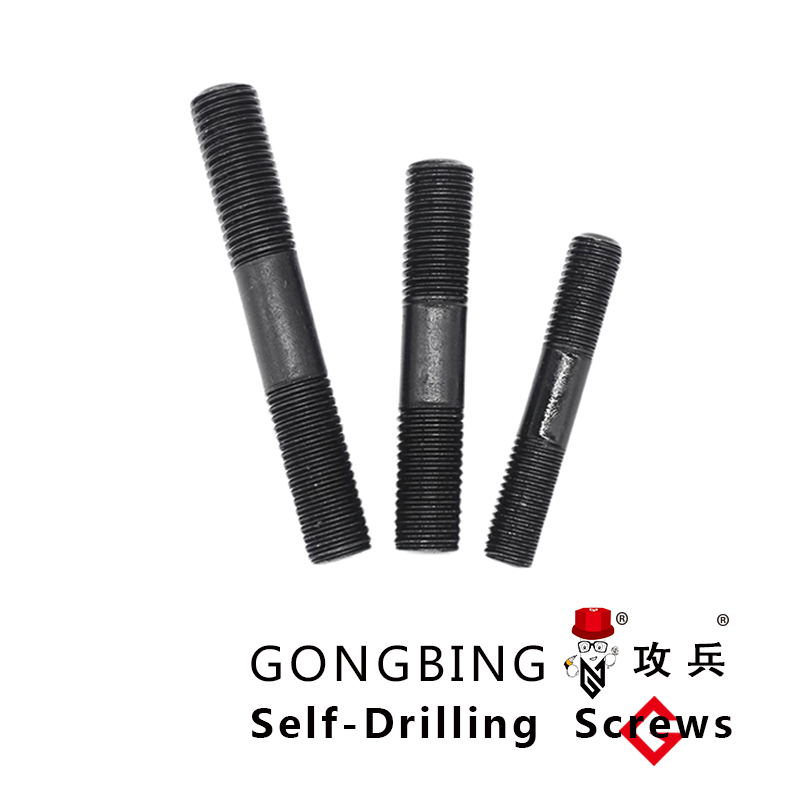
Dimensions adhere to standards like ASME B1.1 for unified inch screw threads (UNC, UNF) or ISO metric threads. The two threaded ends, hence the "double head" designation, typically feature coarse threads for ease of assembly and disassembly. The unthreaded central body, or shank, contributes to the bolt's shear strength and can vary in length based on application requirements. A tap end stud bolt, a variant of the double threaded stud bolts, features threads of unequal length, with one end designed for permanent engagement into a tapped hole.
Key Product Specifications
| Parameter | Specification / Standard | Typical Value / Range |
|---|---|---|
| Material Grades | ASTM A193 B7, B7M, B16, B8, B8M | Alloy Steel, Stainless Steel |
| Diameters (Nominal) | ANSI/ASME B18.2.1, DIN 976 | 1/4" to 4" (M6 to M100) |
| Thread Type | ASME B1.1 (UNC, UNF), ISO Metric | Coarse (UNC) or Fine (UNF) |
| Length | Customizable | Up to 6 meters (20 feet) |
| Tensile Strength (B7) | ASTM A193 | Min. 125 ksi (860 MPa) |
| Yield Strength (B7) | ASTM A193 | Min. 105 ksi (725 MPa) |
| Surface Finish | ASTM A153, B695, B633 | Plain, Hot Dip Galvanized, Zinc Plated, PTFE Coated |
Coatings play a vital role in enhancing durability and corrosion resistance. Options include hot-dip galvanizing, zinc plating, cadmium plating, and advanced fluoropolymer (PTFE) coatings, each chosen based on the operating environment's corrosivity and temperature profile.
Manufacturing Process Flow for Double Head Bolts
The production of high-quality double head bolts is a sophisticated process that integrates advanced metallurgical techniques with precision engineering. Adherence to strict quality control protocols at every stage ensures that the final product meets or exceeds industry standards.
Detailed Manufacturing Steps:
- Material Sourcing and Preparation: High-grade alloy steel (e.g., AISI 4140, 4340) or stainless steel (e.g., 304, 316) is sourced from certified mills. Incoming material undergoes rigorous chemical analysis and mechanical testing to verify compliance with ASTM standards. Rods or bars are cut to specified lengths, accounting for material loss during subsequent processes.
-
Forging: Depending on the size and material, fasteners can be produced via cold forging or hot forging.
- Cold Forging: For smaller diameters, this process involves deforming metal below its recrystallization temperature, enhancing material strength and surface finish.
- Hot Forging: For larger diameters and complex geometries, material is heated above its recrystallization temperature, improving ductility and facilitating shaping. This method is critical for forming the unthreaded body and ensuring grain flow optimization, which contributes to increased fatigue resistance.
- Heat Treatment: A critical step for alloy steels like B7. Quenching and tempering processes are meticulously controlled to achieve desired hardness, tensile strength, and yield strength, ensuring optimal mechanical properties and service life. Stainless steels may undergo solution annealing for improved corrosion resistance and stress relief.
- Thread Rolling/Cutting: Threads are typically formed by thread rolling, a cold-forming process that plastically deforms the material to create threads. This method improves the material's grain structure, enhances fatigue strength, and produces a smoother, stronger thread compared to thread cutting. For specialized or very large sizes, thread cutting (machining) may be employed. Precision CNC machining ensures accurate thread profiles and dimensions.
- Secondary Machining (if required): Depending on the design, additional CNC machining may be performed to achieve specific dimensions, chamfers, or surface finishes.
- Surface Treatment/Coating: After cleaning and surface preparation (e.g., sandblasting), fasteners receive coatings such as hot-dip galvanizing (for enhanced corrosion resistance in outdoor/marine environments), zinc plating (for general corrosion protection), or specialized PTFE (fluoropolymer) coatings for chemical resistance and reduced friction during assembly. Passivation is often applied to stainless steel products to enhance their inherent corrosion resistance.
-
Quality Control and Testing: Each batch undergoes extensive testing conforming to ISO 9001 and specific ASTM/ANSI standards. This includes:
- Dimensional Inspection: Using calibrated gauges and optical comparators to verify length, diameter, thread pitch, and lead.
- Mechanical Testing: Tensile strength, yield strength, elongation, reduction of area, and hardness tests (Rockwell, Brinell).
- Non-Destructive Examination (NDE): Magnetic particle inspection (MPI) or liquid penetrant inspection (LPI) to detect surface or subsurface discontinuities. Ultrasonic testing (UT) for larger diameter bolts.
- Corrosion Resistance Testing: Salt spray tests for coated fasteners.
- Final Inspection and Packaging: Visual inspection for surface defects, proper marking, and secure packaging to prevent damage during transit. Certification documents (MTRs - Material Test Reports) are prepared.
This meticulous process ensures that each double head bolts unit is capable of delivering exceptional performance, energy saving potential through reduced maintenance, and superior corrosion resistance, contributing to a longer service life in demanding operational environments.
Application Scenarios and Technical Advantages
The robust design and versatility of double head bolts make them indispensable across a spectrum of heavy industrial applications where reliability, strength, and ease of assembly are critical. Their ability to handle significant axial loads and resist environmental degradation offers distinct technical advantages over conventional bolting solutions.
Target Industries and Typical Use Cases:
- Petrochemical and Oil & Gas: Used extensively in flange connections for pipelines, pressure vessels, valves, and heat exchangers. The high-temperature stability of ASTM A193 B7 and corrosion resistance of B8M are crucial here. Double threaded stud bolts provide consistent clamping force, crucial for preventing leaks in high-pressure, high-temperature fluid transfer systems, thereby ensuring process safety and energy efficiency.
- Power Generation (Thermal, Nuclear, Renewable): Employed in turbines, generators, boiler systems, and structural supports. Their robust construction handles extreme mechanical stresses and thermal cycling. In nuclear power plants, stringent material traceability and inspection standards for these fasteners are paramount for long-term operational integrity.
- Metallurgy and Heavy Machinery: Integral to the assembly of heavy-duty equipment like rolling mills, presses, and large engines. The strength of double head bolts ensures the structural stability of machinery operating under severe dynamic loads and abrasive conditions.
- Water Supply & Drainage Systems: Used in large-diameter piping, pump stations, and treatment facility infrastructure. Hot-dip galvanized or PTFE-coated double head bolts provide superior corrosion resistance against water, chemicals, and wastewater, ensuring the longevity of critical municipal assets.
- Construction and Infrastructure: For structural steel connections in bridges, high-rise buildings, and industrial facilities. The strength and reliability of these fasteners contribute to the overall safety and resilience of large-scale constructions.
Key Technical Advantages:
- Superior Clamping Force: The design allows for two nuts to be tightened independently, providing precise and uniform clamping force across bolted joints, critical for sealing integrity in flanged connections.
- Corrosion Resistance: Available in stainless steel grades or with advanced coatings (e.g., PTFE, Hot Dip Galvanizing), they offer exceptional resistance to corrosive agents, significantly extending service life in harsh environments. This directly translates to reduced maintenance costs and enhanced operational safety.
- High-Temperature and Pressure Resilience: Engineered from materials like ASTM A193 B7 and B16, these fasteners maintain mechanical integrity under extreme thermal and pressure fluctuations, essential in steam lines, reactors, and pressure vessels.
- Ease of Installation and Maintenance: Their double-ended threaded design simplifies alignment and allows for quick installation and removal, reducing downtime during maintenance. A tap end stud bolt, for instance, simplifies fastening where one component has a blind tapped hole.
- Versatility: Accommodate varying grip lengths by adjusting nut positions, offering flexibility in design and assembly.
The strategic deployment of double head bolts thus contributes not only to structural integrity but also to operational efficiency, energy saving through leak prevention, and extended asset longevity, reflecting their significant value proposition in industrial engineering.
Vendor Comparison and Customized Solutions
Selecting the right vendor for industrial fasteners like double head bolts is a critical decision that impacts project timelines, operational safety, and overall cost-effectiveness. A comprehensive vendor evaluation goes beyond price, encompassing quality assurance, manufacturing capabilities, certifications, and customer support.
Key Factors for Vendor Comparison:
- Quality & Certifications: Verify adherence to international standards (ISO 9001, ASTM, ANSI, DIN) and presence of Material Test Reports (MTRs) for every batch.
- Manufacturing Capacity & Lead Time: Assess the vendor's ability to handle large orders and meet delivery schedules.
- Material Expertise: A vendor with deep knowledge of various alloy and stainless steel grades can recommend the optimal material for specific applications, including specialized double threaded stud bolts.
- Customization Capabilities: The ability to produce non-standard sizes, lengths, thread types, or apply specialized coatings is a significant advantage.
- Technical Support & After-Sales Service: Prompt and knowledgeable technical assistance, along with clear warranty and return policies.
Comparison: Standard vs. Customized Double Head Bolts
| Feature | Standard Double Head Bolts | Customized Double Head Bolts |
|---|---|---|
| Material Options | Common ASTM A193 B7, B8, B8M | Exotic alloys, customer-specified grades (e.g., Duplex, Inconel) |
| Dimensions | Standard diameters and lengths per ANSI/DIN | Non-standard diameters, specific custom lengths, modified thread engagement |
| Thread Configuration | Equal thread length on both ends | Unequal thread lengths (e.g., tap end stud bolt), fine pitch on one end |
| Coatings & Finishes | Plain, HDG, Zinc, Cadmium | PTFE, Xylan, Molybdenum Disulfide, specialized plating for extreme environments |
| Marking | Standard material grade and manufacturer mark | Customer-specific marking, project codes, additional traceability info |
| Testing & Documentation | Standard MTRs | Additional NDE, specific client inspection requirements, third-party witness testing |
Customized double head bolts are often essential for highly specialized or challenging applications where off-the-shelf solutions would compromise performance or safety. A reputable vendor offers comprehensive engineering support to develop bespoke fasteners that perfectly match the project's unique demands, ensuring optimal functionality and longevity.
Application Case Studies: Double Head Bolts in Action
Real-world applications underscore the critical role and reliable performance of double head bolts in diverse industrial settings. These examples highlight their efficacy in ensuring structural integrity and operational continuity.
Case Study 1: High-Pressure Flange Connection in a Refinery
A major petrochemical refinery faced recurring leakage issues in critical high-temperature, high-pressure crude oil pipelines due to inadequate flange sealing. The original fasteners were standard hex bolts, which experienced uneven load distribution and premature material degradation under continuous thermal cycling. The engineering team opted to replace these with ASTM A193 B7 double head bolts, along with high-strength nuts and washers. The precise tightening possible with the double-nut configuration of the stud bolts allowed for uniform gasket compression, significantly improving the sealing integrity. After installation and rigorous testing, the leakage was completely eliminated, leading to enhanced safety, reduced product loss, and a substantial decrease in maintenance interventions. The improved corrosion resistance of the B7 material also contributed to a projected 50% increase in the service life of the bolted connection, demonstrating the long-term value of these specialized fasteners.
Case Study 2: Offshore Wind Turbine Foundation
An offshore wind farm project required robust, corrosion-resistant fasteners for securing the massive monopile foundations to the transition pieces, which would be exposed to harsh marine environments. Traditional galvanized bolts were considered, but concerns about long-term crevice corrosion and fatigue under constant wave action led engineers to seek a superior solution. The chosen solution involved large-diameter double threaded stud bolts made from ASTM A193 B8M (316L stainless steel) with an additional PTFE fluoropolymer coating. These fasteners offered exceptional resistance to saltwater corrosion and excellent fatigue strength. The tap end stud bolt variant was also utilized for specific sections where one end needed permanent embedment. This strategic choice ensured the structural stability of the turbine foundations against extreme environmental loads for an anticipated lifespan of over 25 years, crucial for the reliability and efficiency of renewable energy infrastructure.
Case Study 3: Water Treatment Plant Expansion
During the expansion of a large municipal water treatment plant, there was a need for fasteners that could reliably connect large-bore PVC and ductile iron pipes in areas exposed to treated water and various chemical disinfectants. Longevity and ease of replacement were key considerations. Hot-dip galvanized double head bolts were specified for these connections. The galvanized coating provided excellent sacrificial protection against corrosion, significantly prolonging the life of the fasteners compared to plain or zinc-plated alternatives. The design of the double threaded stud bolts also allowed maintenance crews to easily disassemble and reassemble pipe sections for inspection or replacement without compromising the integrity of adjacent connections. This decision resulted in reduced maintenance frequency and costs, showcasing the practical benefits of tailored fastener solutions in public utility infrastructure.
Trustworthiness: FAQ, Fulfillment, Warranty & Support
Building trust with B2B clients requires transparency, clear commitments, and robust support systems. Our approach ensures complete client satisfaction and confidence in our double head bolts and services.
Frequently Asked Questions (FAQ):
-
Q: What is the typical lead time for custom double head bolts?
A: Lead times vary based on material availability, complexity, and order quantity. Standard items typically ship within 2-4 weeks, while custom or specialty orders may range from 6-12 weeks. We provide firm lead times upon quotation. -
Q: Are your products certified to international standards?
A: Yes, all our fasteners, including double threaded stud bolts, are manufactured and tested in strict accordance with relevant international standards such as ASTM, ANSI, ASME, DIN, and ISO. We maintain ISO 9001 certification for our quality management system. -
Q: Can you provide Material Test Reports (MTRs)?
A: Absolutely. Full MTRs are provided with every shipment, ensuring complete traceability and verification of material properties and manufacturing processes. -
Q: What coating options are available for corrosion protection?
A: We offer a wide range of coatings including hot-dip galvanizing (HDG), zinc plating, cadmium plating, nickel plating, and advanced fluoropolymer coatings (e.g., PTFE, Xylan) to suit various corrosive environments. -
Q: Do you offer technical support for product selection?
A: Yes, our experienced engineering team provides comprehensive technical support and consultation to assist clients in selecting the optimal fastener materials and designs for their specific application requirements.
Lead Time and Fulfillment:
We pride ourselves on efficient production and reliable delivery. Our robust supply chain and manufacturing capabilities allow us to meet demanding schedules. For urgent requirements, expedited production options may be available upon request. All orders are carefully packaged to prevent damage during transit and are delivered with complete documentation.
Warranty Commitments:
We stand by the quality and performance of our products. Our double head bolts are guaranteed against defects in material and workmanship for a period of one year from the date of shipment, provided they are used in accordance with their specified application and industry standards. Detailed warranty terms are available upon request.
Customer Support:
Our dedicated customer support team is available to assist with inquiries, order tracking, and any post-sales support needs. Clients can reach us via phone, email, or through our website's contact portal. We are committed to fostering long-term partnerships built on trust, responsiveness, and consistent product excellence.
Conclusion
In summary, double head bolts are critical components in heavy industries, offering unparalleled strength, reliability, and versatility. Their meticulous manufacturing process, adherence to rigorous technical standards, and adaptability to extreme conditions make them the fastener of choice for demanding applications. By partnering with a reputable manufacturer that emphasizes quality, customization, and robust support, industries can ensure the long-term integrity and efficiency of their critical infrastructure.
References:
- ASTM International. (2023). ASTM A193/A193M-23, Standard Specification for Alloy-Steel and Stainless Steel Bolting for High Temperature or High Pressure Service and Other Special Purpose Applications.
- American Society of Mechanical Engineers. (2020). ASME B1.1-20 Unified Inch Screw Threads (UN and UNR Thread Forms).
- British Standards Institution. (2021). BS EN ISO 898-1:2021 Mechanical properties of fasteners made of carbon steel and alloy steel. Part 1: Bolts, screws and studs with specified property classes – Coarse thread and fine pitch thread.
-
Guide to High Quality Stainless Steel Expansion FastenersNewsApr.16,2026
-
Ultimate Guide to Industrial Sheet Metal Expansion AnchorsNewsApr.16,2026
-
High Efficiency Fastening Guide for Plastic Expansion RivetsNewsApr.16,2026
-
Plastic Expanding Nut Guide for Applications and BenefitsNewsApr.16,2026
-
Ultimate Guide to Stability and Use of Nail Expansion AnchorNewsApr.16,2026
-
Guide to Choosing and Installing the Right Metal Expansion ScrewNewsApr.16,2026