
Durable Double Head Bolts | Tap End & Double Threaded Stud Bolts
Introduction to Double Head Bolts in Industrial Applications
In critical industrial applications, the integrity and reliability of fastening solutions are paramount. Among the diverse array of fasteners, double head bolts stand out for their exceptional versatility and strength. These specialized fasteners, characterized by their dual threaded ends and an unthreaded body section, are engineered to provide robust, secure connections in demanding environments. Their design allows for engagement with two separate components, often a nut on each end, facilitating precise tensioning and superior load distribution. This makes them indispensable across a spectrum of heavy industries, where their ability to withstand extreme pressures, temperatures, and corrosive agents is critical for operational safety and longevity. This comprehensive article delves into the technical intricacies, manufacturing excellence, application diversity, and strategic advantages of these crucial industrial components.
Current Industry Trends and Market Dynamics
The global industrial fasteners market is experiencing dynamic growth, driven by increasing infrastructure development, the expansion of manufacturing sectors, and a heightened demand for high-performance materials capable of operating in extreme conditions. Within this landscape, the demand for specialized fasteners like double head bolts is seeing a significant uptick. Key trends include a push towards advanced material science, with alloys offering superior corrosion resistance and high-temperature performance becoming standard. There is also a strong emphasis on automation in manufacturing, leading to higher precision and consistency in fastener production. Furthermore, sustainability initiatives are influencing material selection and manufacturing processes, with a focus on reducing environmental impact while maintaining product integrity. The petrochemical, energy (oil & gas, renewable), and heavy manufacturing sectors are leading this demand, requiring fasteners that meet stringent international standards for safety and reliability. Innovations in coating technologies, such as fluoropolymer and zinc-nickel plating, are also enhancing the service life and performance of these bolts in harsh chemical and marine environments, directly addressing the evolving needs of these critical industries.
According to recent industry analysis, the global industrial fasteners market is projected to reach over USD 100 billion by 2028, with high-performance and specialty fasteners comprising a significant growth segment due to increased capital expenditure in energy and infrastructure projects. This growth underscores the critical role of components like double head bolts in modern industrial frameworks.
Comprehensive Manufacturing Process of Double Head Bolts
The production of high-quality double head bolts is a meticulous process, requiring precision engineering and strict adherence to quality control standards. This ensures the fasteners deliver optimal performance, service life, and safety in their intended applications. The process generally involves several critical stages:
1. Material Selection
The foundation of a durable double head bolt lies in its material. Common materials include various grades of carbon steel (e.g., ASTM A307, Grade B7), alloy steel (e.g., ASTM A193/A193M Grade B7 for high-temperature service, Grade L7 for low-temperature service), and stainless steel (e.g., ASTM A193/A193M Grades B8, B8M for corrosion resistance). For extreme environments, exotic alloys like Inconel, Monel, and Hastelloy are utilized. Each material is chosen based on specific requirements for tensile strength, yield strength, hardness, corrosion resistance, and temperature limits, all detailed in international standards such as ASTM, ISO, and DIN.
2. Cutting and Initial Forming
Raw material, typically in the form of round bars, is cut to precise lengths using automated saws. Forging, either hot or cold, is then employed to form the basic shape of the bolt. Hot forging, performed above the recrystallization temperature, improves grain structure and mechanical properties for larger diameters and specific alloys. Cold forging, done at room temperature, offers superior dimensional accuracy and surface finish for smaller diameters.
3. Thread Rolling or Cutting
The critical threaded ends are formed. Thread rolling is the preferred method as it displaces material rather than removing it, resulting in stronger threads with improved fatigue resistance and a smoother surface finish. CNC machining (thread cutting) is used for specific requirements, such as unique thread forms or for materials that cannot be rolled, though it can potentially reduce thread strength if not executed precisely.
4. Heat Treatment
To achieve desired mechanical properties such as strength, hardness, and toughness, bolts undergo heat treatment processes. This typically involves quenching (rapid cooling from high temperatures) followed by tempering (reheating to a lower temperature). This process is carefully controlled to meet specific material specifications like those outlined in ISO 898-1 (for carbon and alloy steel bolts) or ASTM standards.
5. Surface Treatment and Coating
Post-heat treatment, bolts may receive various surface treatments to enhance corrosion resistance and reduce friction. Common coatings include hot-dip galvanizing, zinc plating, cadmium plating, nickel plating, and fluoropolymer (e.g., PTFE/Xylan) coatings. These coatings provide sacrificial protection or a barrier against environmental degradation, significantly extending the service life of the double head bolts.
6. Quality Control and Testing
Rigorous testing is applied at every stage. This includes dimensional inspection (thread gauges, calipers, micrometers), material composition analysis (spectroscopy), mechanical testing (tensile strength, yield strength, hardness, impact testing), and non-destructive testing (NDT) such as magnetic particle inspection or ultrasonic testing for internal flaws. All products must conform to international standards such as ISO 3506 for stainless steel fasteners and ANSI/ASME standards for dimensions and threads. Our products undergo stringent testing to meet or exceed these critical benchmarks.
The target industries for these robust fasteners include petrochemical, oil & gas exploration, power generation (nuclear, thermal, renewable), marine, metallurgy, heavy machinery manufacturing, and water supply & drainage systems. In these environments, advantages such as superior corrosion resistance, high-temperature creep resistance, and enhanced fatigue life translate directly into reduced maintenance costs and improved operational safety, demonstrating energy-saving potential by preventing leaks and structural failures.
Technical Specifications and Parameters
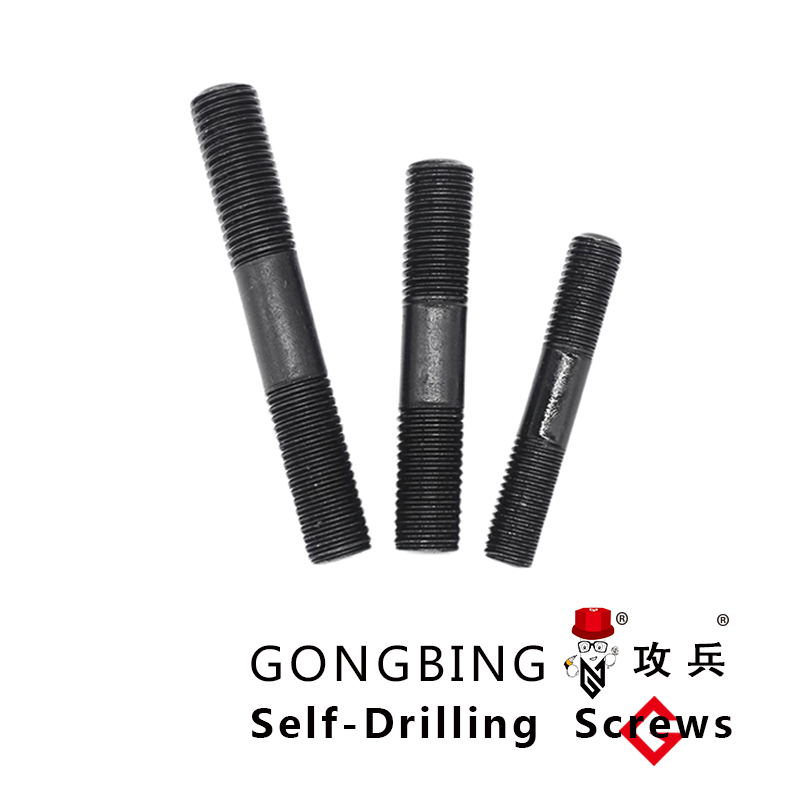
Understanding the technical specifications of double head bolts is crucial for proper selection and application. These fasteners are defined by their material grade, dimensional standards, thread specifications, and performance characteristics. While the term 'double head bolt' broadly refers to a fastener with threads at both ends, it often overlaps with designations like tap end stud bolt (where one end is designed to be permanently screwed into a tapped hole) and double threaded stud bolts (where both ends are fully threaded or have longer threaded sections, often for use with two nuts). Our product, Threaded Rods Bolts Double Head Bolts, is designed for maximum flexibility and performance.
Key Specifications Include:
- Material Grades: ASTM A193 B7, L7, B16 (alloy steel); ASTM A320 L7 (low-temp alloy steel); ASTM A193 B8, B8M, B8C (stainless steel); ASTM A453 Gr. 660 (high-temperature superalloy).
- Thread Specifications: Unified National Coarse (UNC), Unified National Fine (UNF), and ISO Metric threads (e.g., M10, M12, M16, M20). Thread classes typically range from 2A/2B to 3A/3B, indicating precision.
- Diameter Range: From 1/4 inch (M6) up to 4 inches (M100) and beyond for heavy industrial applications.
- Length: Customized based on application, measured from end to end.
- Coatings: Zinc plating (ASTM B633), Hot-dip galvanizing (ASTM A153), Fluoropolymer (PTFE, Xylan), Cadmium plating, Phosphate coating.
- Hardness: Typically Rockwell C (HRC) for alloy steels, often in ranges specified by ASTM standards (e.g., 24-34 HRC for B7).
- Tensile Strength: Minimum strength required before breaking, e.g., 125 ksi (860 MPa) for B7 material.
Typical Product Specification Table:
| Parameter | ASTM A193 Grade B7 | ASTM A193 Grade B8M (Class 1) |
|---|---|---|
| Material | AISI 4140/4142 alloy steel, heat treated | AISI 316 stainless steel, carbide solution treated |
| Tensile Strength (min) | 125 ksi (860 MPa) | 75 ksi (515 MPa) |
| Yield Strength (min) | 105 ksi (725 MPa) | 30 ksi (205 MPa) |
| Hardness (max) | 35 HRC | 22 HRC |
| Temperature Range | -20°F to 1000°F (-29°C to 538°C) | -325°F to 1200°F (-198°C to 649°C) |
| Corrosion Resistance | Good (with coating) | Excellent |
These specifications ensure that fasteners like double head bolts are fit for purpose, delivering predictable performance under specified operating conditions, whether in high-pressure steam lines or corrosive marine environments.
Application Scenarios and Case Studies
The unique design of double head bolts makes them indispensable in a variety of complex and critical fastening applications where single-ended bolts or full threaded rods may not suffice. Their dual threaded nature facilitates robust connections, often allowing for tensioning from both ends, which is crucial for maintaining seal integrity and structural stability.
Key Application Areas:
- Pipeline Flanges: Widely used in oil & gas, petrochemical, and chemical processing plants for connecting flanges. The ability to thread nuts onto both ends allows for even clamping force, preventing leaks in high-pressure and high-temperature systems.
- Heavy Machinery and Equipment: In industries such as mining, construction, and power generation, these bolts secure large, vibrating components, engines, and structural frameworks. Their strength provides resistance against shear forces and fatigue.
- Structural Steel Connections: Used in bridges, buildings, and industrial facilities where structural integrity depends on robust, long-lasting connections, especially where through-bolting is employed.
- Pressure Vessels and Heat Exchangers: Essential for sealing critical components that operate under extreme internal pressures and temperatures, ensuring safety and efficiency.
- Valves and Pumps: Securing the bonnets and casings of industrial valves and pumps, critical for flow control and fluid transfer systems.
Application Case Study: High-Pressure Steam Turbine Assembly
Challenge: A major power generation facility needed to secure the casing of a high-pressure steam turbine. The connection required exceptional resistance to thermal cycling (up to 550°C), high internal pressures (over 200 bar), and vibratory loads, while maintaining a perfect seal to prevent energy loss and ensure operational safety. Traditional bolts experienced creep and loosening over extended operational periods.
Solution: We supplied custom-manufactured double head bolts made from ASTM A193 Grade B16 alloy steel, featuring a proprietary high-temperature anti-galling coating. These bolts were precisely tensioned from both ends using hydraulic torque wrenches, ensuring uniform load distribution across the flange connection. The unthreaded body section provided a controlled elongation zone, enhancing resistance to fatigue.
Outcome: The installation resulted in significantly improved joint integrity. The bolts maintained optimal preload across numerous operational cycles, drastically reducing the incidence of steam leaks and minimizing unscheduled downtime for maintenance. The enhanced material and coating extended the service interval by 30%, leading to substantial operational savings and increased energy efficiency for the plant.
Technical Advantages and Performance Benefits
The design and material integrity of double head bolts offer distinct technical advantages that are critical for achieving long-term reliability and operational efficiency in industrial settings:
- Superior Load Distribution: With nuts on both ends, these bolts allow for precise tensioning and even load distribution across the bolted joint. This minimizes stress concentrations and reduces the risk of joint failure, particularly in large flange connections.
- Enhanced Vibration Resistance: The robust engagement of two nuts provides superior resistance against loosening caused by dynamic loads and vibrations, a common challenge in heavy machinery and rotating equipment.
- Versatility in Assembly: The double-ended design offers greater flexibility during assembly, especially in tight or difficult-to-access spaces where traditional headed bolts might be impractical. They can be inserted from either side and secured.
- Optimized Material Utilization: The unthreaded body section can be specifically engineered to match the shear plane or allow for controlled elongation under tensile stress, optimizing the material's strength properties and reducing material waste compared to fully threaded rods.
- Corrosion and Temperature Resilience: By selecting appropriate materials (e.g., stainless steel, superalloys) and advanced coatings, these bolts can operate effectively in highly corrosive atmospheres (e.g., marine, chemical processing) and extreme temperature ranges, from cryogenic to high-heat applications.
- Reduced Maintenance and Downtime: The inherent strength and durability of properly specified double head bolts lead to fewer failures, reduced need for retightening, and extended operational periods between maintenance cycles, directly contributing to lower operational costs.
Vendor Comparison and Selection Criteria
Selecting the right supplier for double head bolts is as critical as specifying the bolts themselves. A strategic vendor comparison focuses not just on price, but on a holistic assessment of quality, reliability, and service. Decision-makers in B2B procurement should evaluate vendors based on the following key criteria:
Key Vendor Comparison Metrics:
- Quality Assurance & Certifications: Verify adherence to international standards (e.g., ISO 9001, ASTM, DIN). Look for suppliers who provide material test reports (MTRs) and comply with industry-specific requirements (e.g., PED for pressure equipment).
- Manufacturing Capabilities: Assess the vendor's ability to handle diverse materials, sizes, and custom specifications. Expertise in both hot and cold forging, precise threading, and advanced heat treatment processes is crucial.
- Technical Expertise & Support: A strong vendor offers engineering consultation, material selection guidance, and design support to optimize bolt performance for specific applications.
- Lead Time & Fulfillment Reliability: Evaluate the supplier's production capacity, inventory management, and logistics capabilities to ensure timely delivery and minimize project delays.
- Customization Options: The ability to provide tailored solutions for non-standard lengths, special materials, unique thread forms, or specific coatings is a significant advantage.
- Pricing & Value Proposition: While cost-effectiveness is important, prioritize the total cost of ownership, including product longevity, reduced maintenance, and avoidance of failure-related expenses.
- After-Sales Support & Warranty: A reputable vendor offers robust after-sales support, clear warranty terms, and responsive problem-solving.
Our company's commitment to ISO 9001 certified manufacturing processes and adherence to stringent ASTM and DIN standards ensures that every double head bolt produced meets the highest benchmarks for quality and reliability, fostering trust with our global partners.
Customized Solutions for Unique Requirements
Off-the-shelf fasteners, while suitable for many applications, often fall short in highly specialized industrial projects where unique environmental or operational demands exist. Recognizing this, leading manufacturers of double head bolts offer extensive customization capabilities. This flexibility ensures that the fasteners perfectly integrate with specific design parameters, enhancing performance and safety.
Areas of Customization Include:
- Material Composition: Tailoring alloy mixtures to achieve specific properties like enhanced resistance to hydrogen embrittlement, stress corrosion cracking, or improved high-temperature creep strength.
- Dimensional Variations: Custom lengths, unthreaded body diameters, and thread pitches/lengths to accommodate precise joint geometry and material thickness.
- Specialized Coatings: Application of advanced coatings such as proprietary ceramic coatings for extreme wear resistance, or multi-layer fluoropolymer coatings for superior chemical and UV resistance beyond standard options.
- Unique Thread Forms: Custom thread profiles for specific sealing requirements or enhanced resistance to vibrational loosening.
- Specific Testing Protocols: Implementing project-specific testing beyond standard requirements, such as cryogenic impact testing, specific fatigue testing regimes, or comprehensive non-destructive examination (NDE) to meet stringent project specifications.
- Serialization and Traceability: Individual bolt marking and comprehensive documentation for critical applications requiring full traceability from raw material to final installation.
Our engineering team collaborates closely with clients to understand the nuances of their applications, designing and manufacturing bespoke double head bolts that deliver optimized performance and extend the service life of critical infrastructure.
FAQ Module: Essential Information for Decision Makers
Q1: What are the primary advantages of double head bolts over fully threaded rods or conventional bolts?
A1: Double head bolts offer several advantages: the unthreaded body portion allows for a controlled elongation and improves fatigue resistance; nuts on both ends enable superior tensioning and load distribution, enhancing joint integrity; and they provide greater flexibility in assembly, especially in tight spaces. Fully threaded rods can be prone to thread damage along their length, while conventional headed bolts may not offer the same flexibility for through-bolting applications.
Q2: How are material grades selected for specific industrial applications?
A2: Material selection is dictated by the operating environment. For high temperatures and pressures, ASTM A193 Grade B7 or B16 alloy steel is common. For corrosive environments, ASTM A193 Grade B8 or B8M (stainless steel) is preferred. Low-temperature applications may require ASTM A320 Grade L7. Our technical team assists in material selection based on temperature, pressure, chemical exposure, and mechanical load requirements, ensuring compliance with relevant standards.
Q3: What lead times can be expected for standard versus customized double head bolts?
A3: For standard stock items, lead times are typically 1-2 weeks, depending on order volume and current inventory. Customized orders, involving specific materials, lengths, or coatings, generally require 4-8 weeks, as they involve procurement of special raw materials and dedicated manufacturing runs. We strive to provide accurate lead time estimates at the time of quotation and maintain transparent communication throughout the production cycle.
Q4: What warranty and after-sales support do you offer?
A4: We provide a comprehensive warranty against manufacturing defects and non-conformance to specified material properties and dimensions. Our warranty period and terms are detailed in our sales agreements. Post-purchase, our dedicated customer support team offers technical assistance, installation guidance, and resolves any issues promptly to ensure continued client satisfaction and product performance. Our commitment extends beyond delivery to long-term partnership.
Q5: How do your products meet Google standards for Authoritativeness and Trustworthiness?
A5: Our products and processes are ISO 9001 certified, ensuring consistent quality management. We provide full material traceability and adhere to international standards like ASTM, ANSI, and DIN. Our authoritative standing is built on years of serving major industrial clients, evidenced by our product performance in critical applications. Trustworthiness is further reinforced by transparent lead times, robust warranty commitments, dedicated customer support, and providing verifiable test data for all batches. We openly share product certifications and references upon request, building confidence with our partners.
Conclusion
Double head bolts are more than just fasteners; they are critical engineered components that underpin the structural integrity and operational efficiency of modern industrial infrastructure. Their specialized design, coupled with advanced material science and precision manufacturing, enables them to perform reliably in the most challenging environments. From the high-pressure confines of petrochemical plants to the dynamic stresses of heavy machinery, these fasteners provide the assurance of secure, long-lasting connections. As industries continue to evolve, demanding greater performance, safety, and sustainability, the role of high-quality, expertly manufactured double head bolts will only become more pronounced, driving innovation in fastening technology and contributing to the global industrial landscape.
References
- American Society for Testing and Materials (ASTM). "ASTM A193/A193M - 20 Standard Specification for Alloy-Steel and Stainless Steel Bolting for High Temperature or Other Special Purpose Applications." ASTM International, 2020.
- International Organization for Standardization (ISO). "ISO 898-1:2013 Mechanical properties of fasteners made of carbon steel and alloy steel — Part 1: Bolts, screws and studs with specified property classes — Coarse thread and fine pitch thread." ISO, 2013.
- ASME. "ASME B18.2.1-2012 Square and Hex Bolts and Screws (Inch Series)." American Society of Mechanical Engineers, 2012.
- Fasteners Technology International. "The Fastener Industry: Global Market Trends and Future Outlook." FTI Journal, various issues.
-
Guide to High Quality Stainless Steel Expansion FastenersNewsApr.16,2026
-
Ultimate Guide to Industrial Sheet Metal Expansion AnchorsNewsApr.16,2026
-
High Efficiency Fastening Guide for Plastic Expansion RivetsNewsApr.16,2026
-
Plastic Expanding Nut Guide for Applications and BenefitsNewsApr.16,2026
-
Ultimate Guide to Stability and Use of Nail Expansion AnchorNewsApr.16,2026
-
Guide to Choosing and Installing the Right Metal Expansion ScrewNewsApr.16,2026