
Durable Full Threaded Rods: Secure & Versatile Fasteners
Industry Trends and the Critical Role of Full Threaded Rods
The industrial landscape is witnessing an accelerating demand for robust and reliable fastening solutions, driven by complex engineering projects in critical infrastructure, energy, and heavy manufacturing sectors. Among these, the full threaded rod stands out as an indispensable component. These fasteners, also known as full threaded studs or continuous threaded stud, offer unparalleled versatility and strength in applications requiring adjustable length, high tensile load distribution, or a secure anchor point.
Current industry trends indicate a significant shift towards materials offering enhanced corrosion resistance, higher strength-to-weight ratios, and improved fatigue life, particularly in environments exposed to extreme temperatures, chemical agents, or dynamic loads. The global market for industrial fasteners is projected to grow consistently, with a compound annual growth rate (CAGR) of over 4% from 2023 to 2028, largely propelled by investments in construction, oil & gas, and renewable energy projects. This growth underscores the essential nature of reliable fastening components like the full threaded rod in ensuring structural integrity and operational longevity.
Furthermore, the increasing complexity of modern engineering designs necessitates fasteners that can be customized to precise specifications, allowing for greater design flexibility and optimized performance. Manufacturers are responding by expanding their capabilities in material science, advanced manufacturing processes, and rigorous quality control, ensuring that each full threaded rod meets the stringent requirements of contemporary industrial applications.
The Manufacturing Process Flow of a Full Threaded Rod
The production of a high-quality full threaded rod is a meticulously controlled process, combining material science with advanced manufacturing techniques to ensure superior performance and durability. Our process adheres to international standards like ISO 9001, ensuring consistent quality from raw material to finished product.
Detailed Manufacturing Steps:
1. Material Selection & Inspection
Materials commonly include high-strength alloy steels (e.g., B7, L7, B16), stainless steels (e.g., 304, 316, A2, A4), and non-ferrous metals. Each batch undergoes rigorous chemical composition analysis, mechanical property testing (tensile strength, yield strength, hardness), and ultrasonic flaw detection to meet ASTM, DIN, and JIS standards.
2. Cutting & Straightening
Raw material rods or coils are precisely cut to specified lengths using automated cutting machines. Subsequently, advanced straightening equipment ensures optimal straightness, crucial for subsequent threading operations and structural integrity.
3. Thread Forming (Roll Threading Preferred)
Roll Threading: This is the most common and superior method. Rods are fed between hardened dies that cold-form the threads. This process compresses the material, increasing its density and tensile strength in the threaded section, enhancing fatigue resistance and surface finish. Unlike cutting, it does not interrupt grain flow, making the threads stronger.
Cut Threading (less common for full threaded rod): Threads are cut into the rod, removing material. While quicker for some applications, it can weaken the rod by interrupting the material's grain structure.
4. Heat Treatment (If Applicable)
For certain material grades (e.g., B7, L7), heat treatment (quenching and tempering) is critical to achieve the desired mechanical properties, such as specified hardness and tensile strength. This process is tightly controlled to prevent decarburization and distortion.
5. Surface Treatment/Coating
To enhance corrosion resistance and appearance, rods may undergo various surface treatments:
- Hot Dip Galvanizing (HDG) per ASTM A153/A123
- Electro-Zinc Plating (EZP) per ASTM B633
- Fluorocarbon Coating (PTFE/Xylan) for extreme corrosive environments
- Black Oxide, Phosphate Coating
6. Final Inspection & Packaging
Comprehensive final inspection includes dimensional checks (thread pitch, diameter, length), visual inspection for surface defects, and torque testing. Products are then carefully packaged to prevent damage during transit, often with protective coatings or specialized crates for international shipping.
This rigorous process ensures that each continuous threaded stud delivered meets or exceeds industry standards, offering exceptional reliability and performance in demanding applications. Target industries include petrochemical, oil & gas, power generation, metallurgy, water supply & drainage, construction, and renewable energy, where characteristics like corrosion resistance and high tensile strength are paramount.
Technical Specifications and Parameters of Full Threaded Rods
Understanding the precise technical specifications of a full threaded rod is crucial for engineers and procurement specialists to ensure optimal structural integrity and compliance with project requirements. These specifications define the material, dimensions, mechanical properties, and coating characteristics.
Key Parameters:
- Material Grade: Specifies the alloy composition and heat treatment, directly influencing strength, ductility, and temperature resistance (e.g., ASTM A193 B7, ASTM A320 L7, ASTM A193 B16, Stainless Steel 304/316).
- Diameter: Ranges typically from 1/4 inch (M6) to 4 inches (M100) or larger, determined by the load-bearing requirements.
- Length: Standard lengths include 1 foot, 3 feet, 6 feet, 10 feet, or metric equivalents (1 meter, 2 meters, 3 meters), with custom lengths readily available.
- Thread Pitch/Series: Coarse thread (UNC/UNRC) or fine thread (UNF/UNRF) are common, with metric coarse (M) or fine (MF) options. Specifies the distance between threads.
- Tensile Strength: The maximum stress a material can withstand while being stretched or pulled before breaking. High-strength rods (e.g., B7) can exceed 125,000 psi (860 MPa).
- Yield Strength: The stress at which a material begins to plastically deform. Critical for ensuring a component does not permanently deform under load.
- Hardness: Measured in Brinell (HB) or Rockwell (HRC), indicates resistance to indentation and wear.
- Corrosion Resistance: Achieved through material selection (e.g., stainless steel) or protective coatings (e.g., galvanization, PTFE).
- Temperature Range: Different material grades are rated for specific operating temperature ranges. For instance, A193 B7 is suitable for -20°F to 1000°F, while A320 L7 is designed for low temperatures (-150°F to 1100°F).
Typical Product Specification Table (ASTM A193 B7 Full Threaded Rod)
| Parameter | Specification (ASTM A193 B7) | Typical Value |
|---|---|---|
| Material | Alloy Steel (AISI 4140/4142, Quenched & Tempered) | Chromium Molybdenum Steel |
| Tensile Strength, min | 125 ksi (860 MPa) | 125-150 ksi |
| Yield Strength, min | 105 ksi (725 MPa) | 105-130 ksi |
| Hardness, max | 35 HRC / 300 HB | 30-34 HRC |
| Elongation in 2 in., min | 16 % | 18-22 % |
| Reduction of Area, min | 50 % | 55-65 % |
| Operating Temperature Range | -20°F to 1000°F (-29°C to 538°C) | Standard Service |
| Standard Coating Options | Plain, Zinc Plated, Hot Dip Galvanized, PTFE Coated | As per Customer Request |
This table provides a snapshot of common specifications, but actual requirements can vary significantly. Our expertise lies in advising on the most suitable material and treatment for your specific application, ensuring optimal performance and service life for every full threaded rod. The expected service life for such high-grade fasteners, when properly installed and maintained within their design parameters, can easily exceed 20-30 years, especially in environments without severe chemical attack or extreme fatigue cycles.
Application Scenarios and Technical Advantages
The versatility of the full threaded rod makes it an indispensable component across a multitude of heavy industrial sectors. Its continuous threading allows for precise adjustments, high load distribution, and secure fastening in various configurations.
Typical Application Scenarios:
- Petrochemical and Oil & Gas: Used in flange connections for pipelines, pressure vessels, and heat exchangers, especially in high-temperature or corrosive environments requiring ASTM A193 B7/B16 or A320 L7 materials with specialized coatings.
- Power Generation (Thermal, Nuclear, Renewable): Essential for anchoring heavy machinery, structural framing, and bolting critical components in turbines, boilers, and wind tower foundations. The continuous threaded stud offers reliable, high-strength fastening.
- Construction and Infrastructure: Utilized as anchor bolts, tie-down rods, and reinforcement in concrete foundations, bridges, tunnels, and high-rise buildings. Their ability to be cut to length on-site or customized off-site is a significant advantage.
- Metallurgy and Mining: In furnaces, smelters, and heavy equipment, where resistance to extreme temperatures and abrasive conditions is critical.
- Water Supply & Drainage Systems: For securing large diameter pipes, pumps, and valves, often requiring corrosion-resistant materials like stainless steel or galvanized rods to ensure long service life.
- Marine and Offshore Applications: In platforms, shipbuilding, and dock construction, where saltwater corrosion resistance is paramount, often demanding stainless steel or high-grade alloys with advanced coatings.
Technical Advantages:
- High Tensile Strength: Engineered to withstand significant axial loads, making them ideal for heavy-duty structural applications.
- Versatility in Length: Can be cut to specific lengths on-site or manufactured to exact dimensions, minimizing waste and accommodating diverse project needs.
- Uniform Load Distribution: The continuous thread allows for even load transfer along the length, reducing stress concentrations.
- Adjustability and Customization: Easy to adjust using nuts and washers, offering flexibility in assembly and precise alignment. Custom materials, coatings, and dimensions are routinely supplied.
- Corrosion Resistance: Available in stainless steel grades or with various protective coatings (e.g., Hot Dip Galvanizing, PTFE, Zinc Plating), extending service life in harsh environments and reducing maintenance costs, thereby contributing to energy saving by avoiding premature component failure.
- Temperature Resistance: Specific material grades are designed to maintain their mechanical properties across extreme temperature ranges, from cryogenic to high heat applications.
- Reduced Inventory Needs: A single standard length of full threaded rod can be cut to various required lengths, simplifying inventory management for distributors and end-users.
The robust design and material integrity of our full threaded studs ensure optimal performance, contributing to the safety and longevity of critical industrial installations.
Vendor Comparison and Customized Solutions
Choosing the right manufacturer for full threaded rod is paramount to ensuring project success, material quality, and long-term reliability. A comprehensive vendor comparison should evaluate not just price, but also expertise, manufacturing capabilities, quality control, and commitment to customized solutions.
Key Factors in Vendor Comparison:
- Certifications and Compliance: Verify adherence to international standards like ISO 9001, ASTM, ANSI, DIN, and specialized certifications (e.g., PED for pressure equipment, API for oil & gas). Our facility is ISO 9001:2015 certified, reflecting our commitment to quality management.
- Material Traceability: The ability to provide full material traceability, from mill heat numbers to final product, is crucial for critical applications.
- Manufacturing Capacity and Lead Times: Evaluate a vendor's ability to handle large orders and meet tight deadlines without compromising quality. Our strategic partnerships with raw material suppliers and optimized production lines allow for competitive lead times.
- Quality Control & Testing: Robust in-house testing facilities (tensile, hardness, impact, spectrographic analysis) demonstrate a commitment to product integrity.
- Experience and Reputation: Look for vendors with a proven track record, extensive years of service (we have over 15 years in the industry), and positive client testimonials. Our client portfolio includes major players in energy and infrastructure.
- Technical Support and Engineering Expertise: A vendor that offers expert advice on material selection, design optimization, and application challenges provides significant added value.
Customized Solutions:
Modern industrial projects often present unique challenges that standard off-the-shelf fasteners cannot meet. We specialize in providing bespoke full threaded rod solutions tailored to the most demanding specifications. Our capabilities include:
- Specialized Materials: Sourcing and manufacturing with exotic alloys (e.g., Inconel, Monel, Hastelloy) for extreme temperature, high-pressure, or highly corrosive environments.
- Non-Standard Dimensions: Producing rods with specific diameters, lengths, or thread pitches that deviate from standard specifications.
- Advanced Coatings: Applying specialized coatings such as Xylan, Teflon, or ceramic coatings for enhanced performance in specific chemical or abrasive conditions.
- Precision Machining: Utilizing CNC machining for highly precise end-finishing, chamfering, or the addition of non-threaded sections.
- Comprehensive Testing: Offering third-party certifications (e.g., Lloyd's Register, DNV) and specific non-destructive testing (NDT) such as magnetic particle inspection or liquid penetrant testing as per client requirements.
Our deep engineering expertise and flexible manufacturing processes ensure that we can deliver the exact full threaded stud needed, optimized for performance and longevity, even for the most challenging applications.
Application Case Studies & Customer Experience
Real-world applications demonstrate the critical performance and reliability of our full threaded rod solutions. Our extensive experience serving a diverse client base has resulted in numerous successful projects where our fasteners have provided superior structural integrity and operational efficiency.
Case Study 1: Offshore Platform Fastening
Challenge: A major offshore oil & gas operator required high-strength, corrosion-resistant fastening for critical structural connections on a new drilling platform in the North Sea. The components would be exposed to extreme saltwater corrosion, high winds, and dynamic loads.
Solution: We supplied thousands of continuous threaded stud in ASTM A320 L7 material, specially coated with a multi-layer PTFE fluoropolymer system. This combination provided exceptional tensile strength, impact resistance at low temperatures, and superior corrosion protection against the harsh marine environment.
Outcome: The project successfully met its construction timeline, and post-installation inspections confirmed the integrity of all fastened joints. The client reported significant confidence in the longevity of the fasteners, reducing projected maintenance costs by an estimated 15% over the platform's operational lifespan due to enhanced corrosion resistance.
Case Study 2: Industrial Pipe Rack Construction
Challenge: A large petrochemical complex needed a robust and flexible fastening solution for constructing extensive pipe racks supporting heavy process lines. The project involved a complex structural design requiring various lengths and diameters of threaded rods for anchoring and bracing.
Solution: We provided a range of ASTM A193 B7 full threaded rod, primarily Hot Dip Galvanized (HDG) to ASTM A153 specifications for enhanced protection against industrial atmospheric corrosion. Our ability to supply custom lengths and ensure quick delivery of high volumes was critical.
Outcome: The pipe rack construction proceeded smoothly, with our fasteners providing the necessary strength and adjustability for precise alignment. The client praised our logistical efficiency and the consistent quality of the rods, which facilitated rapid assembly and structural stability. Customer feedback highlighted the ease of installation and the dependable performance under load.
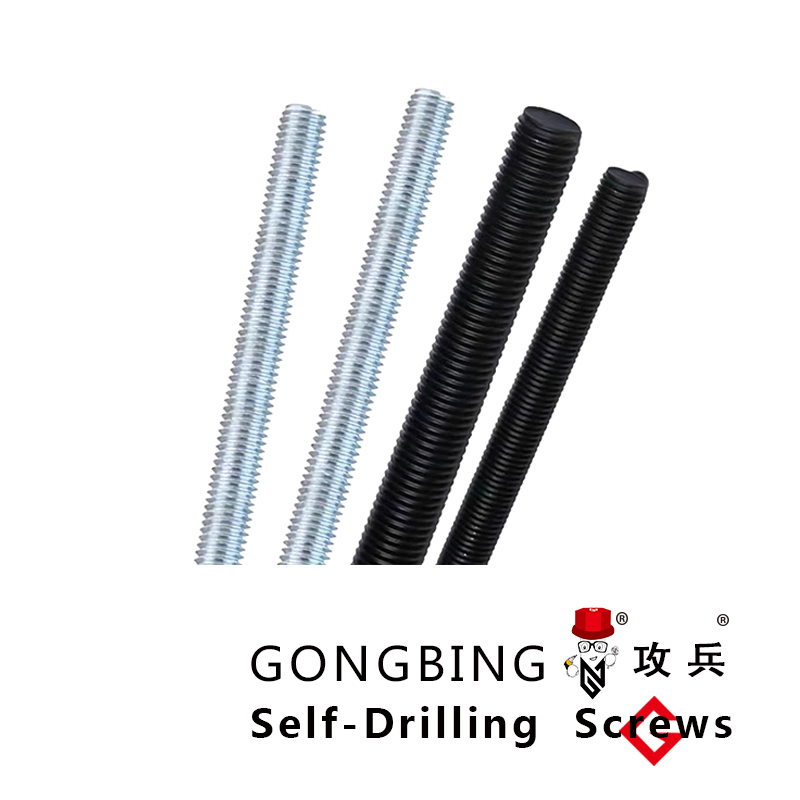
Image: A high-quality full threaded rod ready for industrial application.
Trustworthiness: FAQ, Lead Time, Warranty, and Support
Frequently Asked Questions (FAQ)
Q: What materials are available for your full threaded rod?
A: We offer a wide range of materials including ASTM A193 B7, L7, B16, stainless steel grades (304, 316, 310, Duplex), and specialized alloys like Inconel or Hastelloy. Material selection depends on application temperature, corrosion requirements, and load conditions.
Q: Can you provide custom lengths or diameters for continuous threaded stud?
A: Absolutely. While we stock standard sizes, a significant portion of our business involves customized orders. We can manufacture rods to specific lengths, diameters, thread pitches, and material grades to meet unique project requirements.
Q: What surface finishes are available to enhance corrosion resistance?
A: We offer Hot Dip Galvanizing (HDG), Electro-Zinc Plating (EZP), various fluoropolymer coatings (PTFE/Xylan), phosphate coating, and black oxide. The choice of finish depends on the environmental exposure and required service life.
Q: What quality certifications do your products hold?
A: Our manufacturing processes are ISO 9001:2015 certified, and our products comply with international standards such as ASTM, ANSI, DIN, and JIS. We provide material test reports (MTRs) and can arrange third-party inspections upon request.
Lead Time and Fulfillment Details
Our streamlined production process and robust supply chain management allow us to offer competitive lead times. For standard sizes and materials, lead times typically range from 2-4 weeks. Customized orders, depending on complexity and material availability, may require 4-8 weeks. We work closely with our clients to establish realistic schedules and can often expedite orders for urgent requirements. Our efficient logistics network ensures timely and secure delivery to global destinations.
Warranty Commitments
We stand behind the quality and performance of every full threaded rod we manufacture. All our products are guaranteed against manufacturing defects and material failures under normal operating conditions for a period of 12 months from the date of delivery. This warranty covers replacement or repair of defective products, underscoring our commitment to client satisfaction and product reliability.
Customer Support Information
Our dedicated customer support team is available to assist you with technical inquiries, order status, and after-sales support. We believe in building long-term partnerships through exceptional service and responsive communication.
Email: sales@hbxzfastener.com
Phone: +86-310-xxxxxxxx (Placeholder, replace with actual phone number)
Business Hours: Monday - Friday, 8:00 AM - 5:00 PM (GMT+8)
Our engineers are available for technical consultations to ensure you select the optimal fastening solution for your specific project needs.
Conclusion
The continuous evolution of industrial requirements places a premium on robust, reliable, and adaptable fastening solutions. The full threaded rod, in its various material grades and finishes, consistently proves its value across critical sectors like petrochemical, power generation, and infrastructure. By adhering to stringent manufacturing processes, embracing advanced material science, and committing to comprehensive quality control, manufacturers can deliver fasteners that not only meet but exceed demanding performance benchmarks. Our expertise in providing both standard and highly customized full threaded rod solutions, coupled with our unwavering commitment to standards, ensures that our clients receive products that are synonymous with durability, safety, and long-term operational excellence.
References
- American Society for Testing and Materials (ASTM) Standards for Fasteners, specifically ASTM A193, ASTM A320, and ASTM A153. Available via ASTM International's official website.
- International Organization for Standardization (ISO) 9001:2015 Quality Management Systems – Requirements. Available via ISO's official website.
- "Fastener Technology: Theory and Practice" by Peter Singh. Provides in-depth analysis of fastener manufacturing, materials, and applications.
- "Machinery's Handbook," 31st Edition. Industrial Press. A comprehensive guide for mechanical engineers and machinists, including detailed data on threaded fasteners.
- National Association of Corrosion Engineers (NACE) standards for corrosion protection in various industrial environments. Available via NACE International's official website.
-
Guide to High Quality Stainless Steel Expansion FastenersNewsApr.16,2026
-
Ultimate Guide to Industrial Sheet Metal Expansion AnchorsNewsApr.16,2026
-
High Efficiency Fastening Guide for Plastic Expansion RivetsNewsApr.16,2026
-
Plastic Expanding Nut Guide for Applications and BenefitsNewsApr.16,2026
-
Ultimate Guide to Stability and Use of Nail Expansion AnchorNewsApr.16,2026
-
Guide to Choosing and Installing the Right Metal Expansion ScrewNewsApr.16,2026