
Durable Full Threaded Rods: Strong, Versatile Fasteners
Industry Trends and the Critical Role of Full Threaded Rods
The global industrial landscape is continuously evolving, driven by advancements in infrastructure, energy, and manufacturing sectors. Within this dynamic environment, the demand for high-performance fastening solutions is paramount. Among these, the full threaded rod stands out as a fundamental component, offering unparalleled versatility and structural integrity. Often referred to as full threaded studs or continuous threaded stud, these rods are indispensable in applications requiring consistent fastening along an entire length, providing robust connections in diverse engineering projects.
Current industry trends emphasize durability, material traceability, and adherence to stringent international standards. With increasing pressure for sustainable and reliable operations, businesses in petrochemical, power generation, and construction are seeking fastening solutions that offer extended service life and exceptional resistance to environmental stressors. This necessitates not only superior material quality but also precision manufacturing and rigorous testing. The versatility of these rods allows for customized solutions across a spectrum of requirements, from high-temperature environments to corrosive atmospheres, making them a cornerstone of modern industrial construction and maintenance.
The market for industrial fasteners is projected to grow significantly, driven by infrastructure development in emerging economies and the refurbishment of aging facilities in developed regions. According to recent market analysis, the global industrial fasteners market size was valued at USD 86.8 billion in 2022 and is expected to expand at a compound annual growth rate (CAGR) of 4.3% from 2023 to 2030 (Source: Grand View Research). This growth underscores the enduring importance of reliable components like threaded rods in supporting critical industrial applications worldwide.
The Manufacturing Process of Full Threaded Rods: Precision and Quality Assurance
The production of a high-quality full threaded rod involves a meticulous multi-stage process designed to ensure structural integrity, dimensional accuracy, and optimal performance under demanding conditions. Our manufacturing expertise guarantees products that meet and exceed global industry benchmarks. This intricate process transforms raw material into robust fastening solutions.
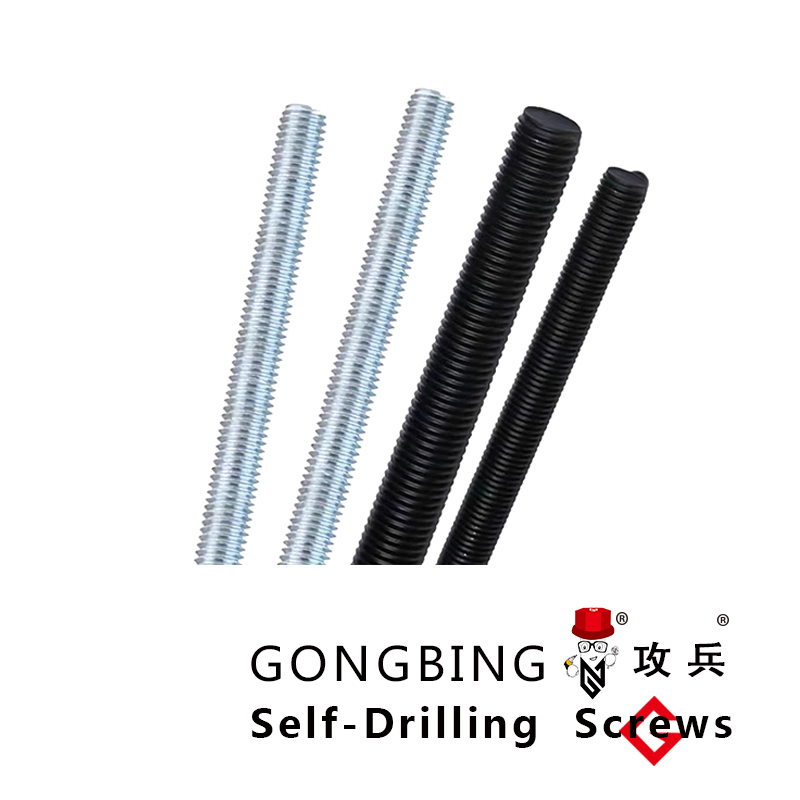
Process Flow Schematic:
- 1. Material Selection & Preparation: This critical initial phase involves selecting high-grade raw materials such as Carbon Steel (e.g., A36, Grade B7), Stainless Steel (e.g., 304, 316), or Alloy Steel (e.g., B7, B16). Materials are chosen based on the intended application's mechanical and chemical requirements, including resistance to corrosion, high temperatures, or specific load capacities. Rods are cut to approximate length, ensuring minimal waste and preparing for subsequent forming processes.
- 2. Cold Heading or Forging (for larger diameters): For smaller to medium diameters, cold heading is employed, a process that forms the rod's basic shape without external heat, enhancing material strength through work hardening. For larger diameter rods or specific strength requirements, hot forging may be used, which involves heating the material to a high temperature before shaping, ensuring optimal grain structure.
- 3. Thread Rolling: Unlike cutting threads, which removes material and can create stress points, thread rolling deforms the material to create threads. This process cold works the material, compacting the grain structure at the thread roots and flanks, significantly increasing tensile strength, fatigue resistance, and overall durability. It creates a stronger, more resilient thread profile compared to cut threads.
- 4. Heat Treatment: Depending on the material grade and desired mechanical properties (e.g., hardness, tensile strength, ductility), rods undergo controlled heat treatment processes such as quenching and tempering. This refines the microstructure of the steel, optimizing its mechanical performance and ensuring it meets specific ASTM or ISO standards for strength and toughness.
- 5. Surface Finishing & Coating: To enhance corrosion resistance and extend service life, various surface finishes and coatings are applied. Common options include hot-dip galvanizing, zinc plating (clear, yellow, black), cadmium plating, fluoropolymer coatings (e.g., PTFE), and black oxide. These treatments are chosen based on the application environment, such as marine, chemical, or high-humidity settings, directly impacting the product's longevity and performance.
- 6. Quality Control & Testing: Throughout the entire manufacturing process, rigorous quality control measures are implemented. This includes dimensional inspections (thread pitch, diameter, length), mechanical testing (tensile strength, yield strength, hardness, elongation, reduction of area), chemical analysis of materials, and non-destructive testing (NDT) if required. Adherence to standards like ISO 9001, ANSI, ASTM, and DIN ensures consistent product quality and reliability.
- 7. Packaging & Dispatch: Finished continuous threaded stud products are carefully packaged to prevent damage during transit, often bundled and secured, and then prepared for dispatch to clients worldwide.
This comprehensive process guarantees that each full threaded rod delivers superior performance, especially in target industries like petrochemicals, metallurgy, and water supply & drainage, where corrosion resistance and extended service life translate directly to energy saving and reduced maintenance costs.
Technical Specifications and Parameters for Full Threaded Rods
Understanding the technical specifications of a full threaded rod is crucial for engineers and procurement specialists to ensure optimal performance and safety in industrial applications. The following table outlines typical parameters and standards that define the quality and suitability of these essential fasteners.
| Parameter | Typical Specification/Standard | Description/Benefits |
|---|---|---|
| Material Grade | ASTM A193 B7, B16, B8/B8M; ASTM A307; ASTM A36; Stainless Steel 304/316 | Determines mechanical properties (tensile strength, yield strength) and corrosion resistance. B7 for high tensile, B8 for corrosion. |
| Diameter Range | 1/4 inch to 4 inches (M6 to M100) | Available in various sizes to accommodate diverse load requirements and structural connections. |
| Length Range | 1 foot to 12 feet (0.3m to 3.6m) or custom lengths | Flexible lengths, often cut to size on-site, minimizing waste and enhancing application flexibility. |
| Thread Type | UNC (Coarse), UNF (Fine), Metric Coarse (M), Metric Fine (MF) | Standardized thread profiles ensure compatibility with nuts and allow for precise torque application. |
| Tensile Strength | Min. 125,000 psi (860 MPa) for B7; Min. 75,000 psi (515 MPa) for 304 Stainless | Critical for resisting pulling forces; indicates the maximum stress a material can withstand before breaking. |
| Yield Strength | Min. 105,000 psi (720 MPa) for B7; Min. 30,000 psi (205 MPa) for 304 Stainless | Measures the stress at which a material begins to plastically deform, indicating elastic limit. |
| Hardness | Rockwell C 22-32 (B7); Rockwell B 80-95 (304 Stainless) | Resistance to indentation and scratching; relates to wear resistance and structural integrity. |
| Surface Finish/Coating | Hot-Dip Galvanized, Zinc Plated, PTFE Coated, Black Oxide, Plain | Provides corrosion protection and reduces friction during assembly, enhancing service life in harsh environments. |
| Testing Standards | ISO 898-1, ASTM F1554, ASTM A193, DIN 976-1 | Ensures compliance with international quality and performance benchmarks, validating material and mechanical properties. |
These specifications underscore the precision engineering involved in producing a reliable continuous threaded stud, ensuring it meets the rigorous demands of industrial use, from the smallest utility connection to critical structural support in heavy industry.
Versatile Application Scenarios for Full Threaded Rods
The inherent design and robust properties of full threaded studs make them incredibly versatile across a multitude of industrial applications. Their ability to be cut to custom lengths and accept nuts along their entire shaft provides unparalleled flexibility in construction, maintenance, and manufacturing processes. These fasteners are crucial for securing, suspending, and connecting components in environments where reliability cannot be compromised.
Target Industries and Specific Use Cases:
- Petrochemical & Oil & Gas: In refineries, chemical plants, and offshore platforms, threaded rods are used for pipe hanging, supporting heavy equipment, and connecting flanges in high-temperature and corrosive environments. Materials like ASTM A193 B7 with appropriate coatings (e.g., PTFE) are essential for resisting chemical attack and extreme thermal cycling.
- Metallurgy & Heavy Manufacturing: Within steel mills, foundries, and heavy machinery assembly, these rods serve as anchor bolts, structural reinforcements, and tensioning elements. Their high tensile strength allows for secure fastening of massive components, ensuring operational stability and safety.
- Water Supply & Drainage Systems: For municipal water treatment plants, pumping stations, and large-scale irrigation projects, corrosion-resistant full threaded studs (e.g., Stainless Steel 316, Hot-Dip Galvanized) are vital for securing pipes, valves, and structural elements against constant exposure to moisture and various chemicals, ensuring the integrity of critical infrastructure.
- Construction & Infrastructure: From high-rise buildings and bridges to tunnels and roadways, these rods are employed in concrete formwork, structural bracing, seismic anchoring, and pre-stressing applications. They provide a reliable means of transferring loads and ensuring long-term structural stability.
- Power Generation (Conventional & Renewable): In power plants, including nuclear, thermal, and hydro facilities, as well as wind turbine installations, full threaded rods are used for anchoring heavy machinery, supporting electrical conduits, and securing critical structural components. Their ability to withstand dynamic loads and harsh environmental conditions is paramount.
- HVAC & Plumbing: In commercial and industrial buildings, these rods are extensively used for suspending ductwork, pipes, and electrical trays from ceilings, offering a robust and adjustable support system.
The broad applicability of the full threaded rod underscores its significance as a go-to fastener where adaptability, strength, and durability are critical operational requirements. Its continuous thread allows for precise adjustment and secure engagement over any desired length, making it invaluable for complex assemblies.
Technical Advantages and Performance Benefits
The adoption of full threaded studs offers distinct technical advantages that contribute to enhanced project efficiency, safety, and long-term structural integrity. These benefits are derived from their unique design and robust manufacturing processes, setting them apart from other fastening solutions.
- Uniform Strength and Load Distribution: The continuous thread along the entire length of the rod ensures consistent engagement with mating nuts, allowing for uniform load distribution. This minimizes stress concentrations and enhances the overall structural integrity of the connection, a critical factor in high-stress applications.
- Exceptional Versatility and Adaptability: Full threaded rods can be easily cut to any required length on-site, providing immense flexibility for varying project specifications. This reduces waste and allows for precise adjustments, making them suitable for custom applications where standard bolt lengths are insufficient. Their adaptability as a continuous threaded stud means they can function as anchor bolts, hanger rods, or structural connectors.
- Enhanced Torque Resistance and Security: The rolled thread profile (as opposed to cut threads) creates a stronger, more resilient surface that resists stripping and deformation under high torque loads. This results in more secure and durable connections, essential for applications subjected to vibration or dynamic stresses.
- Superior Corrosion Resistance (with coatings): When combined with appropriate coatings like hot-dip galvanizing, PTFE, or zinc plating, threaded rods exhibit excellent resistance to corrosion, chemical attack, and environmental degradation. This significantly extends their service life, especially in harsh outdoor, marine, or chemical processing environments, thereby reducing maintenance costs and ensuring long-term operational reliability.
- Cost-Effectiveness and Inventory Management: Due to their versatility, a single type of threaded rod can serve multiple applications by simply cutting it to length. This simplifies inventory management for contractors and manufacturers, reducing the need to stock numerous specific bolt sizes and leading to significant cost savings.
- Streamlined Installation: The continuous thread allows for easy engagement with nuts from either end, simplifying assembly in complex or restricted spaces. This contributes to faster installation times and increased labor efficiency on project sites.
- High-Temperature Performance: Specific material grades, such as ASTM A193 B16, are engineered to maintain their mechanical properties under elevated temperatures, making them ideal for critical applications in power generation and petrochemical industries where thermal stability is paramount.
These advantages collectively position the full threaded rod as a preferred choice for engineers and project managers seeking robust, adaptable, and reliable fastening solutions that deliver long-term value and performance.
Vendor Comparison: Selecting the Right Full Threaded Rod Manufacturer
Choosing the right manufacturer for full threaded studs is a critical decision that impacts project timelines, budget, and long-term operational reliability. A discerning buyer must look beyond mere pricing and evaluate vendors based on a holistic set of criteria encompassing quality, capability, and customer support. The following comparison highlights key factors to consider.
| Evaluation Criteria | Leading Manufacturers/Our Offering | Less Reputable/Standard Vendors |
|---|---|---|
| Quality Certifications | ISO 9001:2015, CE, ASTM, ANSI, DIN compliance; Full Material Traceability (MTRs) | Limited or no verifiable certifications; inconsistent material documentation. |
| Material Grades & Coatings | Wide range of specialty steels (B7, B16, 316L, Duplex), advanced coatings (PTFE, ceramic-metallic) | Limited to common grades (e.g., A307, basic SS304), standard zinc plating only. |
| Customization Capabilities | Full engineering support for custom lengths, diameters, thread types, material compositions, and specific testing. | Minimal or no customization; only offer standard off-the-shelf products. |
| Lead Times & Logistics | Reliable, communicated lead times; efficient global logistics network, express options available. | Unpredictable lead times; limited shipping options, potential for delays. |
| Technical Support | Dedicated technical specialists, application engineers, post-sales support. | Basic customer service; limited technical expertise to address complex issues. |
| Warranty & After-Sales | Comprehensive warranty, clear return/replacement policies, responsive issue resolution. | Vague or non-existent warranty; difficult to resolve post-delivery issues. |
Our commitment to meeting these high standards ensures that every full threaded rod delivered adheres to the strictest quality protocols, providing our clients with peace of mind and unwavering performance.
Customized Solutions for Specialized Projects
Recognizing that no two industrial projects are exactly alike, we specialize in providing bespoke full threaded rod solutions tailored to the unique demands of each application. Our engineering team collaborates closely with clients to understand specific operational parameters, environmental challenges, and performance expectations, ensuring the delivered product is perfectly suited for its intended purpose.
Key Areas of Customization:
- Material Composition: Beyond standard carbon and stainless steels, we can supply rods in exotic alloys (e.g., Duplex, Super Duplex, Inconel) for extreme corrosion resistance, high temperatures, or specific chemical compatibility requirements.
- Dimensional Specifics: Custom lengths, diameters, and thread pitches are precisely manufactured to integrate seamlessly with existing designs or unique structural requirements, ensuring an exact fit for your continuous threaded stud needs.
- Specialized Coatings: We offer a range of advanced coatings, including Xylan, Geomet, Dacromet, and ceramic-metallic finishes, selected for their superior performance in highly corrosive, abrasive, or high-friction environments. These coatings dramatically extend product lifespan and reduce maintenance.
- Mechanical Properties: Through controlled heat treatment processes, we can adjust the tensile strength, yield strength, and hardness to meet specific load-bearing or fatigue resistance requirements, conforming to custom ASTM or ISO specifications.
- Comprehensive Testing: For critical applications, additional non-destructive testing (NDT) such as ultrasonic testing, magnetic particle inspection, or liquid penetrant testing can be performed to ensure internal integrity and detect any subsurface flaws, providing ultimate assurance for the specified rod.
Our commitment to providing tailored solutions ensures that your project benefits from fasteners optimized for performance, safety, and longevity, delivering true value beyond standard off-the-shelf products.
Real-World Application Case Studies
Our expertise in manufacturing high-quality full threaded studs has been validated through successful implementations in demanding industrial projects worldwide. These case studies highlight our commitment to problem-solving and delivering reliable fastening solutions.
Case Study 1: Petrochemical Refinery Expansion
Challenge: A major petrochemical client in the Middle East required thousands of high-strength, corrosion-resistant threaded rods for a critical expansion project involving new piping systems and structural supports operating at elevated temperatures and in highly corrosive atmospheres (H2S presence). Standard fasteners were failing prematurely, leading to increased maintenance and safety risks.
Solution: We supplied custom-manufactured ASTM A193 B7 full threaded rod with a specialized PTFE fluoropolymer coating. These rods underwent stringent impact and salt spray testing to confirm their resistance to both sour gas environments and high temperatures. Our engineering team provided detailed material certifications and torque specifications, ensuring proper installation.
Outcome: The client reported a significant reduction in fastener failures, extending the service life of their piping connections by over 50% compared to previous solutions. The enhanced corrosion resistance minimized leakage risks and operational downtime, translating into substantial cost savings and improved safety. "Their fasteners have proven exceptionally reliable, even in our most challenging units," remarked the project lead.
Case Study 2: Offshore Wind Farm Foundation Anchoring
Challenge: An engineering firm constructing an offshore wind farm required extremely long and robust anchor bolts to secure the massive monopile foundations to the seabed. These fasteners needed to withstand immense dynamic loads, constant saltwater exposure, and provide exceptional fatigue resistance over a projected 30-year lifespan. Custom lengths up to 10 meters were needed for continuous threaded stud applications.
Solution: We developed custom-fabricated threaded rods from high-strength structural steel, specified to ASTM F1554 Grade 105, hot-dip galvanized for marine environment protection. Each rod underwent ultrasonic testing for internal integrity and was supplied with comprehensive traceability documentation. Our logistics team coordinated specialized shipping for the oversized components.
Outcome: The project successfully integrated our custom anchor rods, providing the required structural stability for the wind turbine foundations. The superior fatigue resistance and corrosion protection ensured the longevity of the critical connections, exceeding the client's stringent requirements. The client noted, "The ability to deliver such specific and high-quality fasteners was key to our project's success in a very harsh environment."
Frequently Asked Questions (FAQ)
Q1: What materials are commonly available for full threaded rod?
A1: Common materials include carbon steel (e.g., ASTM A36, A307, A193 B7), stainless steel (e.g., 304, 316, 316L), and alloy steel (e.g., A193 B16). Material selection depends heavily on the application's required strength, temperature resistance, and corrosion properties.
Q2: How does thread rolling differ from thread cutting, and why is it preferred?
A2: Thread rolling is a cold-forming process that plastically deforms the material to create threads, resulting in increased tensile strength, fatigue resistance, and a smoother surface finish. Thread cutting removes material, which can create stress risers and weaken the rod. Rolled threads are generally stronger and more durable, especially for a continuous threaded stud.
Q3: What are the typical lead times for custom orders?
A3: Lead times vary based on material availability, order quantity, and customization complexity (e.g., special coatings, testing). Standard orders typically range from 2-4 weeks, while highly customized or large-volume orders may require 6-10 weeks. We provide clear, project-specific lead time estimates upon inquiry.
Q4: What warranty do you offer on your products?
A4: We stand behind the quality of our threaded rod products with a comprehensive warranty against manufacturing defects and material non-conformance for a specified period (typically 1-5 years, depending on the product and application). Our full warranty terms are available upon request, ensuring client confidence and satisfaction.
Q5: How can I get technical support or place an order?
A5: Our dedicated customer support team and technical specialists are available to assist with product selection, technical inquiries, and order placement. You can reach us via phone, email, or through our website's contact form. We offer direct technical consultation to ensure you specify the optimal fastening solution for your project.
Logistics, Warranty, and Customer Support
Our commitment to client success extends beyond manufacturing superior full threaded studs. We provide comprehensive support services designed to ensure seamless project execution, from initial inquiry to long-term product performance.
Lead Time and Fulfillment:
We understand the critical nature of project timelines. Our production schedules are optimized for efficiency, aiming for rapid turnaround without compromising quality. Standard stock items typically ship within 3-5 business days. For custom or large-volume orders of threaded rods, specific lead times are provided at the quotation stage, usually ranging from 2 to 10 weeks depending on material sourcing and complexity. We leverage a robust global logistics network to ensure timely and secure delivery to any worldwide destination, offering various shipping options to meet specific project deadlines.
Warranty Commitments:
Every threaded rod we manufacture is backed by a comprehensive warranty, affirming our dedication to quality and reliability. We guarantee our products to be free from defects in material and workmanship under normal use and service conditions for a period defined by industry standards and specific product applications (typically 1-5 years from the date of purchase). This warranty underscores our confidence in our manufacturing processes and the inherent quality of our fasteners, providing our clients with critical assurance.
Dedicated Customer Support:
Our experienced customer support team is available to assist with all aspects of your order, from initial consultation and technical specifications to post-delivery inquiries. We provide expert guidance on product selection, application suitability, and compliance with international standards. Each client benefits from dedicated project management and readily accessible technical assistance, ensuring that any challenges are addressed swiftly and effectively. Our goal is to build lasting partnerships based on trust, superior product quality, and exceptional service.
References
- Grand View Research. "Industrial Fasteners Market Size, Share & Trends Analysis Report By Product (Externally Threaded, Internally Threaded, Washers, Rivets), By Application (Automotive, Aerospace, Machinery), By Region, And Segment Forecasts, 2023 - 2030." Available at: grandviewresearch.com/industry-analysis/industrial-fasteners-market
- American Society for Testing and Materials (ASTM). "ASTM A193/A193M - 23 Standard Specification for Alloy-Steel and Stainless Steel Bolting for High Temperature or High Pressure Service and Other Special Purpose Applications." Available at: astm.org
- International Organization for Standardization (ISO). "ISO 898-1:2013 Mechanical properties of fasteners made of carbon steel and alloy steel — Part 1: Bolts, screws and studs with specified property classes — Coarse thread and fine pitch thread." Available at: iso.org
- NACE International (now AMPP). "Corrosion Control in the Petrochemical Industry." Available at: ampp.org
- Federal Highway Administration (FHWA). "Bridge Design Manuals and Specifications." Available at: fhwa.dot.gov
-
Guide to High Quality Stainless Steel Expansion FastenersNewsApr.16,2026
-
Ultimate Guide to Industrial Sheet Metal Expansion AnchorsNewsApr.16,2026
-
High Efficiency Fastening Guide for Plastic Expansion RivetsNewsApr.16,2026
-
Plastic Expanding Nut Guide for Applications and BenefitsNewsApr.16,2026
-
Ultimate Guide to Stability and Use of Nail Expansion AnchorNewsApr.16,2026
-
Guide to Choosing and Installing the Right Metal Expansion ScrewNewsApr.16,2026