
Durable Round Head Self-Tapping Screws for Secure Fastening
Understanding the Versatility and Precision of Round Head Self Tapping Screws
In the intricate world of fastening solutions, the round head self tapping screws stand out as a fundamental component across diverse industrial applications. These specialized fasteners are engineered to create their own mating threads as they are driven into a material, eliminating the need for pre-drilled and tapped holes in many scenarios. This inherent capability significantly streamlines assembly processes, reduces labor costs, and enhances overall production efficiency. Their characteristic round head provides a smooth, aesthetically pleasing finish while offering a broad bearing surface, which is crucial for secure connections and preventing pull-through in softer materials or applications requiring a larger clamping force. This article delves into the meticulous manufacturing processes, technical specifications, and versatile applications of these essential fasteners, catering specifically to technical buyers and engineers seeking robust and reliable solutions.
The demand for high-performance fastening components is continuously rising, driven by advancements in industries ranging from automotive and electronics to construction and consumer goods. Our focus on `Self-tapping Screw With Round Head` highlights their critical role in ensuring structural integrity and operational longevity. We will explore how these fasteners, often referred to as self tapping round head screws, are designed to meet stringent industry standards, offering superior performance in challenging environments. The ability of these screws to perform efficiently in various materials, including thin sheet metal, plastics, and wood, makes them an indispensable choice for engineers looking for both versatility and durability.
The Manufacturing Journey: Precision in Every Round Head Self Tapping Screws
The production of high-quality round head self tapping screws is a sophisticated process involving multiple stages, each meticulously controlled to ensure adherence to global standards like ISO and ANSI. The journey begins with the careful selection of raw materials, typically high-grade carbon steel (e.g., C1018, C1022), stainless steel (e.g., 304, 316 for enhanced corrosion resistance), or specialized alloy steels for specific strength requirements. These materials are chosen for their optimal balance of hardness, ductility, and strength, which are critical for the screw's ability to form threads and resist shear forces during installation and throughout its service life.
Key Manufacturing Processes:
- Cold Heading: This initial stage involves forming the screw head and basic shank from wire coils using high-speed cold heading machines. This process improves the material's grain structure, enhancing strength without requiring heat.
- Thread Rolling: Following heading, the screw blanks undergo thread rolling. This non-cutting process forms the threads by pressing the blank between dies, resulting in stronger threads with a smoother surface finish compared to cut threads. This method ensures excellent thread engagement and pull-out strength.
- Heat Treatment: For carbon steel screws, a critical heat treatment process (hardening and tempering) is applied. This involves heating the screws to a high temperature and then rapidly cooling them (quenching) to achieve desired hardness, followed by tempering to increase ductility and reduce brittleness. This step is vital for the self-tapping capability and overall structural integrity.
- Surface Finishing: To enhance corrosion resistance, appearance, and lubricity, various surface treatments are applied. Common finishes include zinc plating (clear, yellow, black), nickel plating, black oxide, phosphating, and specialized coatings like Dacromet or Geomet for extreme environments. These finishes can significantly extend the product's lifespan and performance in specific applicable industries such as petrochemical, metallurgy, and water treatment where resistance to aggressive media is paramount.
Throughout the manufacturing cycle, rigorous quality control and inspection standards are enforced. This includes dimensional checks, hardness testing (e.g., Rockwell, Vickers), torque testing, tensile strength testing, and salt spray testing for corrosion resistance. These stringent protocols ensure that each `Self-tapping Screw With Round Head` meets specified mechanical properties and performance criteria, offering an expected service life measured in decades under normal operating conditions. Their robust design contributes to system longevity, translating into significant advantages such as energy efficiency through reduced maintenance cycles and superior anti-corrosion properties in critical infrastructure like pipelines and municipal water supply systems.
Technical Specifications and Performance of Round Head Self Tapping Screws
Understanding the technical parameters of round head self tapping screws is crucial for engineers and procurement specialists to select the optimal fastener for their specific application. These screws are designed with precise dimensions and material properties to ensure reliable performance. Below is a comprehensive table detailing typical specifications for `Self-tapping Screw With Round Head`, illustrating the range and depth of their engineering.
| Parameter | Description/Typical Values |
|---|---|
| Material Grades | Carbon Steel (C1018, C1022), Stainless Steel (304, 316, 410), Alloy Steel |
| Nominal Diameter (D) | #4 (2.8mm) to #14 (6.3mm), M2 to M8 (ISO metric) |
| Length (L) | 6mm to 100mm (0.25 in to 4 in), customizable |
| Head Style | Round Head (Pan Head, Truss Head variations common) |
| Drive Type | Phillips, Pozi, Slotted, Square, Torx (Star) |
| Thread Type | Type A, Type AB, Type B, Type 25 (spaced threads for plastics/wood) |
| Surface Finish | Zinc Plated (Clear, Yellow, Black), Nickel Plated, Black Oxide, Phosphate, Dacromet, Geomet, Powder Coating |
| Hardness (Core) | 28-39 HRC (Carbon Steel) |
| Hardness (Case) | Minimum 45 HRC (for self-tapping capability) |
| Tensile Strength | Approx. 700 MPa (100,000 psi) for carbon steel |
| Torque Values | Dependent on size and material; e.g., #8 screw into steel sheet: 3-5 Nm (approx.) |
| Applicable Standards | ASME B18.6.4, DIN 7981, ISO 1479 |
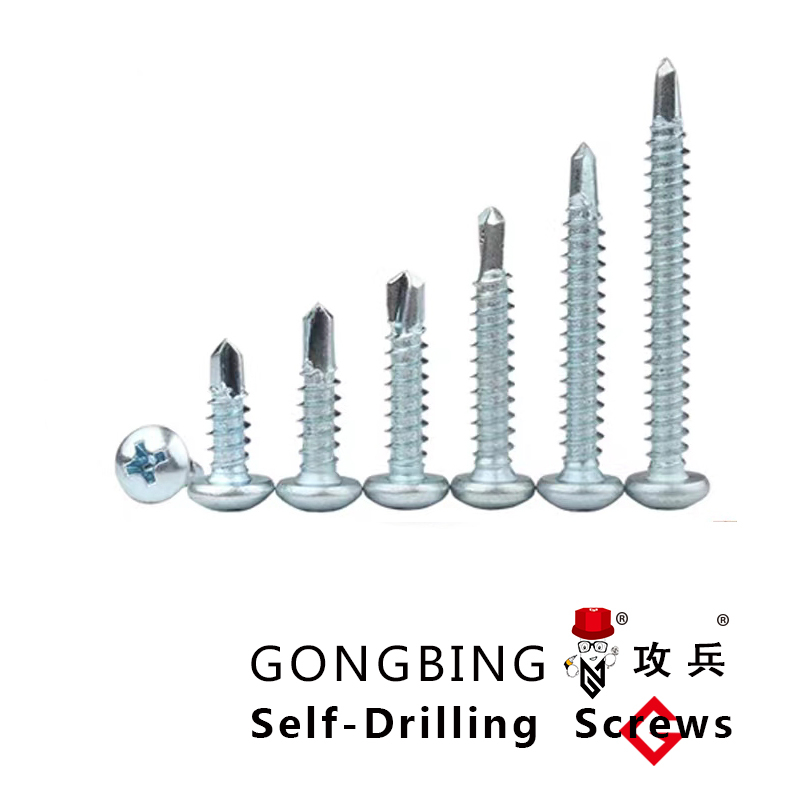
The performance characteristics, such as pull-out strength and torque resistance, are critical for the reliability of the assembled product. For instance, a round head self drilling screw (a closely related variant) includes a drill bit point, allowing it to drill, tap, and fasten in one operation, often used in heavier gauge metals. While `Self-tapping Screw With Round Head` requires a pilot hole in denser materials, its round head and specific thread form excel in providing optimal clamping force and surface contact, preventing material distortion and ensuring a secure, lasting joint. This meticulous attention to design and specification underscores their capability to deliver exceptional performance in demanding applications.
Versatile Applications and Unrivaled Advantages of Round Head Self Tapping Screws
The inherent design and engineering of `Self-tapping Screw With Round Head` grant them exceptional versatility, making them indispensable across a multitude of industries. Their ability to form their own threads in various substrates, from thin sheet metal and aluminum to plastics, wood, and composite materials, significantly simplifies assembly processes and reduces manufacturing costs. This broad applicability stems from their specialized thread geometry, which provides strong engagement and high resistance to vibration loosening, ensuring long-term joint integrity.
Key Application Scenarios:
- Automotive Industry: Widely used for interior trim, dashboard components, light fixture assembly, and various non-structural applications where vibration resistance and quick assembly are critical.
- Electronics Manufacturing: Ideal for securing circuit boards, enclosures, and internal components in devices like computers, televisions, and other consumer electronics, thanks to their precision and reduced risk of material damage.
- HVAC Systems: Employed in assembling ductwork, vents, and casing components, where ease of installation into sheet metal is highly valued.
- Construction and Building: Used for attaching metal studs to drywall, fastening insulation panels, and securing cladding or roofing elements, particularly when working with light gauge steel.
- Furniture Manufacturing: Essential for assembling various wood, particle board, or MDF components, providing strong, reliable joints without the need for pre-drilling and tapping in softer materials.
- Appliance Manufacturing: Integral in assembling washing machines, refrigerators, and ovens, securing panels, motors, and internal mechanisms.
The advantages of utilizing self tapping round head screws are manifold. They offer substantial time and cost savings by eliminating the need for tapping operations, thereby reducing tooling requirements and labor. Their strong pull-out resistance ensures a secure fastening, even in dynamic environments. The round head design provides a clean, finished appearance and a large bearing surface, which is beneficial for spreading the load and preventing damage to the fastened material, particularly in soft or thin substrates. Compared to a round head self drilling screw, the standard self-tapping screw is often preferred in applications where material thickness allows for a pilot hole or when the self-drilling point is not necessary or could cause damage. This strategic choice underscores the importance of selecting the right fastener based on specific application requirements for optimal performance and efficiency.
Navigating the Landscape: Choosing the Right Manufacturer for Round Head Self Tapping Screws
For B2B decision-makers, selecting a reliable manufacturer for round head self tapping screws is paramount to ensuring product quality, supply chain stability, and cost-effectiveness. The global fastener market is competitive, and not all suppliers offer the same level of expertise, quality control, or customer support. A reputable manufacturer differentiates itself through rigorous adherence to international standards, substantial investment in R&D, and a proven track record of delivering high-performance products. Key factors to consider include the manufacturer's quality management systems (e.g., ISO 9001, IATF 16949 for automotive), their ability to provide comprehensive material certifications, and their capacity for consistent high-volume production.
Furthermore, assessing a manufacturer's technical support capabilities is essential. The best partners offer engineering assistance, helping clients select the most appropriate `Self-tapping Screw With Round Head` for their specific application, or even designing bespoke solutions. This collaborative approach can lead to optimized designs, reduced material waste, and improved overall product performance. Manufacturers with extensive service years in the fastener industry often possess deeper insights into material science, coating technologies, and application challenges, making them invaluable resources. Look for suppliers who can provide detailed test data, performance graphs, and success stories, demonstrating their authority and trustworthiness in the field. This due diligence ensures that your supply chain is robust and that the fasteners you procure meet the precise demands of your critical applications.
Tailored Solutions: Customizing Round Head Self Tapping Screws
While standard round head self tapping screws fulfill a wide range of industrial requirements, certain specialized applications demand fasteners with unique specifications. Customization offers the flexibility to tailor `Self-tapping Screw With Round Head` to perfectly match specific material properties, environmental conditions, and assembly methodologies, thereby optimizing performance and extending product lifespan. This bespoke approach ensures that engineers are not limited by off-the-shelf options but can procure components that are precisely engineered for their unique challenges.
Customization Parameters Include:
- Material Composition: Beyond standard carbon and stainless steels, custom alloys can be specified for extreme temperatures, corrosive environments, or non-magnetic applications.
- Dimensions and Geometry: Non-standard diameters, lengths, and specialized head dimensions (e.g., lower profile, larger bearing area) can be produced.
- Thread Design: Custom thread pitches, lead angles, or double-lead threads can be designed to optimize performance in specific plastic or composite materials, or for faster insertion.
- Drive Type: Unique drive recesses (e.g., tamper-resistant, specific proprietary designs) for enhanced security or automated assembly systems.
- Advanced Coatings: Application-specific coatings for enhanced lubricity, electrical insulation, high chemical resistance, or aesthetic purposes. This is particularly relevant for `round head self drilling screw` variants that require unique properties.
- Integrated Features: Incorporating washers, O-rings, or special sealing elements directly onto the screw for improved sealing or vibration damping.
Collaborating with a manufacturer capable of advanced customization ensures that the final product is not merely a component, but an optimized solution integrated seamlessly into the client's manufacturing process. This proactive engineering can lead to superior product reliability, reduced assembly time, and enhanced overall operational efficiency, underscoring the value of tailored fastening solutions.
Real-World Impact: Application Case Studies with Round Head Self Tapping Screws
The practical utility of `Self-tapping Screw With Round Head` is best illustrated through real-world applications where they provide tangible benefits in terms of efficiency, reliability, and cost-effectiveness. These case studies highlight how the judicious selection of `Self-tapping Screw With Round Head` can lead to optimized assembly processes and enhanced product durability across various industries.
Illustrative Case Studies:
- Automotive Interior Assembly: A major automotive manufacturer sought to reduce assembly time and improve the integrity of plastic interior panels. By switching from traditional machine screws with inserts to specialized round head self tapping screws with a thread-forming design optimized for plastics, they achieved a 20% reduction in assembly time per vehicle. The screws provided superior pull-out resistance, leading to a 15% decrease in warranty claims related to loose panels, showcasing the direct impact of high-quality fasteners on operational efficiency and customer satisfaction.
- HVAC Ductwork Installation: A large commercial HVAC installer faced challenges with the time-consuming process of fastening sheet metal ducts using traditional methods requiring pre-drilling and tapping. Implementing self tapping round head screws with a specific point design enabled single-step installation. This transition led to a 30% increase in installation speed for standard duct sections and a significant reduction in labor costs, demonstrating how optimized fastener solutions can revolutionize construction methodologies.
- Electronic Device Enclosures: A consumer electronics company needed a reliable fastening solution for the thin metal and plastic enclosures of their new smart devices. Standard screws often caused material deformation or required complex assembly steps. By adopting precision-engineered `Self-tapping Screw With Round Head` with fine threads and a controlled head bearing surface, they achieved secure, flush fastening without material damage. This not only improved the aesthetic appeal but also enhanced the structural integrity of the devices, contributing to higher perceived quality and product longevity.
These examples underscore the critical role of properly engineered round head self tapping screws in delivering operational efficiencies, enhancing product quality, and ultimately driving down overall manufacturing costs. The experience gained from diverse applications continually informs product development, ensuring that these fasteners remain at the forefront of fastening technology.
Frequently Asked Questions (FAQ) about Self-Tapping Screws
-
Q1: What defines a round head self tapping screws?
A: A round head self tapping screws is designed to create its own internal threads in a material as it is driven in, eliminating the need for pre-tapping. The "round head" refers to its dome-shaped head, which offers a large bearing surface and a clean, finished appearance. These are commonly used in softer materials like plastic, wood, and thin sheet metal.
-
Q2: What are the main advantages of using `Self-tapping Screw With Round Head`?
A: The primary advantages include significant time and cost savings by reducing assembly steps (no pre-tapping required), enhanced efficiency in production lines, excellent pull-out resistance for secure fastening, and versatility across a wide range of materials. The round head also provides a neat finish and helps prevent material damage due to its larger bearing area.
-
Q3: How do self tapping round head screws differ from round head self drilling screws?
A: While both are self-fastening, a standard self tapping round head screws requires a pre-drilled pilot hole in most metal applications, and then it forms its own threads. A round head self drilling screw, however, has a drill bit-like point that allows it to drill its own hole, tap threads, and fasten in a single operation, typically used for thicker metal gauges without a pilot hole.
-
Q4: What materials are `Self-tapping Screw With Round Head` typically made from?
A: They are commonly manufactured from carbon steel (often heat-treated for hardness), stainless steel (for corrosion resistance in grades like 304 or 316), and sometimes alloy steels for specialized strength or temperature requirements. The choice of material depends heavily on the application's environmental conditions and mechanical demands.
-
Q5: What surface finishes are available for these screws and why are they important?
A: Common finishes include zinc plating (clear, yellow, black), nickel plating, black oxide, phosphating, and advanced coatings like Dacromet or Geomet. These finishes are crucial for enhancing corrosion resistance, improving aesthetics, reducing friction during installation, and ensuring the screw's longevity, especially in harsh or outdoor environments.
Commitment to Excellence: Delivery and Quality Assurance
Our unwavering commitment to quality and customer satisfaction underpins every `Self-tapping Screw With Round Head` we produce. We understand that for B2B clients, consistent product quality and reliable delivery are not just preferences but fundamental requirements for their operational success. Our manufacturing facilities adhere to stringent quality control protocols, including ISO 9001 certification, to ensure that every batch of round head self tapping screws meets the highest industry standards for dimensions, material properties, and performance.
From raw material inspection to final product packaging, each stage undergoes rigorous testing and verification. This meticulous approach guarantees that our `Self-tapping Screw With Round Head` will perform as expected in the most demanding applications. We also pride ourselves on transparent communication regarding delivery lead times, which are optimized through efficient production planning and robust logistics networks to meet project deadlines. Furthermore, we offer a comprehensive warranty on our products, standing by their quality and performance, coupled with dedicated customer support to address any inquiries or specific technical requirements. Our goal is to forge lasting partnerships built on trust, reliability, and superior product performance, ensuring that your fastening needs are met with the utmost professionalism and expertise.
Conclusion
The `Self-tapping Screw With Round Head` represents a cornerstone in modern fastening technology, offering a robust and efficient solution for a myriad of industrial applications. Its unique design, coupled with advanced manufacturing processes and stringent quality control, ensures high performance, ease of assembly, and long-term reliability. From simplifying production lines to enhancing product durability, the benefits of incorporating high-quality round head self tapping screws are undeniable for any discerning technical buyer or engineer. By understanding their technical specifications, diverse applications, and the importance of selecting a reputable manufacturer, businesses can leverage these fasteners to achieve operational excellence and secure their products with unwavering confidence. We remain committed to delivering superior fastening solutions that drive innovation and success across all sectors.
References
- Bickford, J. H. (2007). An Introduction to the Design and Behavior of Bolted Joints (4th ed.). Marcel Dekker.
- Kulak, G. L., Fisher, J. W., & Struik, J. H. A. (1987). Guide to Design Criteria for Bolted and Riveted Joints. John Wiley & Sons.
- Society of Automotive Engineers (SAE). (Various standards). Fastener Standards Manual.
- American Society of Mechanical Engineers (ASME). (Various standards). ASME B18.6.4: Screws, Tapping, and Metallic Drive Screws.
-
Guide to High Quality Stainless Steel Expansion FastenersNewsApr.16,2026
-
Ultimate Guide to Industrial Sheet Metal Expansion AnchorsNewsApr.16,2026
-
High Efficiency Fastening Guide for Plastic Expansion RivetsNewsApr.16,2026
-
Plastic Expanding Nut Guide for Applications and BenefitsNewsApr.16,2026
-
Ultimate Guide to Stability and Use of Nail Expansion AnchorNewsApr.16,2026
-
Guide to Choosing and Installing the Right Metal Expansion ScrewNewsApr.16,2026