
Fine Thread Drywall Screws & Collated Belts: Fast Installs?
CHINA FINE THREAD DRYWALL SCREWS MANUFACTURER: field notes, specs, and what actually matters on site
If you frame with metal studs, you already know the fastener makes or breaks the day. That’s why I keep coming back to fine thread drywall screws for light-gauge steel. They bite cleaner, seat flush, and—when they’re made right—reduce cam-out scars that drive finishers crazy. Origin: China, and yes, I’ve seen these run in real jobs, not just catalogs.
Trend-wise, metal studs keep gaining ground in commercial interiors. That means fine thread drywall screws are getting more attention, including collated strips for autofeed guns, RoHS-compliant finishes, and tighter QC around drive recess fit. Surprisingly, more contractors are requesting EN 14566 labeling in addition to ASTM, especially when they work across borders.
Product snapshot (real-world focused)
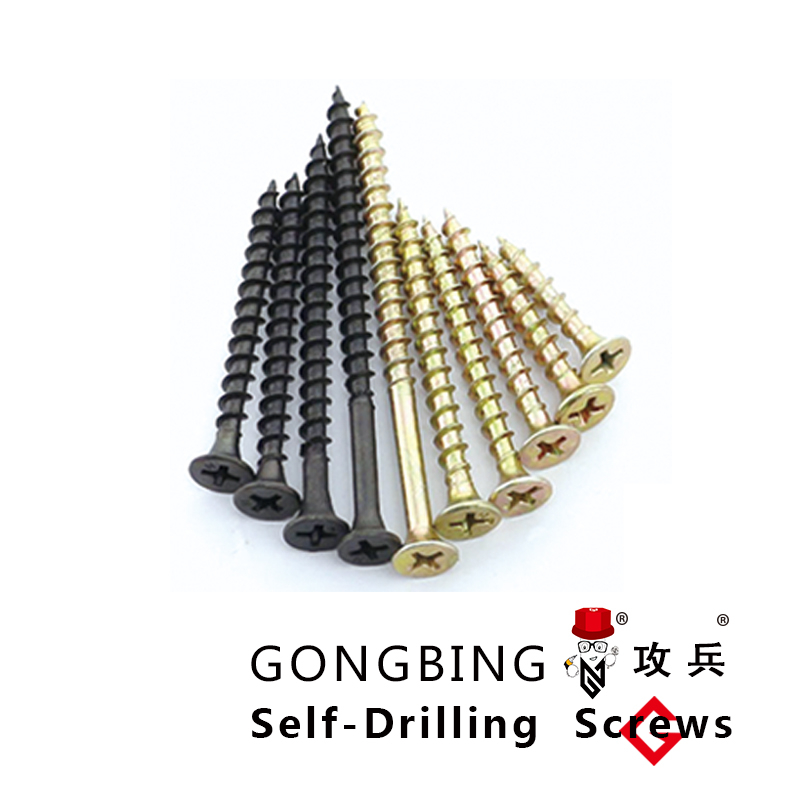
| Parameter | Spec (≈ means typical) |
|---|---|
| Size range | M3.5 × L16–50 mm; M4.2 × L65–100 mm |
| Head / Drive | Bugle head, Phillips #2 recess (tight-fit tested) |
| Thread | Fine thread, ≈ 18–24 TPI equivalent (for 0.5–0.8 mm steel studs) |
| Material | C1022 steel, case hardened |
| Point | Sharp point (self-piercing); self-drilling options on request |
| Finishes | Black phosphate (interior), Zinc per ISO 4042 (optional) |
| Hardness | Surface HRC 48–52 ≈; core HV 270–350 ≈ (real-world may vary) |
| Standards | ASTM C1002/C1002M; EN 14566 (type designation per project) |
Where they shine
- Gypsum boards to light-gauge steel studs (0.5–0.8 mm), walls and ceilings.
- Ceiling grid accessories, drywall reveals, light framing details.
- Prefab modules and hotel corridors—fast repetitive fastening with autofeed tools.
On our last mid-rise hotel fit-out, switching to fine thread drywall screws cut screw spin-outs by roughly 22% (site logs over two weeks). Many installers said the recess felt “stickier”—less wobble on the bit.
Process flow and QC (why consistency shows in the finish)
Wire rod selection → cold heading (bugle formation) → thread rolling → heat treatment (case harden) → surface treatment (phosphate or Zn) → de-embrittlement → 100% magnetic/visual sorting on critical sizes → packing. Tests include: recess/torsion (per EN 14566), case depth microscopy, salt spray (ISO 9227; zinc finish target ≈ 72–120 h, phosphate ≈ 24 h for handling protection), and pull-out on 0.6–0.8 mm steel. Typical service life indoors: 15–25 years; in humid zones, I’d spec zinc or an enhanced coating, honestly.
Measured performance (indicative)
- Pull-out in 0.6 mm steel: ≈ 250–400 N; shear: ≈ 450–700 N (fixture dependent).
- Drive torque to failure: usually exceeds tool clutch settings; cam-out reduction noted with quality #2 bits.
Vendor snapshot and customization
The CHINA FINE THREAD DRYWALL SCREWS MANUFACTURER offers custom lengths, collated strips, private-label boxes, and mixed finishes. Lead times have been surprisingly steady even with shipping hiccups—though, to be honest, book ahead before peak seasons.
| Vendor | Lead time | MOQ | Customization | Certs | Indicative price/1k |
|---|---|---|---|---|---|
| CHINA Fine Thread Manufacturer | 3–5 weeks ≈ | 100–300 k pcs | Length, finish, collated, branding | ISO 9001, EN 14566, RoHS | $6–$12 (spec/finish dependent) |
| Local Distributor | Stock/Next-day | 1–5 k | Limited | Vary by brand | $12–$20 |
| Generic Importer | 4–8 weeks | 50–100 k | Some | Mixed/undisclosed | $7–$11 |
Mini case studies
- Hotel corridor (0.6 mm studs): switch to fine thread drywall screws cut rework on popped heads by ≈ 18% (punch-list data).
- Acoustic studio: zinc finish chosen for humidity; no rust bleed after 120 h ISO 9227 test run in QA lab.
Buying tips (quick)
- Match thread to stud gauge: fine thread drywall screws for steel; coarse for wood.
- Ask for recess gauge reports and salt-spray data; it’s modest cost, big peace of mind.
- For ceilings, consider collated strips to lift productivity 10–20%—I’ve watched it happen.
References
- ASTM C1002/C1002M – Steel Self-Piercing Tapping Screws for Application of Gypsum Panel Products. https://www.astm.org/c1002
- EN 14566 – Mechanical fasteners for gypsum plasterboard systems. https://standards.iteh.ai/catalog/standards/cen/2f0f61b5-0e1f-4d0b-9b3b-9dc32b51b5cd/en-14566
- ISO 4042 – Fasteners: Electroplated coatings. https://www.iso.org/standard/68044.html
- ISO 9227 – Corrosion tests in artificial atmospheres (salt spray). https://www.iso.org/standard/63543.html
-
Guide to High Quality Stainless Steel Expansion FastenersNewsApr.16,2026
-
Ultimate Guide to Industrial Sheet Metal Expansion AnchorsNewsApr.16,2026
-
High Efficiency Fastening Guide for Plastic Expansion RivetsNewsApr.16,2026
-
Plastic Expanding Nut Guide for Applications and BenefitsNewsApr.16,2026
-
Ultimate Guide to Stability and Use of Nail Expansion AnchorNewsApr.16,2026
-
Guide to Choosing and Installing the Right Metal Expansion ScrewNewsApr.16,2026