
Fine Thread Drywall Screws: Secure Hold for Wood & Metal Studs
Understanding the Critical Role of fine thread drywall screws in Modern Construction
In the intricate ecosystem of modern construction, the integrity and longevity of structures often hinge upon the smallest yet most crucial components. Among these, the fine thread drywall screws stand out as indispensable fasteners, meticulously engineered to secure plasterboard, gypsum board, and other drywall panels to wood studs with unparalleled precision and holding power. Unlike their coarse thread counterparts, which are primarily designed for metal studs, fine thread drywall screws excel in applications involving timber or engineered wood, offering superior thread engagement that minimizes stripping and maximizes pull-out resistance. This specialized design ensures a stable, flush, and durable installation, critical for both aesthetic finish and structural stability in residential, commercial, and industrial buildings. The demand for high-quality fasteners in the construction industry is consistently growing, driven by stricter building codes, an increasing emphasis on construction efficiency, and the burgeoning global construction market. Manufacturers, like CHINA FINE THREAD DRYWALL SCREWS MANUFACTURER, are at the forefront of this evolution, continuously refining their production processes and material science to meet these exacting requirements. The selection of the correct screw type, particularly the choice between fine and coarse threads, is a fundamental decision that directly impacts the quality, safety, and cost-effectiveness of drywall installation projects. This comprehensive exploration delves into the technical nuances, manufacturing excellence, application versatility, and strategic advantages offered by these specialized fasteners, providing B2B decision-makers and technical professionals with the insights necessary to make informed procurement choices. Our focus will extend beyond mere specifications, embracing the broader implications of material science, advanced manufacturing techniques, and rigorous quality control protocols that underpin the reliability of these critical components in high-demand construction environments. We aim to illuminate why investing in premium fine thread drywall screws is not merely a purchase, but a strategic decision that contributes significantly to the overall integrity and longevity of building projects, reducing future maintenance costs and enhancing structural performance.
Navigating Industry Trends and Market Dynamics for Fine Thread Fasteners
The global construction industry is a dynamic landscape, continuously shaped by technological advancements, evolving regulatory frameworks, and shifting economic tides. Within this context, the market for fine thread drywall screws is experiencing significant trends that influence demand, production, and innovation. One prominent trend is the increasing adoption of sustainable building practices. This translates into a demand for fasteners manufactured with environmentally responsible processes, using recycled materials where feasible, and designed for longevity to reduce replacement cycles. Furthermore, advancements in construction automation and prefabrication are driving the need for fasteners that are compatible with automated screw guns and collated systems, such as fine thread collated drywall screws, which significantly boost installation speed and efficiency on large-scale projects. The emphasis on worker safety and ergonomics also plays a role, with manufacturers developing screws that require less driving force and offer better bit engagement, reducing fatigue and potential injuries. Geographically, emerging markets in Asia, Africa, and Latin America are witnessing rapid urbanization and infrastructure development, fueling a robust demand for construction materials, including high-quality drywall fasteners. In mature markets, renovation and remodeling activities continue to be strong drivers, where the precision and reliability of fine drywall screws are highly valued. Material innovation is another critical trend, with ongoing research into advanced steel alloys for enhanced strength and specialized coatings for superior corrosion resistance, even in challenging environments. The shift towards higher performance and longer-lasting building materials necessitates fasteners that can match these attributes, ensuring the overall integrity of the structure for decades. For manufacturers like CHINA FINE THREAD DRYWALL SCREWS MANUFACTURER, understanding these macro and micro trends is essential for strategic planning, product development, and market positioning, ensuring they remain competitive and relevant in a rapidly evolving global construction sector. The ability to anticipate future demands, invest in R&D for next-generation fasteners, and optimize supply chain logistics will differentiate leading suppliers in this competitive landscape.
The market for construction fasteners, specifically those used in drywall applications, is projected to grow substantially in the coming years. According to a report by Grand View Research, the global fasteners market size was valued at USD 86.84 billion in 2022 and is expected to grow at a compound annual growth rate (CAGR) of 4.5% from 2023 to 2030. While this encompasses all fasteners, the construction segment, driven by residential and non-residential building activities, represents a significant portion of this growth. Factors such as increasing infrastructure spending globally, rapid urbanization, and a growing focus on prefabrication and modular construction methods are key accelerators. The demand for specialized fasteners like fine thread drywall screws is directly correlated with the growth of drywall as a primary interior finishing material. Its ease of installation, fire-resistant properties, and sound insulation capabilities make it a preferred choice across various building types. Manufacturers are increasingly focusing on automation in their production lines to enhance efficiency, reduce costs, and maintain consistent quality amidst rising labor costs and raw material price volatility. The integration of Industry 4.0 principles, such as IoT-enabled monitoring of production processes and predictive maintenance, is becoming more common, ensuring higher yields and reduced downtime. Furthermore, stringent building codes and safety regulations in many regions are driving the demand for certified, high-performance fasteners, which places an onus on manufacturers to adhere to international standards such as ISO, ASTM, and ANSI. This regulatory pressure, while challenging, also acts as a barrier to entry for lower-quality products, benefiting established and quality-focused manufacturers. Understanding these underlying market dynamics is crucial for any business looking to specify, procure, or distribute fine thread drywall screws, ensuring they partner with suppliers who are not only compliant but also forward-thinking and adaptable to future industry shifts.
Technical Parameters and Specifications of Fine Thread Drywall Screws
The performance of fine thread drywall screws is defined by a precise set of technical parameters, each critical for ensuring optimal functionality and compliance with construction standards. Primarily designed for fastening gypsum board to wood studs, these screws feature a finer thread pitch compared to coarse thread variants, providing a more secure grip in the denser structure of wood without excessively splitting the material. Key parameters include the material composition, which is typically hardened carbon steel, chosen for its strength and durability. Heat treatment processes, such as case hardening, imbue the screws with exceptional hardness (often Rockwell Hardness C50-C56) while retaining a ductile core to prevent brittle fracture under torque. The head type is almost universally a bugle head, which allows the screw to sit flush with or slightly below the drywall surface, creating a smooth finish that is easily concealed by joint compound. The drive type is commonly Phillips (PH2 being standard), designed for effective torque transfer from the driver bit. Lengths vary widely, from 1 inch (25mm) to 3 inches (75mm) or more, depending on the thickness of the drywall and the depth of penetration required into the wood stud. Diameters, often denoted by gauges (e.g., #6, #7, #8), correlate to the screw's overall strength and holding capacity. Surface finishes are crucial for corrosion protection; black phosphate coating is common, offering basic corrosion resistance and a surface that adheres well to joint compound. Alternatively, zinc plating provides enhanced rust protection, suitable for applications where some moisture exposure might occur. Adherence to industry standards such as ASTM C1002 (Standard Specification for Steel Drill Screws for the Application of Gypsum Panel Products or Metal Plaster Bases to Wood or Light-Gage Steel Studs) and ISO 9001 (for quality management systems) is paramount, ensuring consistent performance and reliability across batches. Understanding these intricate technical specifications is vital for engineers, contractors, and procurement managers to select the appropriate fine drywall screws for their specific project requirements, guaranteeing structural integrity and long-term performance.
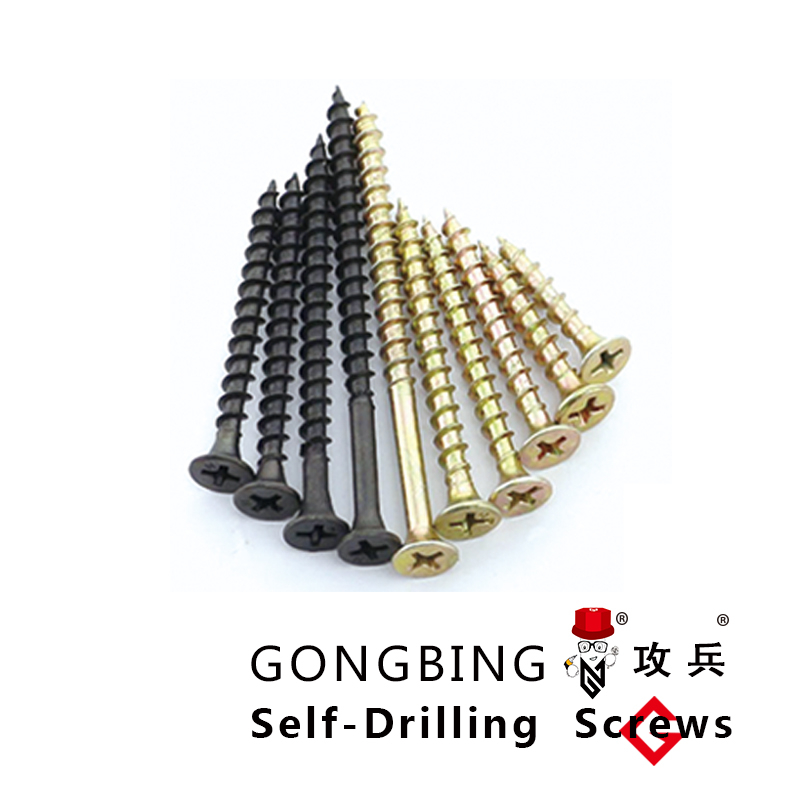
To further illustrate the critical technical specifications, the following table provides a comprehensive overview of typical parameters for fine thread drywall screws. These values are indicative and can vary slightly based on specific manufacturer processes and intended applications, but they represent the industry benchmarks for high-quality products. For example, the precise formulation of the steel alloy (e.g., C1022 carbon steel) can influence its ultimate tensile strength and yield strength, which are vital for preventing screw failure under load. Torque strength, measured in inch-pounds or Newton-meters, indicates the maximum twisting force the screw can withstand before its head shears off or its threads strip, a crucial factor during high-speed installation. Pull-out strength, often tested in various wood densities (e.g., SPF lumber), quantifies the force required to extract the screw from the substrate, directly correlating to the fastener's holding power. Moreover, the consistency of dimensions, particularly head diameter and length, is critical for achieving a uniform finish and ensuring compatibility with automated driving tools, especially for fine thread collated drywall screws. Coatings, beyond basic black phosphate or zinc, can include advanced polymer coatings for extreme corrosion resistance or specialized lubrication for reduced driving friction. These detailed parameters underscore the engineering precision involved in producing reliable fine drywall screws, ensuring they meet the rigorous demands of construction environments where performance, durability, and safety are paramount. Prospective buyers should always request detailed specification sheets and conformity certificates from manufacturers to verify adherence to these critical technical benchmarks.
Typical Technical Parameters for Fine Thread Drywall Screws
| Parameter | Description | Typical Range/Value | Relevance/Standard |
|---|---|---|---|
| Material | High-carbon steel (e.g., C1022) | AISI 1022, Cold Heading Quality | Ensures strength & durability. |
| Hardness (Core) | Rockwell Hardness C Scale (HRC) | HRC 28-35 | Prevents brittle fracture. |
| Hardness (Case) | Rockwell Hardness C Scale (HRC) | HRC 50-56 | Ensures self-tapping capability & thread integrity. |
| Diameter (Gauge) | Nominal body diameter | #6, #7, #8 (e.g., 3.5mm, 3.9mm, 4.2mm) | Determines strength & substrate engagement. |
| Length | Under-head length | 1" (25mm) to 3" (75mm) or more | Depends on drywall thickness & stud penetration. |
| Thread Type | Fine thread, single lead | Optimized for wood studs. | Ensures strong grip & prevents stripping in wood. |
| Head Type | Bugle Head | Countersinks flush with surface. | Creates smooth finish for mudding. |
| Drive Type | Phillips Drive (P2) | Common standard for driver bits. | Ensures secure bit engagement & torque transfer. |
| Surface Finish | Black Phosphate / Zinc Plated | Enhanced corrosion resistance. | Protects against rust; phosphate allows better mud adhesion. |
| Tensile Strength | Minimum breaking strength | Typical > 1800 lbs (8000 N) for #8 | Indicates resistance to stretching/breaking under load. |
| Shear Strength | Resistance to cutting force | Typical > 1200 lbs (5300 N) for #8 | Resistance to fracture under perpendicular force. |
| Torque Strength | Driving torque resistance | Min. 55 in-lbs (6.2 Nm) for #8 | Prevents head stripping during installation. |
| Pull-Out Strength | Resistance to extraction from wood | Typical > 200 lbs (900 N) in SPF wood | Crucial for holding drywall securely. |
| Applicable Standards | Industry recognized standards | ASTM C1002, ISO 9001, ANSI | Ensures quality, performance, and compatibility. |
The Precision Engineering Behind Fine Thread Drywall Screws: A Manufacturing Process Deep Dive
The production of high-performance fine thread drywall screws is a sophisticated industrial process that combines metallurgical science with precision engineering. It begins with the selection of premium raw materials, typically low-carbon steel wire rods (like C1022), which are chosen for their excellent cold-heading properties and subsequent ability to be heat-treated for optimal strength. The manufacturing journey for a fine drywall screw can be conceptualized in several critical stages, ensuring each fastener meets stringent quality and performance benchmarks. The initial step involves wire drawing, where the raw steel rod is pulled through a series of dies, gradually reducing its diameter to the precise gauge required for the screw. This process not only shapes the wire but also work-hardens it, improving its tensile strength. Following wire drawing, the material moves to the cold heading stage. In this highly efficient process, specialized cold heading machines use powerful presses to form the screw head (bugle head) and the initial blank shape from the wire. This non-cutting process maintains the grain structure of the steel, enhancing the overall strength of the screw, particularly at the head and shank junction. It's a testament to modern manufacturing efficiency, creating high volumes of consistent blanks.
After cold heading, the screw blanks undergo thread rolling. This critical step forms the fine thread profile onto the screw shank. Unlike cutting threads, which removes material and can weaken the screw, thread rolling displaces the material, creating a compressed, densified thread surface. This significantly increases the screw's shear strength and fatigue resistance, leading to superior holding power in wood substrates. The precise tooling ensures consistent thread pitch and depth, vital for proper engagement with the wood fibers and for preventing stripping during installation. Following thread rolling, the screws are subjected to heat treatment, a multi-stage process involving austenitizing, quenching, and tempering. This process transforms the internal crystalline structure of the steel, imparting the required core hardness (ductility to prevent snapping) and surface hardness (to allow self-tapping into wood and prevent thread deformation). For fine thread collated drywall screws, additional care is taken during this stage to ensure the screws remain perfectly aligned for the subsequent collation process.
The penultimate stage is surface coating. The most common finish is black phosphate, achieved through a phosphating process that provides a matte black, corrosion-resistant surface. This coating not only offers a degree of protection against rust but also provides an excellent base for joint compound adhesion, ensuring a smooth, undetectable finish on the drywall. For applications requiring superior corrosion resistance, zinc plating (often blue or yellow passivated) is applied, offering enhanced protection against moisture and environmental factors. This process involves electroplating a thin layer of zinc onto the screw's surface. Finally, comprehensive quality control (QC) is integrated throughout the entire manufacturing flow. This includes in-process inspections for dimensional accuracy (head diameter, length, thread pitch), mechanical property testing (hardness, torque, tensile strength, shear strength, pull-out resistance), and corrosion resistance testing (salt spray tests). Adherence to international standards such as ISO 9001 for quality management systems and ASTM C1002 for drywall screws is rigorously maintained. For example, torque testing ensures the screw can withstand the driving force without stripping, while pull-out testing verifies its holding power in the intended substrate. This meticulous approach to manufacturing ensures that every fine thread drywall screw leaving the factory, like those from CHINA FINE THREAD DRYWALL SCREWS MANUFACTURER, is of the highest quality, guaranteeing reliable performance and an extended service life in its applicable industry – primarily the vast construction sector. While specific industries like petrochemical or metallurgy are not direct users of drywall screws, the underlying principles of material selection, robust manufacturing processes, and rigorous testing for demanding applications ensure that these fasteners contribute to high-standard construction, which forms the backbone of infrastructure in all industries. The focus on quality and durability also translates to indirect advantages such as reduced material waste and re-work, contributing to overall project sustainability.
Technical Advantages and Performance Metrics for Fine Thread Fasteners
The inherent design and robust manufacturing of fine thread drywall screws confer several distinct technical advantages, making them the preferred choice for specific drywall applications over their coarse-thread counterparts. One of the primary benefits is their superior holding power in dense materials, particularly wood studs. The finer, more numerous threads create a larger surface area of engagement with the wood fibers, resulting in significantly higher pull-out resistance. This is crucial for securely fastening drywall panels, preventing sagging, popping, or loosening over time, even under the structural stresses of building movement or humidity fluctuations. This enhanced grip minimizes the risk of call-backs for contractors and ensures long-term structural integrity. Furthermore, the fine thread design reduces the likelihood of wood splitting, especially when working near the edges of a stud or with softer wood varieties. The gradual thread progression exerts less outward pressure on the wood, making it a gentler yet firm fastener solution. This is a considerable advantage for maintaining the integrity of the framing and reducing material waste on site.
Beyond pure holding power, fine thread drywall screws offer notable advantages in installation efficiency and finished appearance. Their sharp points and finely rolled threads allow for quicker and smoother penetration into wood without the need for pre-drilling in most standard applications. This ease of installation translates directly into reduced labor time and increased productivity on construction sites, a significant cost-saving factor for large projects. When used with automated screw guns, fine thread collated drywall screws exemplify this efficiency, enabling rapid, repetitive fastening with consistent depth and torque. The bugle head design ensures that the screw head creates a clean, uniform countersink that sits flush with or slightly below the drywall surface. This is vital for achieving a smooth finish ready for taping and mudding, ensuring the aesthetic quality of the final wall or ceiling. Any protrusion or unevenness from the screw head can lead to unsightly bumps or cracks in the finished surface, necessitating costly rework. The precision of the bugle head and the consistency of the screw's length and diameter are paramount in preventing such issues.
Another critical performance metric for fine drywall screws is their durability and resistance to environmental factors. While typical drywall installations are in interior, controlled environments, the robust material (hardened carbon steel) and protective coatings (like black phosphate or zinc plating) provide necessary corrosion resistance. Black phosphate, while primarily enhancing paint adhesion, offers basic protection against moisture during transport and storage, and against minor condensation within wall cavities. Zinc plating, on the other hand, provides superior corrosion resistance for applications in more humid environments or where the possibility of moisture exposure is higher. This enhances the overall lifespan of the fastening system and prevents unsightly rust stains from bleeding through the finished drywall surface, which can compromise both aesthetics and structural integrity over time. Furthermore, the rigorous testing protocols, including salt spray tests for corrosion resistance and torque/pull-out tests, ensure that each batch meets or exceeds industry standards. This commitment to quality and performance translates into long-term reliability, reducing the need for costly repairs and maintenance down the line. For construction professionals, specifying and utilizing high-quality fine thread drywall screws from reputable manufacturers like CHINA FINE THREAD DRYWALL SCREWS MANUFACTURER is a strategic decision that guarantees superior finished quality, enhanced structural longevity, and optimized project timelines, leading to overall client satisfaction and reduced operational risks.
Diverse Application Scenarios and Illustrative Case Studies
The versatility of fine thread drywall screws makes them indispensable across a broad spectrum of construction applications, particularly where gypsum board needs to be securely fastened to wood framing. Their design is optimized for consistent and reliable performance in residential, commercial, and industrial settings. In residential construction, from single-family homes to multi-story apartment complexes, fine thread drywall screws are the standard for installing interior walls and ceilings. They are used to attach various thicknesses of gypsum board (e.g., 1/2 inch, 5/8 inch) to traditional timber studs (such as SPF – spruce, pine, fir – or Douglas fir) and engineered wood products (like LVL – laminated veneer lumber, or I-joists). The fine threads provide the crucial grip necessary in these wood types, preventing the screw from stripping out during installation or loosening over time due to seasonal humidity changes that cause wood to expand and contract. Their ability to create a flush finish is paramount for the aesthetic quality of residential interiors, where smooth walls and ceilings are expected. This application forms the core demand for these fasteners globally, driven by continuous housing development and renovation activities.
In commercial construction, which includes office buildings, retail spaces, hospitals, and educational institutions, the demands on fasteners are often more rigorous due to higher traffic and more complex structural designs. Here, fine thread drywall screws are extensively used for non-load-bearing partitions, fire-rated wall assemblies (where specific lengths and installation patterns are critical for fire resistance ratings), and sound-rated partitions. For instance, in a hospital environment, ensuring minimal sound transmission between rooms is critical, and properly fastened drywall using fine drywall screws contributes significantly to the acoustic performance of the wall system. In modular construction, where building components are prefabricated off-site and then assembled on-site, the consistency and ease of use of fine thread collated drywall screws are highly valued. These collated systems allow for faster, more accurate installation on assembly lines, contributing to the efficiency and cost-effectiveness of modular building processes. A typical application case might involve a new office building requiring hundreds of linear meters of interior partitions. Using collated screws with automated drivers would allow a small team to complete the drywall installation significantly faster than using loose screws, reducing overall project timelines and labor costs, while ensuring a high-quality, uniform finish.
Beyond standard drywall applications, fine thread drywall screws also find use in various renovation and remodeling projects. When upgrading existing structures, these screws are ideal for re-securing loose drywall, installing new drywall over existing surfaces, or attaching gypsum panels to furring strips on masonry walls. Their precise engagement with wood ensures that even in older or less uniform timber, the panels remain firmly in place. While the direct application in industries like petrochemical, metallurgy, or water supply/drainage is not primary for drywall screws (which are for interior building finishes), the underlying principles of securing structural or non-structural elements in a durable, reliable manner are universal. The consistent quality, high pull-out resistance, and ease of installation inherent to quality fine thread drywall screws underscore their value across all construction sectors, indirectly supporting the robust infrastructure required by these heavy industries. The reliable performance of these fasteners directly contributes to the safety and longevity of building enclosures, which house critical industrial operations. In essence, the proper selection and application of these specialized fasteners are fundamental to achieving both the functional and aesthetic objectives of a wide array of construction projects, from the simplest residential repair to the most complex commercial development.
Manufacturer Comparison and Strategic Selection Criteria
Selecting the right manufacturer for fine thread drywall screws is a critical decision for B2B procurement professionals, directly impacting project quality, efficiency, and cost-effectiveness. While numerous manufacturers exist globally, distinguishing between them requires a comprehensive evaluation based on several key criteria beyond just price. First and foremost is product quality and consistency. A reputable manufacturer will consistently produce screws that meet or exceed international standards like ASTM C1002 and possess uniform dimensions, superior material integrity (e.g., proper hardness profiles for both core and case), and reliable coatings. Inconsistent quality can lead to higher rates of stripped heads, broken screws, or poor drywall adhesion, resulting in costly rework and project delays. Manufacturers with robust in-house quality control laboratories and certified testing procedures, such as those that perform regular pull-out strength tests, torque tests, and salt spray corrosion tests, provide a higher degree of assurance. For instance, CHINA FINE THREAD DRYWALL SCREWS MANUFACTURER emphasizes their adherence to ISO 9001 quality management systems, indicating a structured approach to maintaining high standards across their production processes.
Secondly, a manufacturer's production capabilities and capacity are crucial. Can they meet your volume requirements, especially for large-scale projects? Do they offer a full range of sizes, coatings, and packaging options, including loose screws and fine thread collated drywall screws? A manufacturer with advanced, automated production lines can offer better lead times and more competitive pricing due to economies of scale. Their ability to handle customized orders for specific lengths, diameters, or even unique head designs is also a significant differentiator for specialized projects. Third, consider the manufacturer's technical support and customer service. Do they offer detailed product data sheets, technical assistance for application questions, and responsive post-sales support? The ease of communication, cultural understanding, and responsiveness to inquiries can greatly streamline the procurement process, particularly for international collaborations. A manufacturer that is willing to provide samples for pre-qualification testing demonstrates confidence in their product and a commitment to customer satisfaction.
Finally, logistical efficiency and supply chain reliability are paramount. Timely delivery, accurate order fulfillment, and secure packaging are essential to keep construction projects on schedule. Manufacturers with established global distribution networks and efficient warehousing solutions can significantly reduce transportation costs and lead times. Beyond these practical considerations, assessing a manufacturer's reputation, industry experience, and commitment to innovation provides a holistic view. Look for manufacturers who actively invest in R&D to improve screw performance, explore new materials, or develop more sustainable manufacturing practices. While direct comparisons by naming competitors are not feasible, it is important for buyers to conduct due diligence, review case studies (if available), and seek references from existing clients. Partnering with a manufacturer that aligns with your company's values and operational needs, particularly one with a long-standing track record in producing high-quality fine drywall screws, will lead to more successful projects and a stronger, more reliable supply chain relationship. This strategic selection approach goes beyond merely comparing prices per unit; it involves a comprehensive assessment of quality assurance, manufacturing prowess, customer support, and logistical capabilities to ensure a sustainable and mutually beneficial partnership.
Custom Solutions and OEM Capabilities: Tailoring Fastener Excellence
While standard sizes and specifications of fine thread drywall screws meet the majority of construction needs, certain specialized projects or unique market demands often require custom fastener solutions. Reputable manufacturers, such as CHINA FINE THREAD DRYWALL SCREWS MANUFACTURER, offer comprehensive OEM (Original Equipment Manufacturer) and ODM (Original Design Manufacturer) capabilities to cater to these bespoke requirements. This flexibility is a significant advantage for large contractors, specialized construction firms, or fastener distributors looking to differentiate their offerings or address specific niche applications. Customization can involve various aspects of the screw's design and packaging. For instance, specific lengths and diameters beyond standard ranges may be required for fastening multiple layers of drywall, thicker sound-insulating panels, or for particular wood stud dimensions. While the core "fine thread" characteristic remains, the exact thread pitch or geometry can be fine-tuned for optimized performance in unique wood composites or engineered timber products.
Beyond dimensional customization, specialized coatings are a common request. While black phosphate and zinc plating are standard, projects in high-humidity environments, coastal regions, or those requiring enhanced fire resistance might necessitate unique corrosion-resistant coatings, such as ceramic coatings or specialized polymers. These advanced finishes can significantly extend the lifespan of the screws in challenging conditions, preventing premature failure or unsightly corrosion marks. Another area for customization lies in head design. While the bugle head is standard, specific applications might benefit from slight modifications to the head diameter, countersink angle, or even the drive type (e.g., square drive for increased cam-out resistance in certain regions). For distributors, custom branding on screw packaging, including private labeling, barcoding, and unique box designs, is a valuable OEM service that helps reinforce their brand identity in the market. This includes custom collation for fine thread collated drywall screws, tailored to specific automatic screw guns or installation systems.
The process of developing a custom fastener solution typically involves close collaboration between the client and the manufacturer's engineering and R&D teams. This includes detailed discussions on application requirements, environmental conditions, performance targets (e.g., specific pull-out values in a novel substrate), and budget constraints. The manufacturer's expertise in material science, cold heading, thread rolling, and heat treatment is critical in translating these requirements into a feasible and cost-effective product. Prototyping, rigorous testing, and iterative refinement are often part of this development cycle to ensure the custom fine drywall screws perform as expected. For example, if a client needs a screw that offers enhanced shear strength for a specific non-load-bearing partition system in seismic zones, the manufacturer might adjust the steel alloy composition or the heat treatment parameters to achieve the desired mechanical properties. This bespoke approach not only provides a perfect fit for niche applications but also fosters a stronger, more collaborative relationship between the supplier and the buyer, highlighting the manufacturer's commitment to solving complex fastening challenges. Ultimately, these custom solutions drive innovation within the fastener industry, pushing the boundaries of what standard products can achieve and enabling contractors to tackle increasingly complex and demanding construction projects with confidence.
Quality Assurance, Certifications, and Trustworthiness ()
In the B2B landscape, especially for critical construction components like fine thread drywall screws, trust is built on a foundation of demonstrable quality, industry authority, and unwavering reliability. Manufacturers who adhere to stringent quality assurance protocols and possess relevant certifications establish their expertise and trustworthiness. At CHINA FINE THREAD DRYWALL SCREWS MANUFACTURER, the commitment to quality begins with rigorous material inspection upon arrival, ensuring that raw steel wire rods meet precise chemical composition and mechanical property specifications. Throughout the manufacturing process, from wire drawing and cold heading to thread rolling and heat treatment, in-process quality checks are meticulously performed. This includes monitoring dimensional accuracy, head formation, thread profile, and overall consistency. For instance, sophisticated optical inspection systems might be used to verify the bugle head shape and overall length, preventing defects early in the production cycle.
Post-production, a comprehensive suite of mechanical tests is conducted to validate the performance of fine drywall screws. This includes hardness testing (both core and case hardness using Rockwell hardness testers) to ensure the screws can self-tap into wood studs without breaking or deforming. Torque strength tests measure the screw's ability to withstand driving forces without stripping the head, a critical factor for rapid, reliable installation. Pull-out strength tests, simulating real-world application conditions in various wood densities, quantify the screw's holding power, providing concrete data on its load-bearing capabilities. Shear strength tests assess the screw's resistance to cutting forces, important in preventing failure under lateral stress. Furthermore, corrosion resistance testing, such as salt spray tests (e.g., ASTM B117), is performed on coated screws to verify their protective properties in varying environmental conditions. These exhaustive tests are not merely compliance exercises; they are integral to proving the product's long-term durability and performance, crucial for construction projects where safety and longevity are paramount.
Authoritativeness is further solidified through industry certifications and long-standing experience. Adherence to international quality management systems like ISO 9001 demonstrates a systematic approach to quality control and continuous improvement, providing clients with confidence in the manufacturer's processes. Compliance with product-specific standards such as ASTM C1002 (Standard Specification for Steel Drill Screws for the Application of Gypsum Panel Products) and ANSI (American National Standards Institute) ensures that the screws meet recognized performance benchmarks. Beyond certifications, the service longevity of a company and its track record of successful collaborations with reputable construction firms and distributors speak volumes about its reliability. A manufacturer that has consistently supplied high-quality fine thread collated drywall screws and loose screws for many years builds an invaluable reputation for trustworthiness and expertise. This reputation is also reinforced by transparent reporting of test data, readily available technical specifications, and a commitment to addressing any product performance inquiries or issues. For B2B buyers, partnering with a manufacturer that not only produces high-quality products but also demonstrates verifiable expertise and authority through rigorous testing and certifications significantly de-risks their procurement process and ensures the longevity and safety of their construction projects.
Customer Support, Warranty, and Delivery Commitments
For B2B clients procuring fine thread drywall screws, the strength of a manufacturer's customer support, clarity of warranty commitments, and reliability of delivery schedules are as crucial as the product's technical specifications. A truly professional manufacturer understands that exceptional service is integral to long-term partnerships. Comprehensive customer support starts with pre-sales consultations, where experienced sales engineers and technical specialists assist clients in selecting the appropriate screw types, sizes, and coatings for their specific project needs. This consultative approach is invaluable for ensuring product-application fit, preventing costly errors, and optimizing material usage. During the order process, clear communication channels are maintained, providing regular updates on order status, production timelines, and shipping details. Post-sales support is equally vital, including assistance with product application best practices, troubleshooting, and handling any unforeseen issues swiftly and efficiently. This holistic support framework ensures that clients feel confident and supported throughout their engagement.
A transparent and robust warranty policy underscores a manufacturer's confidence in their product quality. For fine thread drywall screws, warranties typically cover manufacturing defects, material flaws, and performance within specified parameters under normal use conditions. For instance, a manufacturer might offer a warranty against premature corrosion for zinc-plated screws within a certain period, or guarantee specific pull-out strength values for their hardened steel products. The clarity of these terms, including the process for claims and replacements, provides essential assurance to buyers. This commitment to standing behind their products differentiates top-tier manufacturers. Moreover, a dedicated customer service team, accessible via multiple channels (phone, email, online portal), ensures that inquiries are addressed promptly, whether it's a technical question about thread pitch or a logistical query about a shipment. This responsiveness minimizes downtime for contractors and keeps projects moving forward efficiently.
Delivery commitment is a cornerstone of supply chain reliability. Manufacturers like CHINA FINE THREAD DRYWALL SCREWS MANUFACTURER, with well-established production capacities and efficient logistics networks, are able to provide accurate and dependable delivery schedules. This is particularly important for large construction projects where just-in-time inventory management is often employed to minimize on-site storage costs and prevent material shortages. Factors influencing delivery include production lead times (which can vary based on order volume and customization), transportation methods (sea freight, air cargo, road freight), and customs clearance for international shipments. Transparent communication about these factors, including any potential delays, allows clients to adjust their project schedules accordingly. For urgent requirements or bulk orders of fine thread collated drywall screws, a manufacturer's ability to expedite production or leverage existing inventory is a significant advantage. Ultimately, a manufacturer that demonstrates a strong commitment to responsive customer support, clear warranty provisions, and reliable delivery schedules contributes significantly to the overall success and profitability of their B2B clients' construction projects, fostering trust and long-term partnerships that extend beyond individual transactions.
Frequently Asked Questions (FAQs) about Fine Thread Drywall Screws
Q1: What is the primary difference between fine thread and coarse thread drywall screws?
A1: The fundamental difference lies in their thread pitch and intended application. Fine thread drywall screws have more threads per inch (a finer pitch) and are specifically designed for fastening gypsum board to wood studs (e.g., lumber, plywood, engineered wood products). The finer threads create a stronger grip in the denser wood fibers, providing higher pull-out resistance and reducing the likelihood of stripping the screw during installation. Coarse thread drywall screws, conversely, have fewer, wider threads and are optimized for securing drywall to metal studs, where the aggressive threads bite effectively into the thin metal. Using the correct thread type for the substrate is crucial for optimal performance and structural integrity.
Q2: Why are bugle heads used for fine thread drywall screws?
A2: Bugle heads are chosen for fine drywall screws because their conical underside smoothly countersinks into the soft gypsum board without tearing the paper facing. This design allows the screw head to sit flush with or slightly below the surface of the drywall, creating a smooth depression that can be easily concealed with joint compound and tape. This is essential for achieving a seamless, professional finish on walls and ceilings, ensuring no visible bumps or protrusions that could detract from the aesthetic quality of the final painted surface. The bugle head distributes pressure effectively, minimizing damage to the board surface.
Q3: What materials are typically used to manufacture these screws, and why?
A3: Fine thread drywall screws are typically manufactured from high-quality low-carbon steel, such as C1022. This specific grade of steel is selected for its excellent cold-heading properties, allowing for the precise formation of the screw head and shank without requiring heat during the initial shaping. After forming, the screws undergo a crucial heat treatment process (case hardening) that hardens the outer layer of the screw (case hardness, typically HRC 50-56) while maintaining a more ductile core (core hardness, typically HRC 28-35). This combination ensures the screw can effectively self-tap into wood without bending or breaking, while the hardened surface prevents stripping during installation, contributing significantly to the screw's overall durability and performance.
Q4: Are fine thread collated drywall screws more efficient than loose screws?
A4: Yes, absolutely. Fine thread collated drywall screws are significantly more efficient, especially for large-scale drywall installation projects. Collated screws come pre-loaded in strips or coils, designed for use with automatic screw guns. This system allows installers to drive screws rapidly and continuously without needing to manually load each screw, dramatically increasing installation speed and reducing labor time. The consistent feeding of collated screws also leads to more uniform screw depth and spacing, contributing to higher quality finishes and reducing installer fatigue. While loose screws are suitable for smaller jobs or repairs, collated screws are the industry standard for high-volume commercial and residential construction.
Q5: What quality standards should I look for in a fine thread drywall screws manufacturer?
A5: When selecting a manufacturer for fine thread drywall screws, it's crucial to look for adherence to recognized international quality standards. Key certifications and standards include ISO 9001, which signifies a robust quality management system across all manufacturing processes. Product-specific standards like ASTM C1002 (Standard Specification for Steel Drill Screws for the Application of Gypsum Panel Products or Metal Plaster Bases to Wood or Light-Gage Steel Studs) are also essential, as they define critical performance criteria such as hardness, torque strength, and pull-out values. Manufacturers who conduct regular in-house testing (e.g., salt spray tests for corrosion, shear strength, tensile strength) and provide traceable test reports demonstrate a strong commitment to product reliability and consistency. Partnering with a manufacturer that prioritizes these standards ensures you receive high-quality, dependable fasteners.
Conclusion: The Enduring Value of Precision Fasteners
The journey through the intricacies of fine thread drywall screws reveals them not merely as simple fasteners, but as products of sophisticated engineering, meticulous manufacturing, and stringent quality control. Their critical role in modern construction, particularly in securing gypsum board to wood studs, underscores the importance of precision in every aspect of their design and production. From the careful selection of high-carbon steel to the advanced processes of cold heading, thread rolling, and heat treatment, every stage is optimized to deliver superior holding power, ease of installation, and long-term durability. The bugle head ensures a seamless finish, while various coatings provide essential corrosion resistance, contributing to the overall longevity and aesthetic quality of interior spaces. The growing adoption of fine thread collated drywall screws further highlights the industry's drive towards enhanced efficiency and consistent performance on large-scale projects.
For B2B decision-makers and technical professionals, understanding the technical parameters, application versatility, and the robust quality assurance protocols that define high-quality fine drywall screws is paramount. Partnering with manufacturers like CHINA FINE THREAD DRYWALL SCREWS MANUFACTURER, who not only adhere to international standards (e.g., ISO 9001, ASTM C1002) but also offer comprehensive customer support, flexible custom solutions, and reliable delivery, is a strategic imperative. Such partnerships mitigate risks, ensure project success, and contribute to the overall integrity and safety of built environments. As the global construction landscape continues to evolve, driven by sustainability goals, automation, and expanding infrastructure, the demand for high-performance, reliable fasteners will only intensify. Investing in superior fine thread drywall screws is not just a procurement choice; it is an investment in the foundational quality, efficiency, and enduring value of construction projects worldwide. The seemingly small detail of a screw, when engineered and manufactured with such precision, becomes a cornerstone of structural excellence, contributing significantly to building performance and long-term inhabitant satisfaction.
References and Further Reading
- ASTM International: Standard Specification for Steel Drill Screws for the Application of Gypsum Panel Products or Metal Plaster Bases to Wood or Light-Gage Steel Studs (ASTM C1002/C1002M). https://www.astm.org/c1002-c1002m-18.html
- ISO: Quality management systems — Requirements (ISO 9001). https://www.iso.org/iso-9001-quality-management.html
- Grand View Research: Fasteners Market Size, Share & Trends Analysis Report. https://www.grandviewresearch.com/industry-analysis/fasteners-market (Please note: Access to full report content may require subscription.)
- Construction Dive: Industry news and trends. https://www.constructiondive.com/
- Fastener Technology International: A leading magazine for fastener manufacturing. https://www.fastenertech.com/
-
Guide to High Quality Stainless Steel Expansion FastenersNewsApr.16,2026
-
Ultimate Guide to Industrial Sheet Metal Expansion AnchorsNewsApr.16,2026
-
High Efficiency Fastening Guide for Plastic Expansion RivetsNewsApr.16,2026
-
Plastic Expanding Nut Guide for Applications and BenefitsNewsApr.16,2026
-
Ultimate Guide to Stability and Use of Nail Expansion AnchorNewsApr.16,2026
-
Guide to Choosing and Installing the Right Metal Expansion ScrewNewsApr.16,2026