
Heavy Hex Head Bolt – High Strength, Corrosion-Resistant
M12–M36 Carbon Steel HDG Metric Heavy Hex Head Structural Bolt — Field Notes from the Shop Floor
The moment you spec a Heavy Hex Head Bolt, you’re signaling “critical joints, high clamp force, zero surprises.” In steel buildings, bridges, wind towers—those big flanged connections—contractors will tell you these are the bolts that make or break a schedule. Origin matters (this one’s from China), but so do standards, coatings, and traceability. And yes, price still matters—no one has an unlimited budget, even on prestige projects.
Industry trend, in a sentence: preloaded structural assemblies per EN 14399 keep gaining share, hot-dip galvanizing stays king outdoors, and owners ask for full lot traceability. I also see more project specs calling for ISO 898-1 mechanical verification and salt-spray screening. Sensible.
What it is and why it’s used
The Heavy Hex Head Bolt has a larger across-flats head and nut, spreading load on the connected plates and delivering higher preloads without rounding. You’ll see them in steel structures, industrial plants, transmission towers, rail and port infrastructure. Many customers say they pick HDG because maintenance access is… let’s say “optimistic.” In fact, properly galvanized assemblies can go decades outdoors.
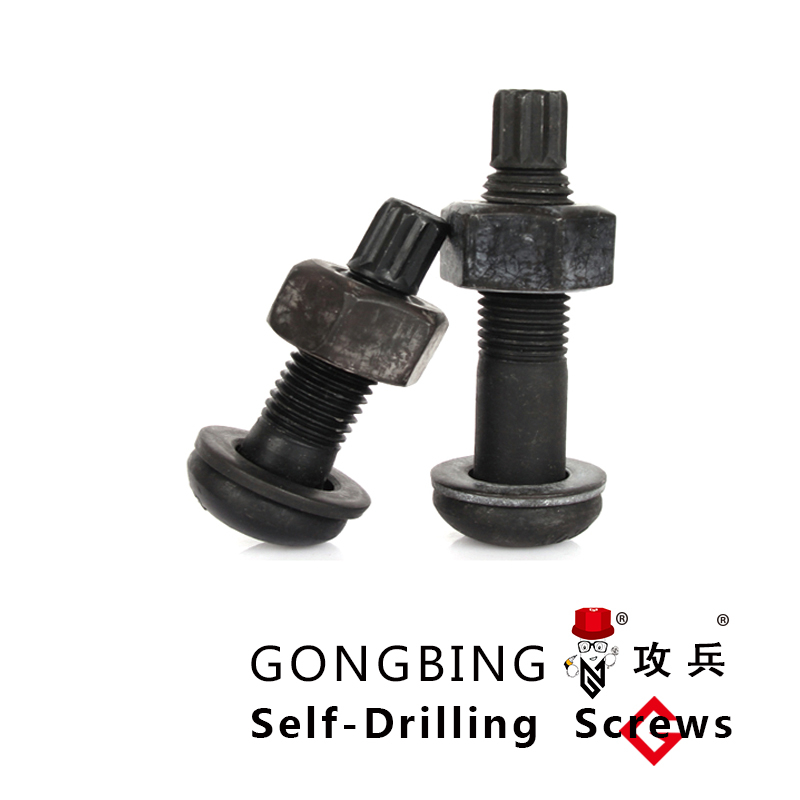
Core specs (real-world picks)
| Size range | M12–M36 (metric) |
| Material | Carbon Steel / Alloy Steel; property class 8.8 or 10.9 (ISO 898-1) |
| Coating | Hot-dip galvanized (ISO 10684), thickness ≈ 50–85 μm; black oiled optional |
| Threads | ISO 261/965 coarse, tolerance 6g; compatibility checked after HDG |
| Head/Nut/Washer | EN 14399-4 bolt, EN 14399-6 HV nut, EN 14399-5 washer (assemblies) |
| Tensile strength | 8.8: ≥800 MPa; 10.9: ≥1000 MPa (ISO 898-1) |
| Origin & Certification | China; ISO 9001; EN 14399 suitability testing available |
Process flow (short version)
- Materials: Selected steel grades per ISO 898-1 with heat lot traceability.
- Methods: Cold/Hot forging, machining, thread rolling; heat treatment; HDG to ISO 10684; post-galv threading gauged.
- Testing: Dimensional checks (GO/NO-GO), hardness, tensile/wedge, proof load, torque–tension (EN 14399-2), coating thickness; salt spray per ISO 9227 as screening.
- Service life: In C3–C4 atmospheres, HDG thickness in this range can reach 20–50 years, conditions depending (ISO 9223 guidance; real-world use may vary).
- Industries: Steel construction, energy, marine terminals, rail, petrochem.
Applications & advantages
Use the Heavy Hex Head Bolt for slip-critical or preloaded joints. Advantages: higher clamp force, better wrench engagement, robust corrosion protection with HDG, and globally recognized standards. A small digression: installers love consistent nut factors; project managers love shipments that pass site inspection the first time.
Vendor snapshot (comparative)
| Vendor | Lead Time | Certs | QC/Testing | Notes |
|---|---|---|---|---|
| HBXZ Fastener (origin China) | Around 2–5 weeks | ISO 9001; EN 14399 docs on request | Dimensional, tensile, coating, torque–tension | Competitive pricing; customization friendly |
| Regional stockist | Immediate–2 weeks | Mill certs | Basic mechanical + gauge | Fast delivery; limited customization |
| Global brand | 3–8 weeks | Broad (incl. CE for EN 14399) | Full suite incl. traceability | Premium price; deep documentation |
Customization
Options include stamped head marks, alternative coatings (e.g., zinc flake), special thread lengths, matched nut/washer assemblies, and packaging with heat-number labels or QR codes. To be honest, packaging and traceability save more time than people expect.
Mini case studies
- Coastal footbridge retrofit: HDG Heavy Hex Head Bolt assemblies passed torque–tension checks on-site; inspector noted uniform nut factor after lubrication.
- Wind farm tower upgrade: Engineers chose 10.9 assemblies; many installers said the larger head gave “forgiving” wrench fit during night shifts.
Testing & typical data
Routine checks: wedge tensile (ISO 898-1), proof load, hardness, impact (where specified), coating thickness microns, and salt spray screening per ISO 9227 (NSS). For HDG, I’ve seen >600 h NSS as a practical screening result—useful, though not a direct predictor of outdoor life.
Final thought: if your spec calls for preloaded joints, insist on EN 14399 assemblies with documented suitability testing. It seems obvious, but it’s still the most common gap I see in submittals.
Authoritative citations
- EN 14399-4: High-strength structural bolting assemblies for preloading — Hexagon bolts and nuts
- ISO 898-1: Mechanical properties of fasteners — Bolts, screws and studs
- ISO 10684: Hot dip galvanized coatings on threaded fasteners
- ISO 9227: Corrosion tests in artificial atmospheres — Salt spray tests
- ISO 4014/4017: Hexagon head bolts — Product grades A and B
-
Guide to High Quality Stainless Steel Expansion FastenersNewsApr.16,2026
-
Ultimate Guide to Industrial Sheet Metal Expansion AnchorsNewsApr.16,2026
-
High Efficiency Fastening Guide for Plastic Expansion RivetsNewsApr.16,2026
-
Plastic Expanding Nut Guide for Applications and BenefitsNewsApr.16,2026
-
Ultimate Guide to Stability and Use of Nail Expansion AnchorNewsApr.16,2026
-
Guide to Choosing and Installing the Right Metal Expansion ScrewNewsApr.16,2026