
Heavy Hex Head Bolt – High Strength for Steel Structures
M12–M36 Carbon Steel HDG Metric Heavy Hex Head Structural Bolt: Real-World Notes from the Field
If you work around steelwork, you already know the humble heavy hex head bolt does a disproportionate amount of heavy lifting—literally. This metric set (M12–M36), hot-dip galvanized, from China, is the kind of product I keep seeing on bridge retrofits and wind projects. To be honest, what wins people over is consistent clamp force and coatings that last without drama.
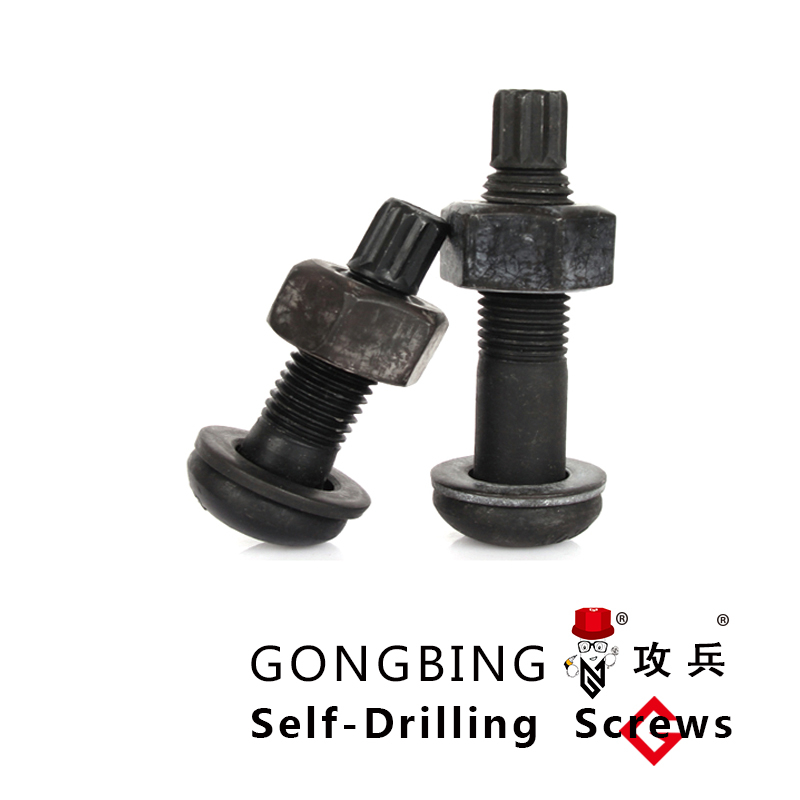
Industry snapshot
Structural steel demand is up—data centers, grid upgrades, onshore wind, you name it. The trend I keep hearing from EPCs is traceability and slip-factor predictability under EN 1090/EN 14399 or ASTM/RCSC rules. Also, price discipline matters again; many customers say they want “proper price, guaranteed quality”—not fancy, just compliant and consistent.
Technical specs (short version)
| Size Range | M12–M36 (metric, coarse thread per ISO 261/965) |
| Material | Carbon/Alloy Steel (e.g., C45E, 40Cr), Q&T |
| Property Class | 8.8 / 10.9 (ISO 898-1) |
| Finish | HDG per ISO 10684 or ASTM A153, thickness ≈ 50–85 μm |
| Standards (assemblies) | EN 14399 (HR sets) or ASTM F3125 (A325/A490 equivalent) |
| Typical Tensile (10.9) | ≥ 1040 MPa; yield ≥ 940 MPa (real-world may vary by lot) |
Where they’re used
Bridges, stadium roofs, transmission towers, wind turbine towers, petrochemical pipe racks, rail viaducts, and solar trackers. The larger bearing area of a heavy hex head bolt helps spread load and reduce embedding, especially on slotted connections and thicker gusset plates.
Manufacturing and QC workflow
- Steel selection and forging: hot forged heads for M24–M36; thread rolling after Q&T.
- Heat treatment: quench and temper for class 8.8/10.9; hardness verified (HRC/HRB).
- HDG: controlled pickling, spin-galvanizing to avoid thread overbuild; optional baking to mitigate hydrogen embrittlement risk on higher strengths.
- Testing: dimensional gauges, proof load/UTS per ISO 898-1, wedge tensile, coating thickness, friction coefficient checks (target μ ≈ 0.12–0.18 with lubricant), salt-spray indicative checks (interpret with care for HDG).
- Traceability: heat/lot numbers, MTCs (EN 10204 3.1).
Service life? In C3–C4 atmospheres (ISO 9223), HDG sets often run 15–30 years with normal maintenance. Coastal C5 needs extra caution; many engineers now specify sealing or duplex systems.
Advantages that matter onsite
- High clamp force with predictable tensioning (TC bolts or calibrated torque methods).
- HDG durability; the sacrificial zinc buys time when coatings get nicked.
- Better bearing under dynamic loads; installers like the wrenching feel—surprisingly consistent.
One foreman told me their last viaduct phase saw around 8–12% faster erection thanks to pre-matched nut/washer sets and less rework on coating-thick threads. Not lab data, but it tracks with what I’ve seen.
Vendor snapshot (what buyers compare)
| Vendor | Lead Time | Certs | MOQ | Notes |
|---|---|---|---|---|
| HBXZ (China, this product) | 2–5 weeks ≈ | ISO 9001; EN 10204 3.1 | Around 500–1,000 sets | Good HDG control; customization friendly |
| Import Brand A | Stock–3 weeks | EN 14399 system | Higher | Premium pricing; strong documentation |
| Local Distributor B | Immediate–2 weeks | Mixed | Low | Convenient, but lot traceability varies |
Customization
Special head marks, alternative coatings (zinc flake, duplex paint), pre-lubed nuts for calibrated torque, and packaging by lot. For slip-critical work, ask for assembly testing data; engineers like seeing μ and k-factor with real nuts/washers.
Quick case notes
Bridge retrofit (C4): M24–M30 10.9 sets, HDG 70 μm avg; tension scatter improved after waxing—installer rejected rate fell below 0.5%. Wind farm (onshore): M36 flanges; crews reported fewer re-torques after a week’s thermal cycling. It seems the larger head really helps with seating on thick flanges.
If you need a straight-talking, spec-compliant heavy hex head bolt with solid HDG, this set deserves a look—especially when budgets are tight but paperwork still matters.
Authoritative references
- ISO 898-1: Mechanical properties of fasteners—Bolts, screws and studs.
- EN 14399 (Parts 1–10): High-strength structural bolting assemblies for preloading.
- ISO 10684: Hot dip galvanized coatings on threaded fasteners.
- ASTM F3125 (incl. former A325/A490).
- ASTM A153/A153M: Zinc Coating (Hot-Dip) on Iron and Steel Hardware.
- ISO 9223: Corrosion of metals—Corrosivity of atmospheres.
-
Guide to High Quality Stainless Steel Expansion FastenersNewsApr.16,2026
-
Ultimate Guide to Industrial Sheet Metal Expansion AnchorsNewsApr.16,2026
-
High Efficiency Fastening Guide for Plastic Expansion RivetsNewsApr.16,2026
-
Plastic Expanding Nut Guide for Applications and BenefitsNewsApr.16,2026
-
Ultimate Guide to Stability and Use of Nail Expansion AnchorNewsApr.16,2026
-
Guide to Choosing and Installing the Right Metal Expansion ScrewNewsApr.16,2026