
Butterfly Toggle Bolts : Enhancing Structural Resilience
In earthquake-prone regions, the integrity of buildings and infrastructure hinges on the reliability of every fastener and anchor. Among the most critical components are butterfly toggle bolts, butterfly anchor bolts, and butterfly anchor screws—specialized hardware designed to distribute dynamic loads and resist seismic forces. These fasteners are increasingly prioritized in construction codes for their ability to prevent catastrophic failures during tremors. This article explores how these systems enhance structural resilience, innovations in their design, and the wholesale strategies that make them accessible for large-scale seismic retrofitting and construction projects.
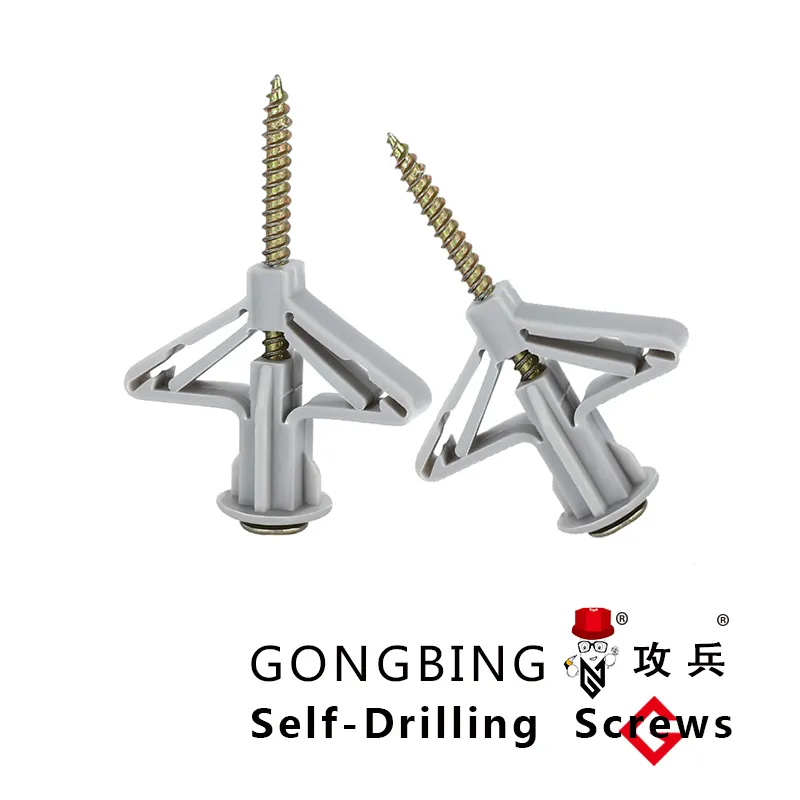
The Mechanics of Butterfly Toggle Bolts in Seismic Resistance
Butterfly toggle bolts are hollow-wall anchors that deploy spring-loaded wings behind drywall, plaster, or masonry to create a secure hold. In earthquake-prone areas, their ability to absorb and redistribute lateral and vertical forces makes them indispensable. When seismic activity occurs, traditional fasteners may loosen due to repetitive stress, but butterfly toggle bolts maintain grip through:
Load distribution: The expanded wings spread forces across a broader surface area.
Flexibility: High-grade steel or alloy construction allows slight movement without fracturing.
Vibration damping: Rubberized or nylon components in some models reduce resonance.
For example, in retrofitting older masonry buildings, butterfly anchor bolts are often used to reinforce non-structural elements like suspended ceilings or HVAC systems, which are prone to collapse during quakes. Wholesale suppliers emphasize standardized sizing and materials to ensure compatibility with diverse construction materials, from brittle concrete to composite panels.
Advantages of Butterfly Anchor Bolts for Earthquake-Prone Construction
Butterfly anchor bolts excel in anchoring heavy fixtures to hollow or fragile substrates common in seismic zones. Key benefits include:
Ease of installation: Pre-assembled wings reduce labor time, critical for large-scale projects.
Corrosion resistance: Stainless steel or galvanized variants prevent degradation in humid or coastal regions.
In regions like the Pacific Ring of Fire, contractors rely on butterfly anchor screws to secure emergency exit signs, fire suppression systems, and electrical conduits. Their threaded design ensures minimal slippage even during prolonged shaking, a feature validated by seismic simulation tests. For wholesalers, offering bulk kits with multiple bolt sizes and materials streamlines procurement for developers managing multi-phase projects.
Innovations in Butterfly Anchor Screw Design for Structural Resilience
Recent advancements in butterfly anchor screw technology focus on enhancing durability and adaptability:
Dual-stage deployment: Wings that lock at two angles for improved grip in cracked or uneven substrates.
Smart coatings: Epoxy or ceramic layers that resist heat and chemical exposure in industrial settings.
Modular compatibility: Universal heads that fit standard and impact drivers, reducing tooling costs.
In Japan, where seismic codes are among the strictest, butterfly toggle bolts with carbon-fiber-reinforced wings are gaining traction for their lightweight yet ultra-strong properties. These innovations are particularly valuable for retrofitting historic buildings, where drilling must be minimally invasive. Wholesale suppliers now provide customizable batches, allowing contractors to order anchors pre-coated for specific environments (e.g., coastal salt resistance or high-temperature factories).
Cost-Efficiency and Scalability in Wholesale Butterfly Toggle Bolt Procurement
For developers and governments managing seismic upgrades, bulk purchasing of butterfly toggle bolts offers significant advantages:
Volume discounts: Orders exceeding 10,000 units often reduce per-anchor costs by 20–30%.
Standardization: Uniform sizing across projects simplifies inventory management and training.
Rapid deployment: Pre-packaged kits for common applications (e.g., ceiling grids, ductwork) cut installation time.
Centralized distribution hubs further optimize logistics. A seismic retrofit program in California cut costs by 15% by sourcing butterfly anchor bolts directly from wholesalers, bypassing intermediaries. Additionally, digital platforms now enable real-time tracking of bulk orders, ensuring just-in-time delivery to construction sites.
FAQ: Butterfly Toggle Bolts in Earthquake Resilience
How do butterfly toggle bolts improve safety during earthquakes?
Butterfly toggle bolts distribute seismic forces across a wider area, reducing stress on substrates. Their flexible design accommodates movement without losing grip, preventing fixtures from detaching during tremors.
What distinguishes butterfly anchor bolts from standard anchors?
Butterfly anchor bolts feature spring-loaded wings that deploy behind walls, offering superior pull-out strength and vibration resistance compared to screw-in or adhesive anchors.
Can butterfly anchor screws be used in concrete or brick?
Yes. While ideal for hollow walls, many butterfly anchor screws are rated for solid materials like concrete or brick, provided the correct drill bit and torque settings are used.
Why is wholesale procurement critical for butterfly anchor screws ?
Bulk purchasing ensures cost consistency, reduces supply chain delays, and guarantees material uniformity across large sites—key for compliance with seismic safety standards.
Are butterfly toggle bolts reusable after an earthquake?
No. Once subjected to significant seismic forces, butterfly toggle bolts should be replaced, as stress can compromise their structural integrity.
In earthquake-prone regions, butterfly toggle bolts, butterfly anchor bolts, and butterfly anchor screws are not just fasteners—they are lifelines. Their ability to combine strength, flexibility, and ease of installation makes them indispensable for modern seismic resilience strategies. For wholesalers and large-scale developers, investing in these systems ensures projects meet rigorous safety codes while optimizing costs. As urban density and climate risks grow, the demand for such innovations will only intensify, anchoring safer futures for communities worldwide.
-
Guide to High Quality Stainless Steel Expansion FastenersNewsApr.16,2026
-
Ultimate Guide to Industrial Sheet Metal Expansion AnchorsNewsApr.16,2026
-
High Efficiency Fastening Guide for Plastic Expansion RivetsNewsApr.16,2026
-
Plastic Expanding Nut Guide for Applications and BenefitsNewsApr.16,2026
-
Ultimate Guide to Stability and Use of Nail Expansion AnchorNewsApr.16,2026
-
Guide to Choosing and Installing the Right Metal Expansion ScrewNewsApr.16,2026