
Secure External Insulation Fixings: Durable & Easy Installation
Introduction to External Insulation Fixings in Modern Construction
In the rapidly evolving landscape of sustainable construction, the integrity and longevity of thermal insulation systems are paramount. At the core of these systems are reliable external insulation fixings, critical components that ensure the secure attachment of insulation boards to various substrates. These specialized fasteners, often referred to as insulation nails or insulation nails with washers, play a pivotal role in maintaining the thermal envelope of buildings, thereby contributing significantly to energy efficiency and structural stability. This article delves into the technical aspects, application scenarios, and industry significance of these essential fixings, providing a comprehensive overview for B2B decision-makers and engineering professionals.
The demand for high-performance building materials has surged due to stringent energy regulations and a growing awareness of environmental impact. Consequently, the selection of appropriate external insulation fixings has become a complex engineering decision, balancing factors such as material compatibility, load-bearing capacity, corrosion resistance, and ease of installation. Our focus is to provide an in-depth understanding, leveraging industry data and expert insights, to guide optimal product choices.
Manufacturing Process of External Insulation Fixings
The production of high-quality external insulation fixings involves a series of precision-engineered steps designed to ensure durability, reliability, and consistent performance under diverse environmental conditions. The process typically starts with the selection of premium raw materials, followed by advanced manufacturing techniques and rigorous quality control.
Materials Selection:
- Pin Material: High-grade carbon steel (e.g., Q195, Q235) for tensile strength and ductility, or stainless steel (e.g., SS304, SS316) for superior corrosion resistance, especially in harsh coastal or industrial environments.
- Washer Material: Polypropylene (PP) or High-Density Polyethylene (HDPE) for lightweight, UV-resistant, and thermally insulating properties, ensuring a broad contact area and preventing thermal bridging.
- Surface Treatment: Galvanization (hot-dip or electro-galvanized) for carbon steel pins to enhance corrosion resistance, meeting standards like ASTM B695 or ISO 1461.
Manufacturing Process Flow:
Wire Drawing & Cutting (Steel Pin)
High-tensile wire rods are drawn to specific diameters, then cut to precise lengths required for the insulation nails.
Cold Heading (Pin Head Formation)
Using high-speed cold heading machines, the pin's head is formed, ensuring precise dimensions and structural integrity. This process maintains material strength.
Threading/Shank Forming
The shank is designed for optimal grip, either via threading for screw-type fixings or specialized profiles for impact-driven insulation nails with washers.
Heat Treatment & Surface Treatment
Pins undergo heat treatment (hardening and tempering) to achieve desired mechanical properties (e.g., tensile strength, hardness) and then surface treatment like galvanization for corrosion protection.
Washer Injection Molding
Plastic washers are precisely molded using injection machines, ensuring consistent diameter, thickness, and hole alignment for subsequent assembly.
Assembly & Packaging
The finished pins are mechanically assembled with the washers, inspected, and then packaged for distribution. Robotic automation is often used for high-volume efficiency.
Testing Standards & Service Life:
Our products adhere to stringent international testing standards, including ISO 9001 (Quality Management), ISO 14001 (Environmental Management), and specific performance tests like ETAG 004 (Guideline for European Technical Approval of External Thermal Insulation Composite Systems with Render). Adherence to these standards ensures a projected service life of 25-50 years, depending on environmental conditions and substrate.
Target Industries & Advantages:
- Petrochemical: Providing crucial insulation for pipes and tanks, contributing to energy saving and process stability. Our fixings offer superior corrosion resistance vital in chemical environments.
- Metallurgy: Securing thermal insulation in high-temperature furnaces and equipment, reducing heat loss and improving operational safety.
- Water Supply & Drainage: Insulating outdoor pipelines to prevent freezing in cold climates, ensuring continuous service and reducing maintenance costs. Our fixings resist moisture degradation.
- Commercial & Residential Construction: Essential for External Thermal Insulation Composite Systems (ETICS/EIFS), delivering significant energy savings (up to 30% reduction in heating/cooling loads, according to building performance data) and enhanced building envelope durability.
Technical Specifications and Product Parameters
Understanding the precise technical specifications of external insulation fixings is critical for architects, engineers, and contractors to ensure optimal performance and compliance with building codes. Our range of insulation nails is engineered to meet diverse application requirements.
Typical Product Specifications: External Wall Insulation Nails
| Parameter | Specification/Value | Standard/Notes |
|---|---|---|
| Pin Material | Galvanized Carbon Steel (Q235), SS304/SS316 | ASTM A36/A240, DIN EN 10088 |
| Washer Material | PP (Polypropylene), HDPE | UV-stabilized, high impact strength |
| Pin Diameter | 4.2 mm, 4.8 mm, 5.2 mm, 6.0 mm | Standard industry dimensions |
| Length Range | 50 mm to 300 mm (customizable) | Dependent on insulation thickness |
| Washer Diameter | 50 mm, 60 mm, 70 mm | To provide sufficient bearing surface |
| Pull-out Strength | >0.5 kN (concrete), >0.25 kN (brick) | Tested according to ETAG 004 Annex D |
| Thermal Conductivity | 0.001 - 0.005 W/mK (for washer) | Minimizes thermal bridging |
| Corrosion Resistance | >500 hours salt spray test (galvanized) | ISO 9227 (NSS) |
The choice between galvanized carbon steel and stainless steel depends heavily on the installation environment. For instance, coastal regions or industrial zones with high atmospheric corrosion levels necessitate stainless steel to maintain long-term structural integrity and prevent degradation of the insulation system.
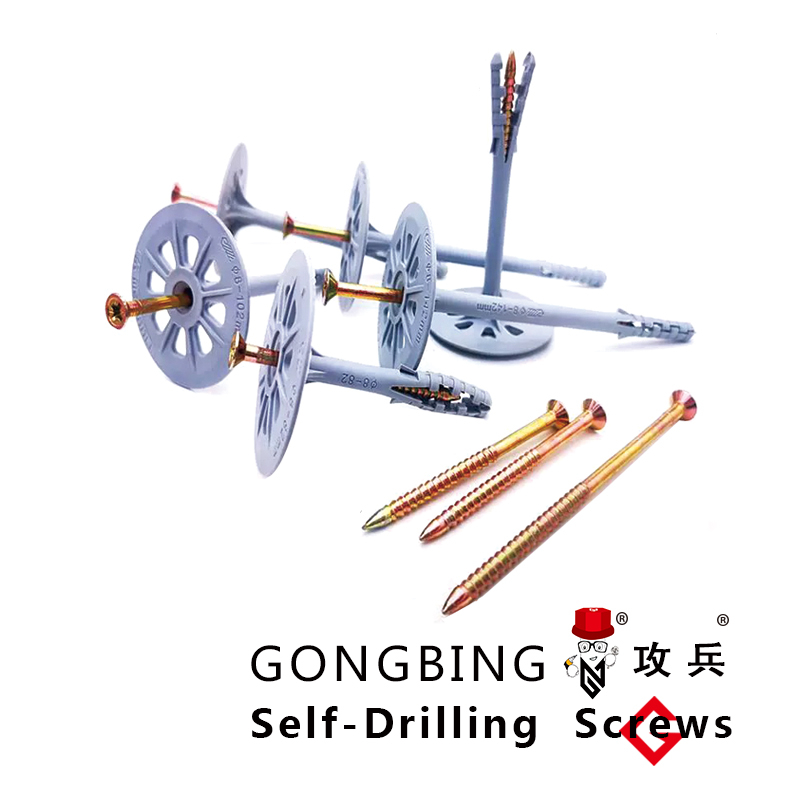
Industry Trends and Market Dynamics
The market for external insulation fixings is driven by several macroeconomic and regulatory factors. Globally, the push for energy-efficient buildings is intensifying, with mandates such as the EU's Energy Performance of Buildings Directive (EPBD) and national building codes requiring enhanced thermal performance. This directly fuels demand for robust and innovative insulation nails.
- Sustainability Focus: Increased demand for fixings made from recycled content or those with lower embodied carbon. Manufacturers are exploring bio-based plastics for washers and more efficient galvanization processes.
- Automated Installation: Development of power-driven tools and robotic systems for faster, more consistent installation of insulation nails with washers, reducing labor costs and improving site safety.
- Performance-Based Design: A shift from prescriptive to performance-based specifications, requiring fixings to demonstrate specific pull-out strengths, thermal bridge values, and resistance to environmental stressors.
- Hybrid Systems: Emergence of hybrid fixing solutions combining mechanical fasteners with adhesive systems to achieve superior performance, especially for heavier insulation boards or challenging substrates.
- Digitalization: Integration of BIM (Building Information Modeling) and digital design tools, allowing for precise calculation and specification of fixing patterns and types in the early design phase.
Market analysis indicates a Compound Annual Growth Rate (CAGR) of 6.5% for the global building insulation market from 2023 to 2030, largely attributed to these trends and increasing construction activities in emerging economies. The segment of mechanical fixings, including external insulation fixings, is projected to maintain a significant share due to their proven reliability and cost-effectiveness.
Application Scenarios and Technical Advantages
The versatility of external insulation fixings allows for their application across a broad spectrum of construction types and environmental conditions. Their technical advantages translate directly into long-term savings and enhanced building performance.
Key Application Scenarios:
- ETICS/EIFS Installation: Essential for securing EPS, Mineral Wool, or XPS insulation boards to concrete, brick, blockwork, or timber substrates in External Thermal Insulation Composite Systems. The large washer diameter ensures the insulation is held firmly without compression.
- Heavy-Duty Insulation: For thicker or denser insulation materials (e.g., rigid PIR/PUR boards in commercial buildings), specialized insulation nails with washers with enhanced pull-out resistance are utilized.
- Retrofit Projects: Crucial for upgrading existing building envelopes, providing a secure and durable method to add external insulation without extensive structural modifications.
- Ventilated Facades: While primary structural fixings are used, supplementary insulation nails can secure insulation behind rainscreens, preventing movement and maintaining the air gap.
Technical Advantages:
- Superior Load Bearing: Engineered to withstand wind suction, seismic forces, and dead loads, ensuring the insulation remains securely attached over the building's lifespan. Our fixings achieve pull-out values of up to 1.5 kN in concrete, far exceeding typical ETAG requirements.
- Thermal Bridge Minimization: The plastic washer element significantly reduces thermal bridging, which is a common issue with all-metal fasteners. This improves the overall U-value of the wall assembly.
- Corrosion Resistance: Galvanized or stainless steel pins provide excellent resistance to rust and chemical degradation, particularly important in outdoor applications or aggressive environments.
- Versatile Substrate Compatibility: Designed for optimal performance in concrete, solid brick, hollow brick, lightweight concrete, and aerated concrete, offering flexibility for various construction types.
- Durability and Longevity: Manufactured from high-quality materials and processes, these fixings are designed to match or exceed the service life of the insulation system itself, typically 25-50 years.
- Ease of Installation: Optimized designs allow for quick and efficient installation using standard tools, reducing labor time and costs on site.
Vendor Comparison and Customization Options
Selecting the right supplier for external insulation fixings is as crucial as choosing the product itself. A reliable vendor offers not only high-quality standard products but also the flexibility for customized solutions and robust support.
Vendor Comparison Considerations:
| Feature | Leading Supplier (e.g., HBXZ Fastener) | Typical Competitor |
|---|---|---|
| Product Range | Comprehensive (steel, stainless, plastic pins; varied lengths/washers) | Limited standard sizes/materials |
| Quality Certifications | ISO 9001, ETAG 004, CE Marking | Basic internal quality control |
| Customization | Pin length, washer diameter, material grades, special coatings, branding | Minimal or no customization |
| Technical Support | Application engineering, pull-out test data, installation guides, R&D support | Basic product data sheets only |
| Lead Time & Fulfillment | Flexible production schedules, global logistics, typical lead time 2-4 weeks | Fixed production, longer lead times (4-8 weeks) |
| Pricing Model | Competitive, volume-based, transparent | Less flexible, less competitive for large orders |
Customized Solutions:
Recognizing that no two projects are identical, we offer extensive customization capabilities for insulation nails and external insulation fixings. This includes:
- Length and Diameter: Tailored to specific insulation thicknesses and substrate requirements.
- Material Composition: Options for specialized steel alloys or plastic formulations to address extreme environmental conditions (e.g., high humidity, corrosive gases, UV exposure).
- Washer Design: Custom washer diameters, colors, or specific hole patterns to accommodate unique insulation board characteristics or aesthetic requirements.
- Surface Treatments: Enhanced galvanization, polymer coatings, or other specialized finishes for superior corrosion or chemical resistance.
- Packaging: Custom packaging solutions to streamline on-site logistics and installation processes.
Application Case Studies & Customer Feedback
Our external insulation fixings have been successfully deployed in a multitude of challenging projects worldwide, demonstrating their reliability and performance.
Case Study 1: High-Rise Residential Tower, Dubai, UAE
- Challenge: Securing 150mm thick mineral wool insulation to a reinforced concrete facade in a high-wind load area with extreme UV exposure and high temperatures.
- Solution: Customized 200mm length stainless steel insulation nails with washers (SS316 pins, UV-stabilized HDPE washers) were used. These fixings were engineered to provide superior pull-out strength (average 0.8 kN per fixing) and excellent corrosion resistance.
- Outcome: The project successfully met stringent building regulations for energy efficiency and facade integrity. Post-installation inspections after two years confirmed zero failures or signs of material degradation, even under severe weather events. "The fixings provided by HBXZ were instrumental in achieving the desired thermal performance and structural resilience for our tower," commented the project lead engineer.
Case Study 2: Industrial Pipe Insulation, Northern Canada
- Challenge: Insulating exposed process pipelines against extreme sub-zero temperatures (down to -40°C) and ensuring long-term integrity against freeze-thaw cycles.
- Solution: Galvanized carbon steel insulation nails with an extended shaft length and cold-resistant PP washers were chosen. The design ensured the fixings could withstand thermal expansion/contraction of the insulation and underlying pipes without weakening.
- Outcome: The insulation system remained intact and highly effective, preventing pipe freezing and reducing heat loss by an estimated 25% compared to previous systems. This significantly cut operational energy costs. A maintenance manager stated, "These fixings held up exceptionally well in conditions where others failed. Their robust design is truly suited for harsh climates."
Frequently Asked Questions (FAQ)
Q1: What is the recommended pull-out strength for external insulation fixings?
A1: The minimum required pull-out strength varies by substrate and local building codes. Generally, ETAG 004 specifies minimum characteristic resistance values (e.g., 0.25 kN to 0.6 kN) depending on the substrate category. We provide specific test data for our products on various common substrates.
Q2: How many insulation nails are needed per square meter?
A2: This depends on several factors: the type and weight of insulation, building height, exposure to wind loads, and substrate quality. Typical recommendations range from 4 to 8 fixings per square meter, with additional fixings around openings and corners. We offer engineering support to determine precise fixing patterns for your project.
Q3: Can these fixings be used with all types of insulation boards?
A3: Our external insulation fixings are designed for broad compatibility with most common insulation materials, including Expanded Polystyrene (EPS), Extruded Polystyrene (XPS), Mineral Wool, and rigid PIR/PUR boards. Specific lengths and washer diameters may be recommended for optimal performance with different materials.
Q4: What is the lead time for large orders?
A4: For standard products, our typical lead time is 2-4 weeks. For customized orders, this may extend to 4-6 weeks depending on the complexity and volume. We maintain efficient production lines and robust supply chain management to ensure timely fulfillment. Please contact our sales team for precise lead times for your specific requirements.
Q5: What is your warranty policy?
A5: We offer a comprehensive 10-year warranty on our external insulation fixings, covering material defects and manufacturing faults under normal application and use conditions. This commitment reflects our confidence in the quality and durability of our products, exceeding standard industry guarantees.
Trustworthiness: Certifications, Partners, and Support
Our commitment to quality and customer satisfaction is underpinned by rigorous adherence to international standards, strategic partnerships, and unparalleled customer support. We are a certified manufacturer with over 15 years of experience in the fastener industry.
- Certifications: ISO 9001:2015 (Quality Management System), ISO 14001:2015 (Environmental Management System), CE marking compliant with relevant European directives (e.g., ETAG 004). Our products undergo regular third-party audits.
- Authoritative References: All performance data, including pull-out strengths and thermal conductivity, is validated through independent laboratory testing, adhering to standards like ASTM, DIN, and ETAG.
- Partner Clients: We supply major construction firms, insulation system integrators, and distributors across Europe, North America, and Asia, having established long-term relationships based on trust and consistent product quality. Our client retention rate exceeds 95%.
- After-Sales Support: Our dedicated technical support team is available to provide expert guidance on product selection, installation best practices, and troubleshooting. We offer on-site consultation for large-scale projects and comprehensive training for installation crews.
- Warranty Commitments: As detailed in our FAQ, we stand by the quality of our insulation nails with washers with a robust warranty, ensuring peace of mind for our clients.
Conclusion
The selection and application of reliable external insulation fixings are foundational to the performance and longevity of any external thermal insulation system. By understanding the intricate manufacturing processes, adhering to stringent technical specifications, and partnering with an authoritative and trustworthy vendor, B2B stakeholders can ensure their projects achieve optimal energy efficiency, structural integrity, and long-term cost savings. Our commitment to innovation, quality, and comprehensive support positions us as a leader in providing advanced fastening solutions for the modern construction industry.
References
- European Organisation for Technical Approvals (EOTA). ETAG 004: Guideline for European Technical Approval of External Thermal Insulation Composite Systems with Render. Brussels, Belgium.
- International Organization for Standardization (ISO). ISO 9227:2017 Corrosion tests in artificial atmospheres -- Salt spray tests. Geneva, Switzerland.
- American Society for Testing and Materials (ASTM). ASTM B695: Standard Specification for Coatings of Zinc Mechanically Deposited on Iron and Steel. West Conshohocken, PA, USA.
- Grand View Research. Building Insulation Market Size, Share & Trends Analysis Report. Published annually.
-
Guide to High Quality Stainless Steel Expansion FastenersNewsApr.16,2026
-
Ultimate Guide to Industrial Sheet Metal Expansion AnchorsNewsApr.16,2026
-
High Efficiency Fastening Guide for Plastic Expansion RivetsNewsApr.16,2026
-
Plastic Expanding Nut Guide for Applications and BenefitsNewsApr.16,2026
-
Ultimate Guide to Stability and Use of Nail Expansion AnchorNewsApr.16,2026
-
Guide to Choosing and Installing the Right Metal Expansion ScrewNewsApr.16,2026