
Self Tapping Screw Countersunk Head: Stainless, Strong Hold
Field Notes on the Self Tapping Screw Countersunk Head (Nickel Plated)
I’ve spent a chunk of my career around sheet-metal shops and appliance lines. One fastener keeps showing up—reliably, quietly—like the person who never misses a shift: the Self Tapping Screw Countersunk Head. Nickel plated, clean finish, no fuss. Origin is China, sure, but the right factory setup makes the difference. And this one, to be honest, is ticking the boxes.
Industry trend snapshot: design teams are downsizing hardware counts, asking for nicer cosmetics (brushed metal and satin plastics demand it), and pushing for better corrosion data without breaking BOM cost. Nickel plating is having a moment again—it’s consistent, bright, and plays well with consumer electronics, fixtures, and furniture where the head sits flush and has to look great.
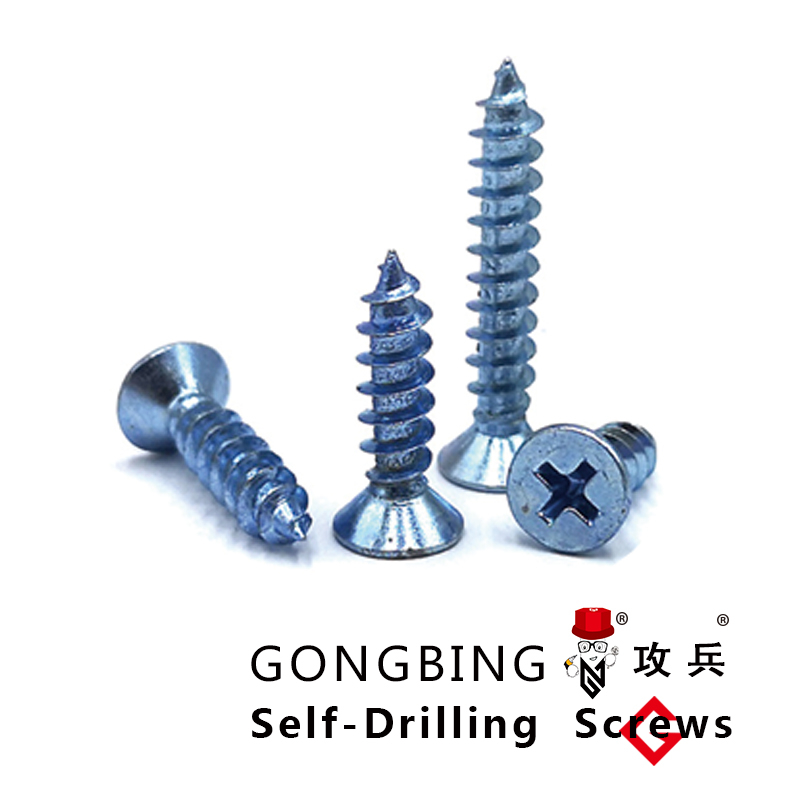
Product specs at a glance (real-world use may vary)
| Parameter | Spec |
|---|---|
| Size range | M3 × L 8–50 mm; M4 × L 10–60 mm; M5 × L 12–100 mm; M6 × L 12–200 mm |
| Head/drive | Countersunk 90° (DIN), ≈82° optional (ANSI); Phillips/Pozidriv/Torx on request |
| Thread | Self-tapping AB/B per ISO 1478; rolled threads |
| Material | C1022 carbon steel (case hardened); A2 stainless optional |
| Finish | Nickel plating per ASTM B733 / ISO 1456, thickness ≈5–12 μm |
| Standards | DIN 7982 / ISO 7050 reference; coating per ISO 4042 |
Where it’s used (and why)
Appliance fascia, lighting trims, HVAC vents, retail fixtures, and electronics housings—all places where a flush head matters and tapping into thin sheet is faster than nut-and-bolt. Many customers say the nickel look “just reads premium,” which is surprisingly persuasive for consumer brands.
Process flow and QC (the short version)
Material selection → cold heading → thread rolling → heat treatment (case hardening) → nickel electroplating → baking (hydrogen relief where applicable) → 100% optical sorting (optional) → torque/drive tests → final pack.
Testing: neutral salt spray per ISO 9227 (96–240 h typical, no red rust on significant surfaces), torque-tension per ISO 16047, dimensions per DIN 7982/ISO 7050 gauges. Service life: around 5–10 years indoor; coastal outdoor use needs extra protection or different coating system.
Field data (sample lots, internal lab)
M4 into 0.9 mm CR steel: install torque ≈1.8–2.3 N·m; failure mode usually cam-out before head strip with Pozidriv. NSS: 144 h, no red rust; at 240 h, scattered edge corrosion—expected for nickel without topcoat. Not lab gospel, but it matches what we see on the line.
Advantages I actually notice
- Sits perfectly flush; no snag points on trims.
- Nickel is forgiving—consistent color across batches.
- Good thread-forming bite in 0.6–1.5 mm sheet; less pilot drama.
Vendor comparison (approximate, for sourcing teams)
| Vendor | Origin | Plating options | Certs | NSS hours | Lead time |
|---|---|---|---|---|---|
| HBXZ Fastener | China | Nickel, Zn, Zn-Ni, black | ISO 9001; RoHS/REACH | 96–240 h (nickel) | 2–4 weeks |
| Global Brand X | EU/SEA | Nickel, Zn, organic topcoats | IATF 16949; RoHS | 144–480 h | 4–6 weeks |
| Local Distributor Y | Regional | Stock finishes | Varies | Stock dependent | Immediate–2 weeks |
Customization
Drive type (PZ/TX), head angle (82°/90°), pilot tip geometry, private-label packaging, optical sorting to ≤50 ppm, and torque spec validation reports. If your line needs low-cam-out Torx, ask for it—saves bits and wrists.
Quick case study
A mid-size EU lighting brand swapped zinc for Self Tapping Screw Countersunk Head nickel plated on decorative bezels. Result: rejection rate fell from 1.8% to 0.4% (mainly cosmetic dents previously). Install torque became more consistent (CV dropped ≈12%), and the satin look matched their brushed aluminum—small change, big win.
Citations:
- DIN 7982 — Cross recessed countersunk head tapping screws.
- ISO 7050 / ISO 1478 — Countersunk tapping screws and thread form.
- ASTM B733 / ISO 1456 — Electrodeposited nickel coatings on ferrous metals.
- ISO 9227 — Corrosion tests in artificial atmospheres (salt spray).
- ISO 4042 — Fasteners: electroplated coatings.
-
Guide to High Quality Stainless Steel Expansion FastenersNewsApr.16,2026
-
Ultimate Guide to Industrial Sheet Metal Expansion AnchorsNewsApr.16,2026
-
High Efficiency Fastening Guide for Plastic Expansion RivetsNewsApr.16,2026
-
Plastic Expanding Nut Guide for Applications and BenefitsNewsApr.16,2026
-
Ultimate Guide to Stability and Use of Nail Expansion AnchorNewsApr.16,2026
-
Guide to Choosing and Installing the Right Metal Expansion ScrewNewsApr.16,2026