
Using Chemical Anchors for Safer, Faster, Stronger Installs?
Field Notes on using chemical anchors in 2025: What Works and What’s Hype
If you’ve installed rails on a windy viaduct or hung a chiller on a tired concrete wall, you already know the difference a bonded anchor makes. The industry is buzzing—new resins, stricter standards, smarter cartridges. And, to be honest, a lot of marketing fluff. Here’s the pragmatic view from countless site visits and a fair share of lab reports.
Trend check
- Shift from polyester to vinyl ester/epoxy for higher temperature resistance and seismic performance.
- Design per EN 1992-4 and ACI 318/355.4 becoming baseline, not “premium.”
- Pre-approved systems with ETA/ICC-ES reports preferred by GCs to cut RFIs and liability.
Product snapshot (DIN Standard, Vinyl-Resin Bolt)
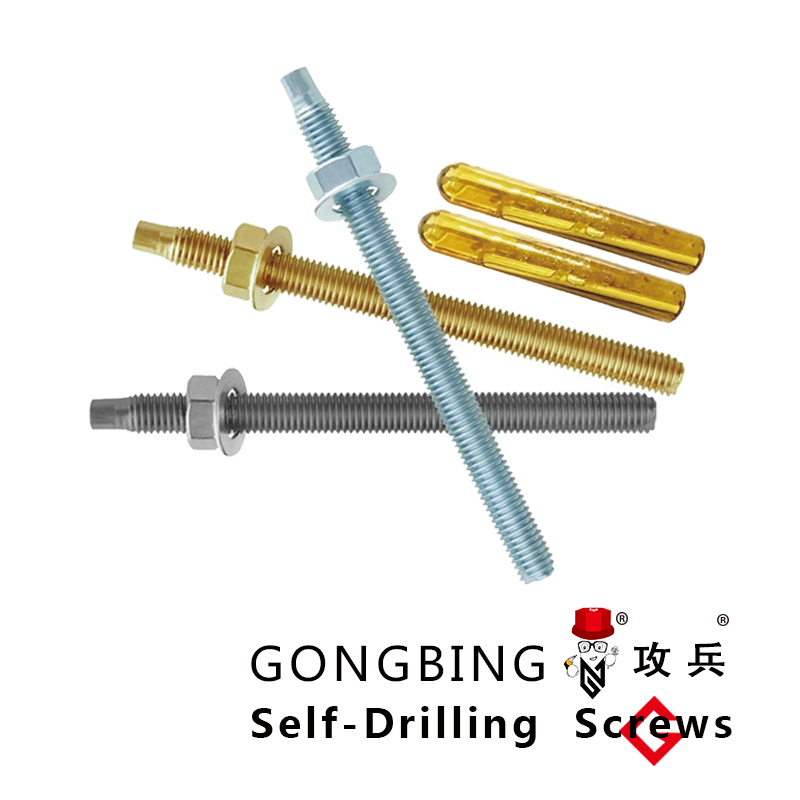
Origin: China. Many customers say the current batches feel consistent—less smell, cleaner cure. Below is a concise spec view of the DIN Standard Good Quality Steel Material Chemical Anchor Bolt From Direct Factory.
| Parameter | Spec (≈ real-world) |
|---|---|
| Base Resin | Vinyl resin (vinyl ester family), early name “chemical bolt” |
| Steel Grades | Carbon steel 8.8/10.9; SS A2/A4 on request |
| Diameter Range | M8–M30 (common: M10–M20) |
| Coating | Zinc plated, HDG, or plain; corrosion class per ISO 12944 project-by-project |
| Cure Time @ 20°C | ≈ 20–45 min; full load after 24 h (temperature dependent) |
| Working Temp | -40°C to +80°C (short-term up to +120°C typical) |
| Standards | DIN fastener dimensions; tested against ACI 355.4 / ICC-ES AC308 / EAD 330499 guidance (project docs may vary) |
Where it shines
- Cracked and uncracked concrete, dense masonry.
- Seismic retrofits, handrails, façade brackets, MEP supports, racking.
- Close edge distances and minimal spacing where expansion anchors struggle.
Process flow that actually works on site
- Materials: threaded rod/nut per ISO 898-1 or ISO 3506; vinyl-resin cartridge; brush + blower (or hollow drill), dispenser.
- Method: drill to design depth; clean 2× blow, 2× brush, 2× blow; inject from bottom out; rotate rod while inserting; respect gel/cure time per temp chart.
- Testing: proof-load a sample set; for formal jobs, use ACI 355.4 or ETAG/EAD protocol pull tests.
- Service life: typically designed for 25–50 years when protected from UV/chemicals; check chloride exposure and specify stainless if needed.
Vendor landscape (quick reality check)
| Vendor | Core strengths | Notes |
|---|---|---|
| HBXZ Fastener (China) | Direct factory pricing, DIN-focused bolts, customization on batches | Good for volume orders; request batch test reports and cure-time charts |
| Hilti | Broad ETA/ICC portfolio, strong tech support, seismic data | Premium pricing; great for complex approvals |
| fischer | Reliable bonded systems, software design tools | Balanced cost vs certification footprint |
Customization and test data
Common tweaks: rod length, tip chamfer, stainless grade, and cartridge size. On a recent logistics project, proof tests averaged ≈ 25 kN (M12) and ≈ 45 kN (M16) in C30/37 concrete with proper hole cleaning—surprisingly close to lab curves. As always, real results vary.
Mini case files
- Metro retrofit: 600+ anchors for cable trays; zero spin-outs after switching to hollow-drill cleaning and stricter gel-time control.
- Coastal hotel façade: A4 stainless rods with vinyl ester; maintenance reports at year 3 show no visible corrosion, which is encouraging.
Standards and paperwork that matter
Designers are leaning on EN 1992-4 in the EU and ACI 318/355.4 in North America. Certification footprints like ETA per EAD 330499 or ICC-ES AC308 evaluation are often requested by specifiers—even if not strictly required. Ask for batch CoC, gel/cure profile, and temperature reduction factors before using chemical anchors in safety-critical fixings.
Customer vibe: “Fast cure is nice, but cleaning the hole changed everything.” I guess that’s the quiet truth.
Final take
Vinyl-resin bonded anchors bridge cost and performance well. For light-to-heavy duty in concrete, using chemical anchors is still the most forgiving approach—provided the crew respects hole cleaning and cure times. Paperwork first, torque second.
Authoritative citations
- EAD 330499-00-0601: Bonded Fasteners for Use in Concrete — European Organisation for Technical Assessment
- ACI 355.4: Qualification of Post-Installed Adhesive Anchors in Concrete — American Concrete Institute
- ICC-ES AC308: Acceptance Criteria for Post-Installed Adhesive Anchors in Concrete — ICC Evaluation Service
- EN 1992-4: Design of Fastenings for Use in Concrete — CEN Eurocode
-
Guide to High Quality Stainless Steel Expansion FastenersNewsApr.16,2026
-
Ultimate Guide to Industrial Sheet Metal Expansion AnchorsNewsApr.16,2026
-
High Efficiency Fastening Guide for Plastic Expansion RivetsNewsApr.16,2026
-
Plastic Expanding Nut Guide for Applications and BenefitsNewsApr.16,2026
-
Ultimate Guide to Stability and Use of Nail Expansion AnchorNewsApr.16,2026
-
Guide to Choosing and Installing the Right Metal Expansion ScrewNewsApr.16,2026