
Zinc Plated Chipboard Screws – Corrosion Resistant Grip
Chipboard Screw, Color Zinc Plated: What Pros Really Use
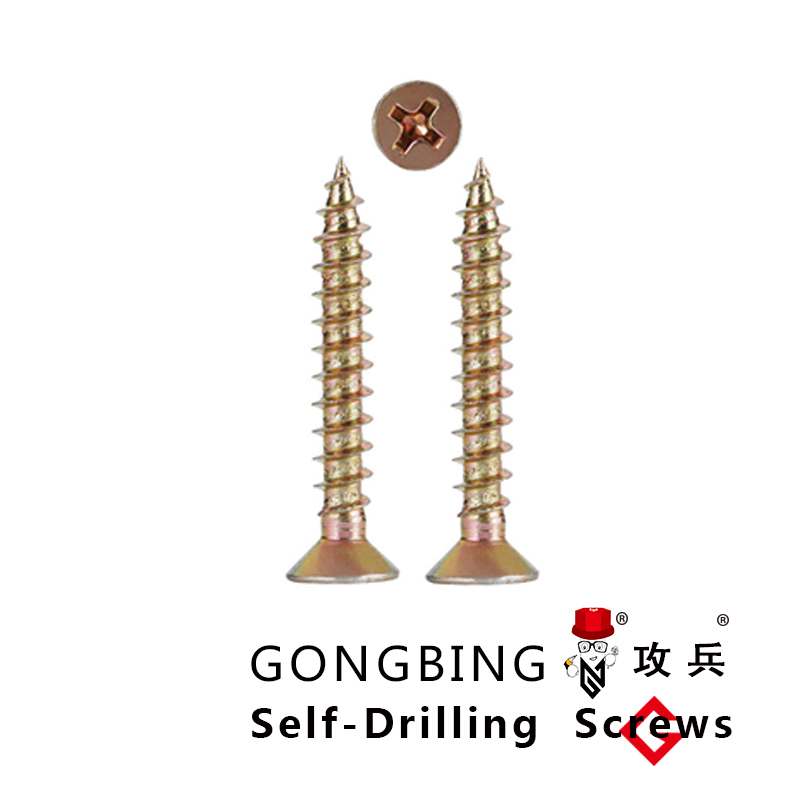
If you build cabinets, shopfitting, or flat-pack furniture, you already know the quiet hero is the fastener. I’ve toured plants from Tianjin to Ningbo, and the workhorse that kept showing up on assembly lines was zinc plated chipboard screws. To be honest, they aren’t flashy—but that’s precisely the point. They bite hard into particleboard and MDF, drive clean, and don’t rust in normal indoor environments.
Why color zinc plating still matters
Yellow (color) zinc with modern trivalent passivation is a sweet spot: decent corrosion resistance, low cost, and that familiar golden finish customers still ask for. I guess it’s also a trust thing—many buyers say they can “see” quality in the finish. In fact, the better factories bake parts to mitigate hydrogen embrittlement after plating—small detail, big reliability.
Technical specs at a glance
| Item | Details (≈ / typical) |
|---|---|
| Product | Chipboard screw color zinc plated; Origin: China |
| Sizes | M3.5 × L12–40 mm; M4 × L12–70 mm; M5 × L20–75 mm |
| Material | Case-hardened carbon steel (e.g., C1022), core toughened |
| Head / Drive | Countersunk, Pozi PZ2/PZ3; Philips optional |
| Thread / Point | Coarse chipboard thread; 25–30° tip; partial or full thread |
| Coating | Color zinc, trivalent passivation, ≈5–12 μm; RoHS compliant |
| Corrosion | Neutral salt spray (ISO 9227): ≈72–120 h to white rust (real-world may vary) |
| Typical driving torque | M3.5: ≈1.0–1.8 N·m; M4: ≈2.0–3.0 N·m; M5: ≈3.5–5.0 N·m (particleboard) |
| Standards ref. | DIN 7505, ISO 4042 (plating), ISO 2702 (tapping screws), ISO 9227 |
Where they excel
Furniture assembly, kitchen cabinets, shop displays, speaker boxes, and melamine carcasses. Indoors, dry to mildly humid is ideal. For coastal or wet zones, I’d step up to zinc-nickel or stainless—no heroics needed.
How they’re made (quick process flow)
Wire drawing → cold heading (head/drive) → thread rolling → case hardening → color zinc electroplating (trivalent passivate) → de-embrittlement bake → 100% visual + sampling tests (dimensions per DIN 7505, torsion per ISO 2702, coating per ISO 4042, salt spray per ISO 9227). Service life indoors is often 5–10 years; more if humidity is controlled.
Real-world feedback
Many customers say PZ2 bits “seat better” and cam-out less. A cabinet shop in Leeds told me switching to zinc plated chipboard screws with sharper tips cut split-outs in MDF backs by about 18%—small change, big morale boost for installers.
Vendor comparison (what I look for)
| Vendor | MOQ | Coating | Certs | Lead Time | Customization | Price/1k (≈) |
|---|---|---|---|---|---|---|
| HBXZ Fastener (China) | ≈50k pcs | Color Zn 5–12 μm | ISO 9001, RoHS | 15–25 days | Head/drive/thread, packaging | $6–$11 |
| EU Brand (Distributor) | Stock | Color Zn 8–10 μm | CE (EN 14592) | 2–5 days | Limited | $12–$18 |
| Marketplace Seller | Small | Unstated | Unknown | 7–20 days | None | $5–$9 |
Customization notes
Options include PZ2/PZ3, Phillips, square; full or partial thread; cut point vs. Type 17; blue-white or color zinc; bulk or small-box packaging with private labels. For high-humidity retail fit-outs, I’d ask for thicker plating and a documented ISO 9227 report.
Two quick case snapshots
- Kitchen OEM, Poland: switching to zinc plated chipboard screws with tighter drive tolerance reduced bit changes by ~22% per shift.
- Shopfitter, Malaysia: requested 10 μm coating and baking; reported zero early red rust after 6 months in mall installs (anecdotal, but consistent).
Citations:
- ISO 4042:2018, Fasteners—Electroplated coatings.
- ASTM B633-19, Electrodeposited Zinc on Iron and Steel.
- ISO 9227:2017, Corrosion tests in artificial atmospheres—Salt spray tests.
- DIN 7505, Screws for wood/chipboard—Dimensions and requirements.
- ISO 2702:2017, Heat-treated steel tapping screws—Mechanical properties.
- EN 14592:2012+A1:2016, Fasteners for timber structures.
-
Guide to High Quality Stainless Steel Expansion FastenersNewsApr.16,2026
-
Ultimate Guide to Industrial Sheet Metal Expansion AnchorsNewsApr.16,2026
-
High Efficiency Fastening Guide for Plastic Expansion RivetsNewsApr.16,2026
-
Plastic Expanding Nut Guide for Applications and BenefitsNewsApr.16,2026
-
Ultimate Guide to Stability and Use of Nail Expansion AnchorNewsApr.16,2026
-
Guide to Choosing and Installing the Right Metal Expansion ScrewNewsApr.16,2026