
Durable Double Head Bolts for Secure Industrial Fastening
Understanding Double Head Bolts in Critical Industrial Applications
In the demanding landscape of modern industrial engineering, the selection of robust and reliable fastening components is paramount. Among these, double head bolts stand out as essential elements for securing heavy-duty connections in a myriad of critical applications. These specialized fasteners, also often referred to as double threaded stud bolts or sometimes, depending on specific configurations, akin to tap end stud bolts, are designed with threading at both ends of a central unthreaded shank. This unique configuration allows for versatile and secure installations, particularly where access is limited on one side or where pre-stressed connections are required. Their design facilitates applications ranging from the intricate assemblies within pressure vessels to the robust structural demands of heavy machinery, ensuring long-term integrity and operational safety under extreme conditions.
The performance characteristics of these fasteners are not merely about tensile strength; they encompass resistance to fatigue, corrosion, and extreme temperatures, making them indispensable in environments where failure is not an option. Our deep dive explores the technical intricacies, manufacturing excellence, diverse applications, and strategic advantages that position these fasteners as a cornerstone of industrial reliability.
Industry Trends and Market Relevance
The global industrial fastener market is experiencing consistent growth, driven by expansion in infrastructure, energy, and manufacturing sectors. Projections indicate a compound annual growth rate (CAGR) of over 5% for industrial fasteners, with specialized components like double head bolts playing a crucial role in high-value segments. Key trends include increasing demand for high-performance materials, advanced coating technologies for enhanced corrosion resistance, and precision manufacturing to meet stringent industry standards.
The petrochemical industry, for instance, is increasingly adopting fasteners that can withstand corrosive environments and high pressures, leading to a surge in demand for materials like stainless steel and exotic alloys. Similarly, the renewable energy sector, particularly wind turbine construction, relies heavily on robust fastening solutions capable of enduring dynamic loads and environmental stressors over extended service lives. The emphasis on energy efficiency and reduced maintenance cycles further propels the need for fasteners with superior fatigue life and reliability. This market shift underscores the importance of quality, customization, and adherence to international standards in the production of every double threaded stud bolt.
Technical Specifications and Material Science
The efficacy of double head bolts is fundamentally tied to their material composition and precise technical specifications. These fasteners are typically manufactured from high-grade carbon steel, alloy steel, stainless steel, or even superalloys, each selected based on the specific operational demands. Key parameters include:
- Material Grades: Common grades include ASTM A193 B7 for high-temperature service, ASTM A320 L7 for low-temperature applications, and various stainless steel grades (304, 316, 310S) for corrosion resistance. For extreme environments, Duplex and Super Duplex stainless steels (e.g., UNS S31803, UNS S32750) or Nickel alloys (e.g., Inconel, Monel) are utilized.
- Thread Specifications: Threads are commonly manufactured to ANSI/ASME B1.1 (Unified National Coarse - UNC or Fine - UNF) or ISO metric standards. Precision in thread form, pitch, and diameter is critical for optimal engagement and load distribution.
- Dimensional Tolerances: Adherence to standards like ASME B18.2.1 for dimensional accuracy ensures compatibility and proper fit within assembled components.
- Mechanical Properties: Tensile strength, yield strength, hardness, and elongation are rigorously tested to ensure the fastener can withstand anticipated loads without permanent deformation or fracture. For example, ASTM A193 B7 studs typically boast a minimum tensile strength of 125 ksi (860 MPa).
- Corrosion Resistance: Depending on the application, various coatings such as hot-dip galvanizing, zinc plating, PTFE (Xylan/Teflon), or specialized inorganic zinc silicate coatings are applied to enhance resistance to chemical attack and environmental degradation.
Typical Product Specification Table: Double Head Bolts
| Parameter | Details/Value | Standard |
|---|---|---|
| Material Options | ASTM A193 B7, B16, B8/B8M; ASTM A320 L7, L43; Duplex UNS S31803; Inconel 625 | ASTM |
| Diameter Range | 1/4" to 4" (M6 to M100) | ASME B18.2.1, ISO |
| Length Range | Up to 12 feet (customizable) | Custom |
| Thread Type | UNC, UNF, 8UN, Metric Coarse, Metric Fine | ASME B1.1, ISO 261 |
| Tensile Strength (B7) | Min. 125 ksi (860 MPa) | ASTM A193 |
| Yield Strength (B7) | Min. 105 ksi (720 MPa) | ASTM A193 |
| Hardness (B7) | Max. 35 HRC | ASTM A193 |
| Surface Finish | Plain, Hot Dip Galvanized, Zinc Plated, PTFE Coated | ASTM A153, ASTM B633, ASTM F1941 |
The meticulous selection of materials and adherence to these specifications ensure that each double threaded stud bolt delivers superior performance and longevity, even in the most challenging operational environments.
Manufacturing Process: Precision and Quality Assurance
The production of high-quality double head bolts is a sophisticated process that integrates advanced metallurgical techniques with precise mechanical engineering. Our commitment to excellence ensures every fastener meets or exceeds stringent industry standards.
Process Flow Overview:
1. Raw Material Selection
High-grade alloy steels or stainless steels are sourced from certified mills. Materials undergo rigorous chemical composition analysis and mechanical testing (e.g., impact, tensile) to ensure compliance with ASTM/ISO standards.
2. Cutting & Forging
Raw material rods are cut to precise lengths. Forging processes (hot or cold, depending on material and size) are employed to shape the bolt ends, enhancing grain structure and mechanical properties, leading to superior strength and fatigue resistance compared to casting.
3. Thread Rolling/Cutting
Threads are typically formed using thread rolling, which cold-forms the material, increasing its strength and producing a superior fatigue life compared to cut threads. For larger or special threads, CNC machining is used for precise cutting, adhering to ASME B1.1 or ISO metric standards.
4. Heat Treatment
A critical stage to achieve desired mechanical properties. This involves quenching and tempering cycles, carefully controlled to optimize hardness, strength, and toughness, ensuring fasteners meet specified ASTM/ISO requirements like ISO 898-1.
5. Surface Treatment/Coating
After heat treatment, fasteners undergo surface preparation and coating. Options include hot-dip galvanizing for enhanced corrosion resistance, zinc plating, or advanced PTFE coatings for friction reduction and chemical inertness. All coatings adhere to standards like ASTM A153 or F1941.
6. Quality Control & Testing
Each batch undergoes extensive quality checks: dimensional inspection, thread gauging, hardness testing, tensile strength testing, magnetic particle inspection for flaws, and often ultrasonic testing. Certifications like ISO 9001 ensure consistent quality throughout the process.
The rigorous testing standards, including ISO 898-1 for mechanical properties of fasteners and ANSI B1.1 for thread quality, ensure that our double head bolts deliver exceptional service life and reliability, minimizing risks and maintenance costs for our clients.
Application Scenarios and Technical Advantages
Double head bolts are distinguished by their versatility and superior performance in critical industrial environments. Their design, featuring threads on both ends, allows for a robust fastening solution where through-bolting is impractical or where specific tensioning methods are employed.
Key Target Industries:
- Petrochemical and Oil & Gas: Used in flange connections for pipelines, pressure vessels, heat exchangers, and drilling equipment. The ability to withstand high temperatures, extreme pressures, and corrosive media is crucial. Our corrosion-resistant coatings extend service life, reducing downtime and replacement costs, contributing to energy saving in operations by maintaining sealed systems effectively.
- Power Generation: Essential in thermal power plants for turbine assemblies, boiler components, and structural connections where high temperatures and cyclic loading are prevalent.
- Metallurgy and Heavy Manufacturing: Employed in large machinery, furnaces, and structural steelworks, where heavy loads and vibrations demand high tensile strength and fatigue resistance.
- Water Supply & Drainage Systems: Used in critical pipe connections, pumps, and valves, particularly in large-scale infrastructure projects where long-term corrosion resistance in aquatic environments is non-negotiable.
- Construction and Infrastructure: For anchoring heavy structural elements, bridge components, and tunneling equipment, providing robust and secure fastening.
Demonstrated Advantages in Typical Scenarios:
- Enhanced Pre-Load Capabilities: The double-threaded design allows for tensioning from both ends, achieving precise and high pre-loads in critical bolted joints, which is vital for preventing leakage in flange connections and ensuring structural integrity.
- Corrosion Resistance: Utilizing materials like ASTM A193 B8M (316 stainless steel) or specialized coatings such as PTFE significantly extends the service life in highly corrosive environments, e.g., chemical processing plants or offshore platforms. This minimizes maintenance interventions and associated costs.
- High-Temperature Stability: Alloys like ASTM A193 B16 are engineered to maintain their mechanical properties at elevated temperatures, making them ideal for boiler systems, exhaust manifolds, and high-temperature reactors, ensuring operational continuity and safety.
- Simplified Installation and Maintenance: In scenarios where space is restricted, or specific alignment is needed, the ability to engage nuts from both sides simplifies the installation process and facilitates easier disassembly during maintenance.
- Fatigue Resistance: Through controlled manufacturing processes like thread rolling and optimized heat treatment, these bolts exhibit superior fatigue resistance, crucial for applications subjected to dynamic loads and vibrations, such as engine blocks or vibratory screens.
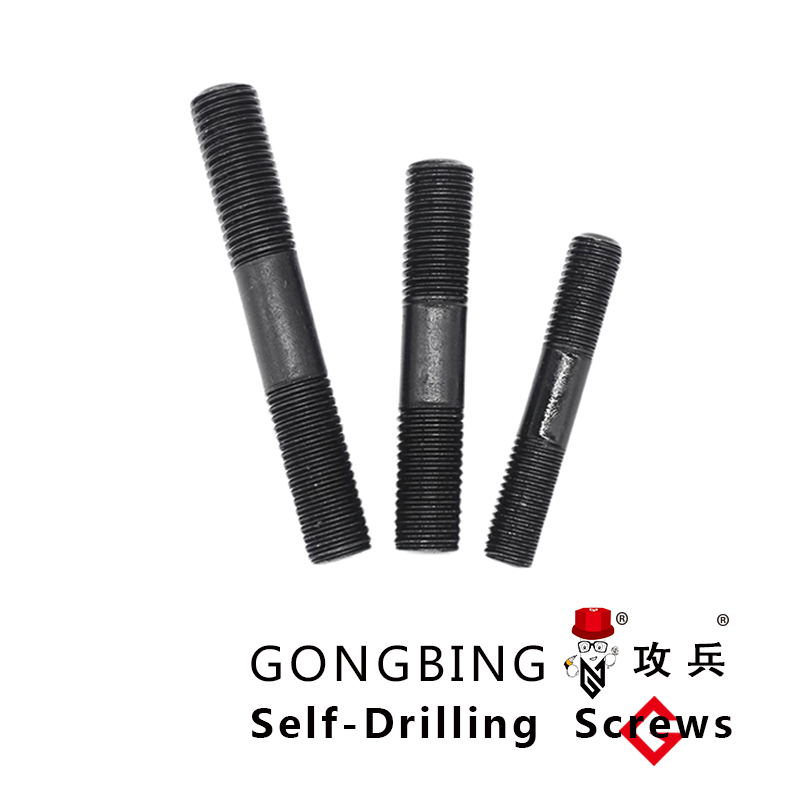
Image: High-strength double head bolts for industrial applications.
Vendor Comparison and Selection Criteria
Selecting the right vendor for industrial fasteners, especially for critical components like double threaded stud bolts, goes beyond mere price comparison. It involves evaluating a supplier's capabilities in manufacturing, quality assurance, technical support, and logistical efficiency. Here's a comparative overview of key criteria:
Key Vendor Comparison Factors:
| Factor | Generic Vendor (Example) | Specialized Manufacturer (e.g., HBXZ Fastener) |
|---|---|---|
| Manufacturing Process | Often relies on standard practices, limited in advanced forging/rolling techniques. | Utilizes advanced cold/hot forging, precision CNC machining, and thread rolling for superior fatigue life. |
| Material Sourcing & Range | Standard material grades, potentially limited exotic alloys. | Extensive range of certified materials (ASTM A193 B7/B8/B16, Duplex, Inconel), strict material traceability. |
| Quality Control & Certifications | Basic QC, fewer international certifications. | ISO 9001, API, PED certified. Comprehensive in-house testing (UT, MPI, mechanical, chemical). |
| Customization Capabilities | Limited to standard dimensions or minor modifications. | Full customization for dimensions, materials, coatings, and specific performance requirements. |
| Technical Support | Minimal pre/post-sales engineering support. | Dedicated engineering team for design assistance, application advice, and troubleshooting. |
| Lead Times & Logistics | Variable, less reliable for large or urgent orders. | Optimized production lines, efficient supply chain, global logistics capabilities for on-time delivery. |
| Industry Experience | General fastener knowledge. | Deep specialization in B2B heavy industry, understanding specific sector challenges (e.g., petrochemical). |
Choosing a vendor with proven expertise and robust quality controls, like HBXZ Fastener, ensures not only product compliance but also long-term reliability and cost-effectiveness for projects involving critical double head bolts.
Customized Solutions for Unique Challenges
Many industrial applications present unique challenges that standard off-the-shelf fasteners cannot adequately address. This is where customized double head bolts become indispensable. Our capabilities extend to providing bespoke solutions tailored to precise client requirements, ensuring optimal performance in specialized environments.
Customization can involve a wide range of parameters:
- Exotic Material Grades: Beyond standard stainless steels, we can fabricate fasteners from high-performance alloys such as Monel, Inconel, Hastelloy, or Titanium, specifically chosen for extreme corrosion resistance, high-temperature creep strength, or unique strength-to-weight ratios.
- Non-Standard Dimensions: Custom lengths, diameters, thread pitches, and unthreaded shank lengths are routinely produced to fit specific equipment designs or retrofitting projects.
- Specialized Coatings: Application-specific coatings can include ceramic coatings for abrasion resistance, anti-galling coatings for ease of disassembly, or dielectric coatings for electrical insulation, far beyond typical galvanizing or PTFE.
- Unique Head Configurations or Features: While the core is a double-ended thread, specific requirements might dictate a slightly modified central shank for specific fixture or anti-rotation features.
- Enhanced Testing & Certification: Beyond standard procedures, we can perform additional non-destructive testing (NDT) like eddy current testing, metallurgical analysis, or specific performance validation tests (e.g., stress corrosion cracking tests) to meet highly stringent project specifications.
Our engineering team collaborates closely with clients from design conceptualization through to final production, leveraging decades of experience to transform complex technical specifications into reliable fastening solutions. This collaborative approach ensures that the final product, whether a standard tap end stud bolt or a custom-engineered solution, perfectly integrates into the client's system, extending service life and optimizing operational efficiency.
Application Case Studies & Customer Experience
Our fasteners have been deployed in countless challenging projects worldwide, consistently demonstrating their reliability and contributing to the success of our clients.
Case Study 1: Petrochemical Flange Assembly
- Challenge: A major petrochemical plant faced recurrent leakage issues in high-pressure steam lines due to fastener failure under cyclic thermal stress and corrosive chemical exposure.
- Solution: We supplied customized double head bolts manufactured from ASTM A193 B16 material with a specialized PTFE coating. These bolts were engineered to withstand temperatures up to 550°C and resist aggressive chemical attack.
- Outcome: After installation, the plant reported a 90% reduction in flange leakage incidents over a two-year period, significantly enhancing operational safety and reducing maintenance costs by an estimated 15% annually. Customer feedback highlighted the superior coating durability and consistent torque values during assembly.
Case Study 2: Offshore Wind Turbine Foundation
- Challenge: Securing the base of offshore wind turbine monopiles requires fasteners with extreme corrosion resistance, high fatigue strength, and the ability to withstand dynamic marine loads.
- Solution: We provided large-diameter double head bolts fabricated from Duplex stainless steel (UNS S32750), hot-dip galvanized and then coated with a multi-layer marine-grade polymer. Each bolt underwent extensive ultrasonic testing and magnetic particle inspection.
- Outcome: The fasteners have demonstrated exceptional performance in the harsh North Sea environment for over five years, showing no signs of corrosion or fatigue cracks. The client praised our ability to meet precise material and testing specifications for a critical, long-life asset.
Authoritativeness and Trustworthiness: Our Commitment
Our reputation as a leading supplier of industrial fasteners is built on a foundation of unwavering quality, technical expertise, and transparency.
Certifications and Compliance:
We adhere to the highest international standards, ensuring every product, including our tap end stud bolts and double threaded stud bolts, meets rigorous quality benchmarks. Our key certifications include:
- ISO 9001:2015: Certified quality management system ensuring consistent product quality and customer satisfaction.
- API Q1: For products serving the petroleum and natural gas industry, demonstrating compliance with API's stringent quality standards.
- PED 2014/68/EU: Compliance with the European Pressure Equipment Directive, critical for fasteners used in pressure systems within the EU.
- Material Test Certificates (MTCs): All shipments are accompanied by comprehensive MTCs (3.1 or 3.2), traceable to raw material heats and verifying chemical and mechanical properties.
Years of Service and Partner Clients:
With over two decades of specialized experience in industrial fasteners, we have built enduring partnerships with leading companies in petrochemicals, power generation, maritime, and heavy construction sectors globally. Our long-standing client relationships are a testament to our reliability and commitment to superior product and service delivery.
Frequently Asked Questions (FAQ):
Q: What is the typical lead time for custom double head bolts?
A: Standard items usually ship within 2-4 weeks. For custom specifications, lead times can range from 4-8 weeks, depending on material availability, complexity, and order volume. We provide precise lead time estimates upon quote approval.
Q: Do you offer international shipping?
A: Yes, we have extensive experience with international logistics and can ship products globally, adhering to all necessary customs and shipping regulations.
Q: What is your warranty policy?
A: We offer a comprehensive warranty covering manufacturing defects and material non-conformance for a period of 12 months from the date of shipment. Full warranty details are provided with every order and are available upon request.
Q: How do I get technical support or place an order?
A: Our dedicated sales and technical support teams are available via phone, email, or through our website contact form. We encourage you to reach out for any inquiries, technical assistance, or to request a detailed quotation. Our goal is to provide prompt and expert support to ensure your project's success.
Conclusion
The role of double head bolts in securing critical industrial connections cannot be overstated. From the depths of subsea oil rigs to the heights of wind turbines, their robust design, superior material properties, and precise manufacturing ensure operational integrity and safety. By adhering to the highest standards of quality, offering extensive customization, and providing unparalleled technical support, we empower industries to build with confidence and achieve long-term success. Partner with us for fastening solutions that deliver reliability, performance, and peace of mind.
References
- American Society for Testing and Materials (ASTM). "ASTM A193/A193M - 23 Standard Specification for Alloy-Steel and Stainless Steel Bolting for High Temperature or Other Special Purpose Applications." ASTM International, 2023.
- American Society of Mechanical Engineers (ASME). "ASME B1.1-2019 Unified Inch Screw Threads (UN and UNR Thread Form)." ASME, 2019.
- International Organization for Standardization (ISO). "ISO 898-1:2013 Mechanical properties of fasteners made of carbon steel and alloy steel — Part 1: Bolts, screws and studs with specified property classes — Coarse thread and fine pitch thread." ISO, 2013.
- MarketsandMarkets. "Industrial Fasteners Market - Global Forecast to 2027." MarketsandMarkets, 2022.
-
Guide to High Quality Stainless Steel Expansion FastenersNewsApr.16,2026
-
Ultimate Guide to Industrial Sheet Metal Expansion AnchorsNewsApr.16,2026
-
High Efficiency Fastening Guide for Plastic Expansion RivetsNewsApr.16,2026
-
Plastic Expanding Nut Guide for Applications and BenefitsNewsApr.16,2026
-
Ultimate Guide to Stability and Use of Nail Expansion AnchorNewsApr.16,2026
-
Guide to Choosing and Installing the Right Metal Expansion ScrewNewsApr.16,2026