Look, I've spent the last twenty years on construction sites, wrestling with materials, talking shop with engineers, and frankly, getting my hands dirty. And let me tell you, finding a fastener you can rely on is huge. It's not just about holding things together; it's about speed, safety, and minimizing headaches. That’s where self piercing metal screws come in. They're a game-changer, particularly when you’re working with thin gauge steel – ductwork, metal framing, things that used to require a lot of pre-drilling and specialized tools. We're talking serious time and labor savings, and fewer trips up and down the scaffolding. They've really evolved too; the quality and range of sizes available now make them suitable for a much wider range of applications than folks realize.
The real beauty of self piercing metal screws isn’t just their convenience, it’s their robustness. You're dealing with a fastener that creates its own threads as it goes in, meaning a tighter, more secure hold than you get with a lot of traditional methods. That translates to safer structures, fewer callbacks, and a project that holds up over the long haul. And believe me, nobody wants to be fixing something a year down the line because the fasteners failed. I’ve seen too much of that.
These aren’t your grandfather’s sheet metal screws. The advancements in material science and manufacturing have made them genuinely reliable for structural applications. You’re seeing them used more and more in everything from commercial construction to industrial maintenance and even residential projects. I'm seeing crews using them more and more where they previously relied on welding or rivet solutions, purely because of the time saving and lower skill requirement.
The Importance of Self Piercing Metal Screws in Modern Construction
The construction industry is constantly demanding faster, more efficient methods. Self piercing metal screws have stepped up to meet that demand. They've become critical in projects where time is money, and pre-drilling just isn't feasible. I've seen crews cut installation times by 30-40% simply by switching to these screws. It's a big deal, especially on large-scale commercial builds where every minute counts. self piercing metal screws are an essential part of any toolbox.
From my experience, a lot of folks underestimate how much time is wasted on prep work. Drilling pilot holes, switching bits, keeping everything aligned… it adds up. Self piercing metal screws eliminate that step, allowing crews to focus on the actual assembly. That’s where the real cost savings are.
Defining Self Piercing Metal Screws and Their Industrial Role
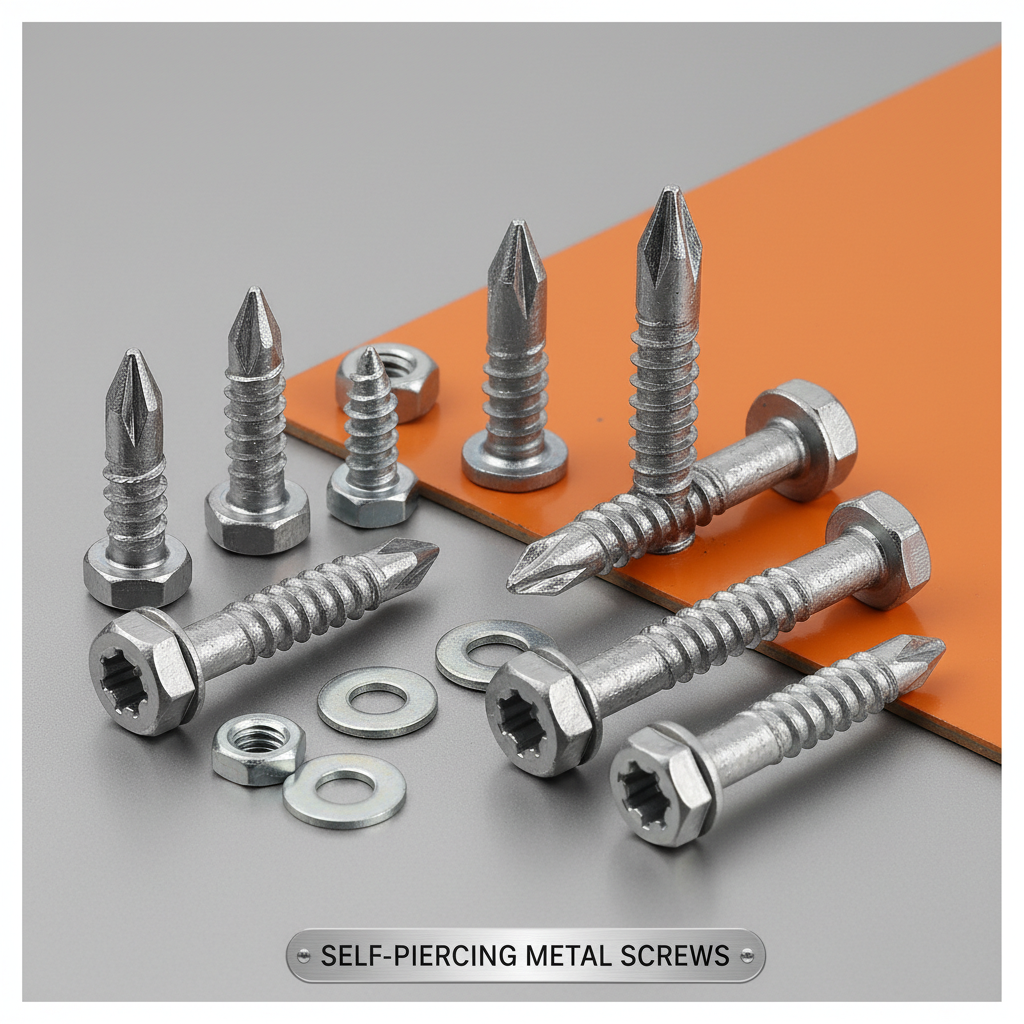
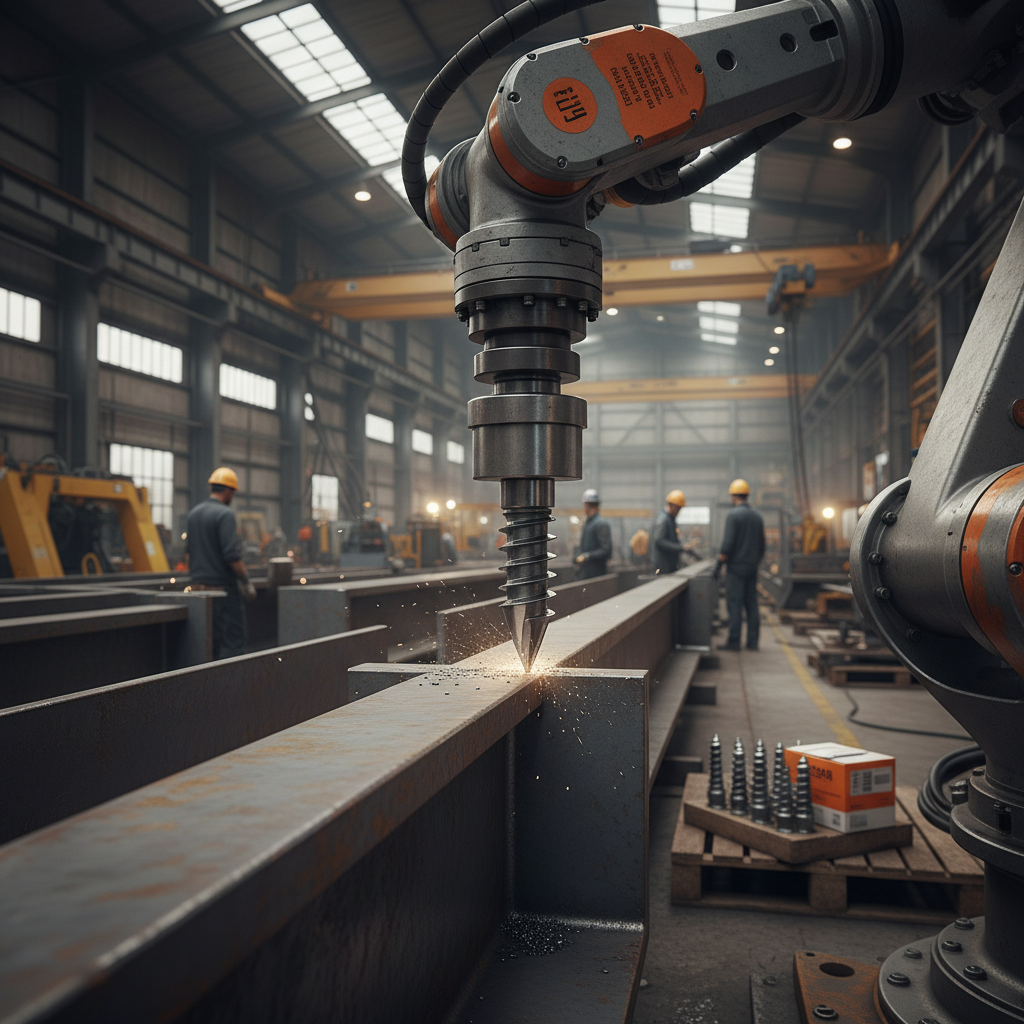
Simply put, self piercing metal screws are designed to fasten metal components without the need for pre-drilled holes. They have a specially hardened tip that cuts through the metal as the screw is driven in, creating its own mating thread. This makes them incredibly versatile for joining sheet metal, steel framing, and other metal materials. They’re not a new invention, but the advancements in metallurgy and thread design have made them far more reliable and effective than earlier versions.
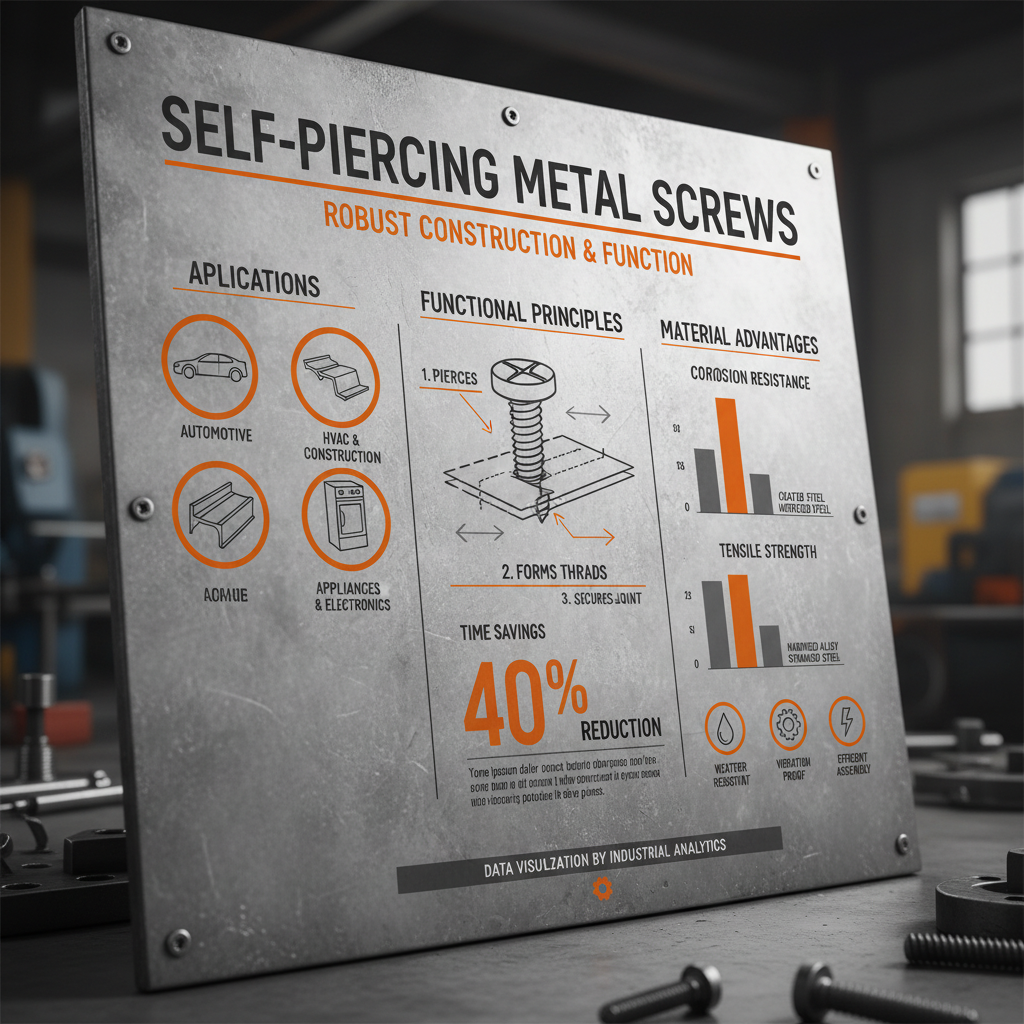
Industrially, they’ve become vital in areas like HVAC systems, where ductwork needs to be securely fastened quickly and efficiently. They’re also widely used in metal building construction for attaching roofing, siding, and structural components. The ability to quickly and securely join metal without welding or rivets makes them an essential tool in these sectors. They’re also seeing more use in the automotive and appliance industries.
Compared to traditional fasteners like rivets or weld pins, these screws offer a significant advantage in terms of adjustability and disassembly. If you need to make a change or repair something, you can simply remove the screws without damaging the surrounding material. That’s a huge benefit in situations where flexibility is key.
Key Characteristics of High-Quality Self Piercing Metal Screws
A good self piercing metal screw starts with the steel. You want something hardened – typically carbon steel or alloy steel – that can withstand the stress of piercing and threading without breaking or stripping. The quality of the heat treatment is crucial. A poorly treated screw will dull quickly and lose its ability to penetrate cleanly. I've seen cheap ones just mushroom over and become useless after a few screws.
The thread design is also critical. A properly designed thread will create a strong, secure hold without stripping the metal. Look for screws with coarse threads for softer metals and finer threads for harder materials. The geometry of the tip – how it’s shaped and hardened – is what really determines how easily the screw penetrates the metal. A sharp, well-defined tip is essential.
Finally, the coating matters. A good zinc or phosphate coating will protect the screw from corrosion, extending its lifespan and preventing rust. In harsh environments, you might even consider stainless steel screws for added protection. I've learned that spending a little more upfront on quality screws saves a lot of time and money down the road.
Applications of Self Piercing Metal Screws Across Industries
These screws aren't limited to just construction. You’ll find them everywhere. In the manufacturing sector, they're used for assembling metal cabinets, enclosures, and machinery. HVAC installers rely on them for ductwork and ventilation systems. They're even used in the automotive industry for attaching body panels and interior components.
In the realm of renewable energy, self piercing metal screws are increasingly used to secure solar panel racking to metal roofs, providing a robust and corrosion-resistant connection. That’s a critical application where reliability is paramount. They also see heavy use in the fabrication of metal trailers and storage containers, where quick assembly is a major priority.
Self Piercing Metal Screw Performance by Application
Advantages and Long-Term Value of Using Self Piercing Metal Screws
The biggest advantage is speed. Eliminating the need for pre-drilling saves significant time and labor. That translates to lower project costs and faster completion times. But it’s not just about speed; it’s about reducing the risk of errors. Pre-drilling can be inaccurate, leading to misaligned components and structural weaknesses. Self piercing metal screws minimize that risk.
Long-term, these screws offer excellent value. They create a strong, durable connection that can withstand vibration, temperature fluctuations, and other environmental factors. And because they’re relatively easy to remove and replace, they simplify maintenance and repairs. The reduced likelihood of structural failures means lower long-term maintenance costs and a more reliable final product.
Global Use Cases for Self Piercing Metal Screws
You see these screws used globally, wherever metal construction and fabrication takes place. In Europe, they're popular for building metal framing systems for residential and commercial buildings. In Asia, they're widely used in the manufacturing of appliances and electronics. And here in North America, they’re becoming increasingly common in everything from industrial maintenance to large-scale construction projects. self piercing metal screws are becoming an international standard.
They're also finding applications in disaster relief efforts, where quick and easy assembly is critical. Prefabricated shelters and emergency structures can be rapidly deployed using self piercing metal screws, providing much-needed housing and infrastructure in affected areas.
I’ve worked on projects in remote locations where getting tools and materials to the site was a logistical nightmare. Self piercing metal screws were a lifesaver in those situations. Reduced equipment needs and simpler installation procedures made a huge difference.
Future Trends and Challenges in Self Piercing Metal Screw Technology
We’re seeing a push towards more sustainable materials and manufacturing processes, and self piercing metal screws are no exception. Manufacturers are exploring the use of recycled steel and eco-friendly coatings to reduce the environmental impact of these fasteners.
Another trend is the development of screws with specialized coatings for enhanced corrosion resistance in harsh environments. This is particularly important for offshore structures and marine applications. We're also seeing some really clever designs aimed at improving screw penetration and reducing the torque required for installation.
The biggest challenge moving forward is maintaining consistent quality as demand increases. There are a lot of cheap, low-quality screws flooding the market, and it’s important to be able to differentiate between a reliable fastener and one that’s likely to fail. Proper certification and testing are crucial to ensure that these screws meet the required standards.
Summary of Challenges and Solutions for Self Piercing Metal Screw Technology
| Challenge |
Impact on Performance |
Proposed Solution |
Implementation Difficulty (1-10) |
| Low-Quality Materials |
Reduced Shear Strength & Corrosion Resistance |
Stricter Material Certification & Testing |
6 |
| Inconsistent Tip Hardness |
Difficulty Piercing Thicker Metals |
Improved Heat Treatment Processes |
7 |
| Suboptimal Thread Design |
Reduced Holding Power & Increased Stripping |
Advanced Thread Geometry Optimization |
8 |
| Lack of Corrosion Resistance |
Premature Failure in Harsh Environments |
Enhanced Coating Technologies (e.g., Zinc-Nickel) |
5 |
| Variable Manufacturing Tolerances |
Inconsistent Performance & Installation Issues |
Implementation of Robust Quality Control Measures |
4 |
| Limited Material Compatibility |
Restrictions on Application in Certain Metals |
Development of Specialized Screw Materials |
9 |
FAQS
Generally, self piercing metal screws perform optimally on materials between 16 gauge and 12 gauge, roughly 0.060 to 0.105 inches. While they can penetrate thicker materials, it requires significantly more torque and may result in stripping. For extremely thick materials, pre-drilling is still recommended. Always check the screw manufacturer’s specifications for recommended thickness ranges.
Yes, but with careful consideration. Higher-grade self piercing metal screws, designed for structural use, can be employed in certain applications. However, it's crucial to consult with a structural engineer to ensure the fasteners meet the necessary load-bearing requirements. They're not a one-size-fits-all solution, and proper engineering analysis is essential for safety.
While often used interchangeably, there’s a subtle difference. Self-drilling screws have a drill-bit-like tip designed for creating holes in both metal and other materials. Self-piercing screws are specifically designed for piercing through thinner gauge metals without pre-drilling, relying on their hardened tip to cut and form threads simultaneously. The latter is typically preferred for metal-to-metal connections.
Using the correct driver bit and applying consistent, firm pressure are key. Avoid over-torquing the screw. A clutch setting on your drill can help prevent this. Also, ensure you’re using a high-quality screw, as cheaper screws are more prone to head stripping. Using a lubricant designed for metal fasteners can also reduce friction and prevent stripping.
Yes, like any metal fastener, they can corrode if exposed to moisture and harsh elements. Choose screws with a protective coating, such as zinc or phosphate. For particularly corrosive environments, stainless steel screws are recommended. Regular inspection and maintenance can also help prevent corrosion and extend the lifespan of the fasteners.
A high-torque drill or impact driver is essential. Use the correct driver bit, matched to the screw head type. A drill with an adjustable clutch is highly recommended to prevent over-torquing. Safety glasses are also crucial, as metal shavings can be generated during installation. Sometimes a step drill bit can be helpful for starting the screw in particularly tough spots.
Conclusion
Self piercing metal screws have fundamentally changed the way we approach metal fastening in a wide range of industries. Their ability to eliminate pre-drilling, coupled with their strength, durability, and ease of use, makes them an invaluable tool for contractors, manufacturers, and engineers alike. They represent a significant step forward in terms of efficiency, cost-effectiveness, and project safety.
Looking ahead, continued innovation in materials and coatings will further enhance the performance and longevity of these fasteners. Embracing these advancements and prioritizing quality will be key to maximizing their benefits. For anyone working with metal, understanding and utilizing self piercing metal screws isn't just a convenience – it’s a competitive advantage. Visit our website at www.hbxzfastener.com to learn more about our range of high-quality self piercing metal screws and how they can benefit your next project.