Look, I've spent the last fifteen years breathing concrete dust and wrestling with blueprints on sites from Dubai to Denver. What I've learned is simple: time is money, and reliability is everything. That’s why understanding the nuances of something as fundamental as self fastening bolts isn’t just about specs on a datasheet – it's about keeping projects on schedule and ensuring they stay built. We’re not talking about pretty bolts here; we're talking about the backbone of modern infrastructure, and getting it right is crucial. self fastening bolts are increasingly crucial for this.
The construction world is shifting. Prefabrication is on the rise, modular builds are becoming standard, and the demand for speed and efficiency is relentless. Traditional bolting methods just can't always keep up. Delays caused by misaligned holes, dropped wrenches, or simply the time it takes to tighten everything down add up fast. This is where self fastening bolts shine. They simplify the process, reduce labor costs, and minimize the risk of human error.
And it’s not just construction. Think about infrastructure projects – bridges, pipelines, even renewable energy installations. The scale of these projects demands solutions that are robust, repeatable, and easy to deploy. Self fastening bolts offer a level of consistency and speed that traditional methods struggle to match. It’s about doing more with less, and doing it right the first time.
The Importance of Self Fastening Bolts in Modern Construction
I've seen firsthand how crucial even seemingly small components are to a project's success. Self fastening bolts, specifically, are becoming increasingly vital. They reduce reliance on skilled labor for tightening, leading to faster assembly times. And in today’s world, speed equals profit. self fastening bolts also minimize the risk of over-tightening or under-tightening, which can compromise structural integrity.
Honestly, it’s about minimizing headaches. We're talking about fewer callbacks, reduced maintenance, and ultimately, a better-built product. The initial cost might be slightly higher than traditional bolts, but the long-term savings in labor, rework, and potential structural issues far outweigh that initial investment.
Defining Self Fastening Bolts: A Practical Perspective
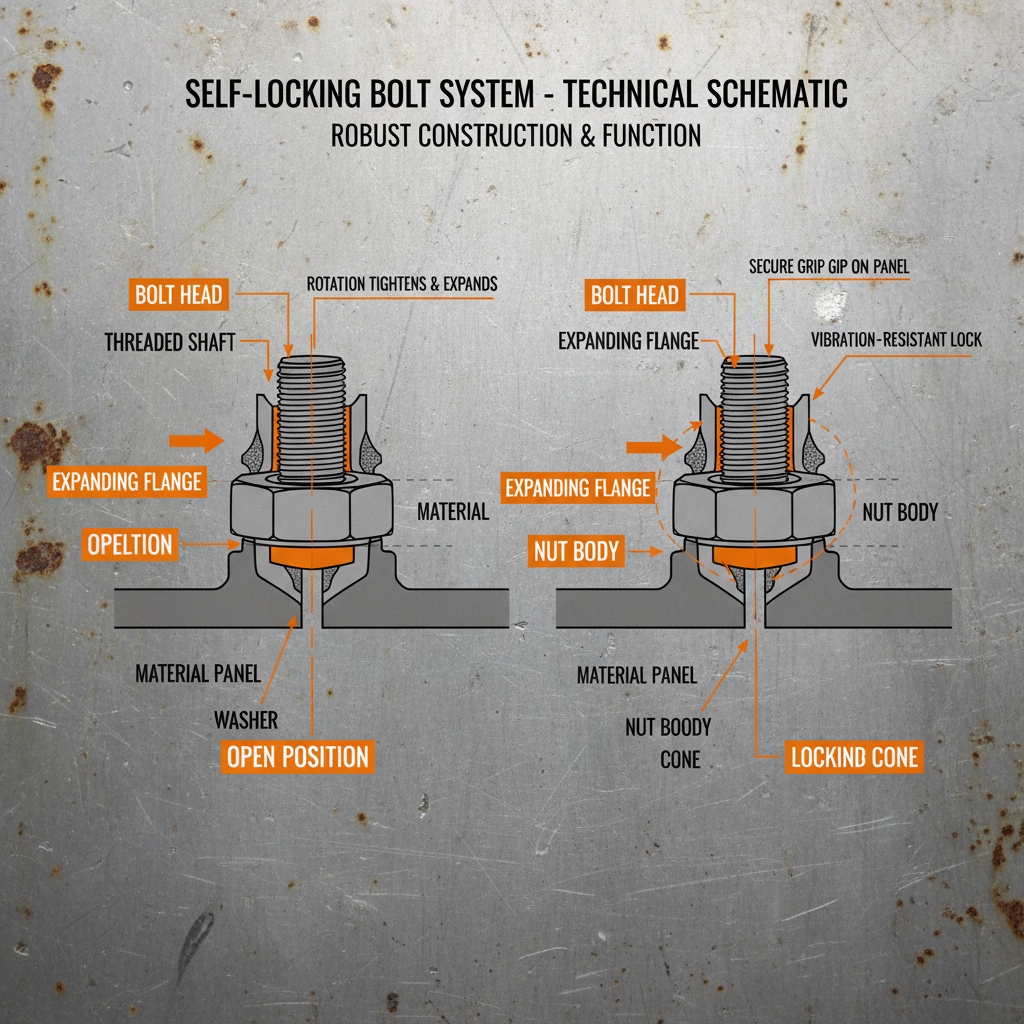
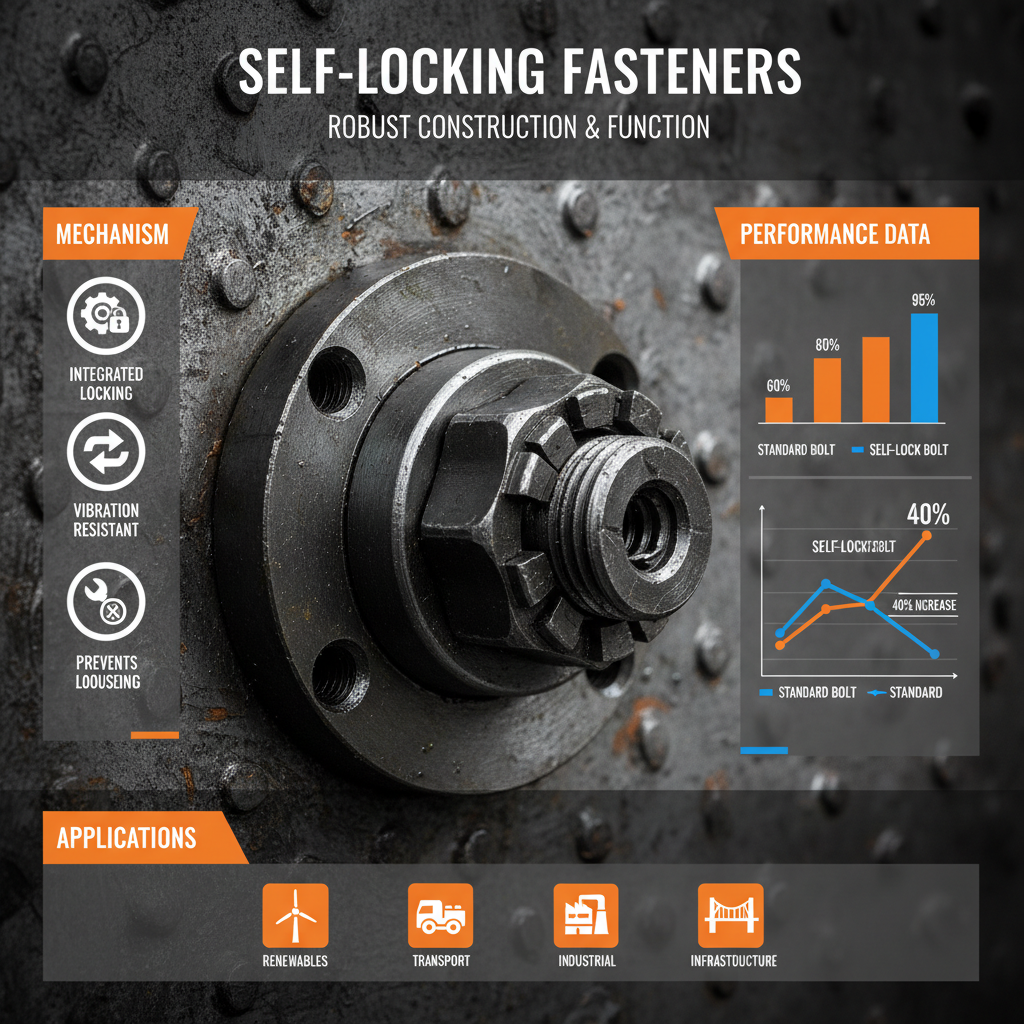
Let’s cut through the jargon. A self fastening bolt isn't magic; it's smart engineering. These bolts utilize a locking mechanism – often a combination of specialized threads, a locking collar, or a prevailing torque feature – that creates friction and prevents loosening under vibration and stress. It’s designed to maintain clamping force without requiring constant retightening.
Think about a bridge. Constant traffic creates relentless vibrations. Traditional bolts require regular inspections and tightening to prevent catastrophic failure. Self fastening bolts, however, are designed to withstand these forces, reducing maintenance and improving safety. They’re not a replacement for proper installation and engineering, but they add a crucial layer of security.
This connects directly to modern industry’s need for standardized, reliable components. It’s not about reinventing the wheel; it’s about making the wheel better and more dependable. And in construction, dependability is paramount.
Key Factors Driving the Adoption of Self Fastening Bolts
Durability is the big one. These bolts are often constructed from high-strength alloy steels and treated with corrosion-resistant coatings. They can withstand harsh environments and extreme temperatures without failing, meaning less replacement and reduced life-cycle costs.
Scalability is another huge advantage. Self fastening bolts are easily adaptable to different project sizes and complexities. Whether you're building a small residential structure or a massive industrial facility, you can rely on these bolts to provide consistent performance. They're less reliant on specialized skills, meaning faster deployment and fewer bottlenecks.
Cost-efficiency isn’t just about the price of the bolt itself. It’s about the total cost of ownership. Reduced labor costs, minimized maintenance, and improved structural integrity all contribute to significant long-term savings. I’ve seen projects where switching to self fastening bolts shaved weeks off the schedule and saved thousands in labor alone.
Global Applications of Self Fastening Bolts
You see these bolts everywhere. In the renewable energy sector, they’re essential for securing wind turbine blades and solar panel mounting structures. In the automotive industry, they’re used in critical safety components like brake systems and suspension assemblies. Even in aerospace, where weight and reliability are paramount, self fastening bolts play a vital role.
I’ve worked on projects in remote industrial zones in Australia, where getting parts and skilled labor is a logistical nightmare. Self fastening bolts are a lifesaver in these situations. They simplify assembly, reduce the need for specialized tools, and minimize the risk of errors. They’re incredibly valuable in areas where access to resources is limited.
And consider post-disaster relief operations. Speed is critical when building temporary shelters or repairing infrastructure. Self fastening bolts allow for rapid assembly and provide a secure and stable structure, offering much-needed support to communities in crisis.
Self Fastening Bolt Performance Comparison
Advantages and Long-Term Value Proposition
The tangible benefits are clear: reduced labor costs, lower maintenance requirements, and improved structural integrity. But it goes deeper than that. Using reliable components builds trust with clients and stakeholders. It demonstrates a commitment to quality and a long-term vision.
From a sustainability standpoint, self fastening bolts contribute to longer-lasting structures, reducing the need for frequent repairs and replacements. This translates to less waste and a smaller environmental footprint. It's a win-win for everyone.
Future Trends and Innovation in Self Fastening Bolt Technology
We’re seeing a lot of innovation in materials science. New alloys are being developed that offer even greater strength and corrosion resistance. Digital integration is also playing a role, with smart bolts equipped with sensors that can monitor stress levels and alert engineers to potential problems.
The push for automation is driving demand for self fastening bolts that can be easily integrated into robotic assembly lines. And as the focus on sustainability intensifies, we’ll likely see more use of recycled materials and eco-friendly coatings in the manufacturing process.
Challenges and Solutions in Implementing Self Fastening Bolts
One challenge is ensuring proper installation. Even the best bolt won’t perform if it’s not installed correctly. That’s why training and clear installation guidelines are essential. We need to educate the workforce on the proper techniques and tools.
Another issue is compatibility. Not all self fastening bolts are suitable for every application. Engineers need to carefully consider the specific requirements of the project and select the appropriate bolt type. Sometimes, a custom solution is necessary.
Finally, cost can be a barrier, particularly for smaller projects. But as demand increases and manufacturing processes become more efficient, the price of self fastening bolts is coming down, making them more accessible to a wider range of customers.
Summary of Self Fastening Bolt Challenges and Solutions
| Challenge |
Impact on Project |
Proposed Solution |
Implementation Cost (Scale 1-10) |
| Improper Installation |
Reduced Clamping Force, Potential Failure |
Comprehensive Training Programs |
5 |
| Incompatibility with Applications |
Suboptimal Performance, Reduced Lifespan |
Detailed Application Analysis |
4 |
| Initial Higher Cost |
Budget Constraints, Hesitation in Adoption |
Life Cycle Cost Analysis |
3 |
| Lack of Awareness |
Missed Opportunities for Efficiency |
Industry Workshops and Demonstrations |
6 |
| Supply Chain Disruptions |
Project Delays, Increased Costs |
Diversified Sourcing and Inventory Management |
7 |
| Corrosion in Harsh Environments |
Reduced Structural Integrity, Increased Maintenance |
Specialized Corrosion-Resistant Coatings |
8 |
FAQS
The biggest advantage is speed and reduced labor. No need for torque wrenches and skilled tightening. They also minimize the risk of loosening due to vibration. In the field, this translates to faster project completion and lower costs. They're particularly useful in applications where frequent access for tightening is difficult or impossible. They increase the overall reliability of a structure, because they’re designed to resist loosening even under dynamic loads.
Not necessarily. While they’re incredibly versatile, they’re not a one-size-fits-all solution. Critical applications that require extremely high and precisely controlled clamping forces might still require traditional methods. It's about understanding the load requirements, the environmental conditions, and the specific demands of the project. A thorough engineering analysis is always recommended to ensure proper selection.
You've got options, depending on the environment. Zinc plating is common for general corrosion resistance. For harsher environments, like marine applications, you'll want to look at hot-dip galvanizing, stainless steel, or specialized coatings like ceramic or polymer coatings. Choosing the right coating is critical for long-term durability and preventing structural failure.
While they are easier to install than traditional bolts, proper training is still crucial. Workers need to understand the specific installation procedures for each type of bolt, including proper alignment, hole preparation, and any necessary tools. A short training session, demonstrating best practices, can significantly reduce errors and ensure a secure connection.
Initially, self fastening bolts can be slightly more expensive. However, when you factor in reduced labor costs, minimized maintenance, and the potential for fewer callbacks, they often prove to be more cost-effective over the project’s lifespan. The long-term savings can be substantial, especially in large-scale projects or applications where maintenance is difficult.
Look for a supplier with a proven track record of quality and reliability. Check their certifications, ensure they meet industry standards, and verify they have a robust quality control system in place. Also, consider their ability to provide technical support and timely delivery. A good supplier is a partner, not just a vendor.
Conclusion
Self fastening bolts aren’t just a trend; they're a fundamental shift in how we build and maintain structures. They offer a compelling combination of speed, reliability, and cost-efficiency, making them an increasingly essential component of modern construction and engineering. They represent a smarter, more efficient approach to fastening, reducing risks and maximizing value.
The future of fastening lies in continued innovation – smarter materials, integrated sensors, and automated installation systems. Embracing these advancements will be critical for staying ahead of the curve and building a more sustainable and resilient future. If you’re looking for a way to improve your projects, I highly recommend exploring the benefits of self fastening bolts.