Selecting the right chipboard screw manufacturers is a critical decision for construction professionals and furniture designers who require high-torque fastening in composite wood materials. Within the broader context of metal products and fastener manufacturing, chipboard screws serve as a specialized solution designed to prevent splitting while ensuring maximum withdrawal resistance in particle boards and MDF.
The primary challenge for buyers lies in balancing material strength with thread precision. Inconsistent thread pitch or poor heat treatment from unreliable suppliers often leads to head snapping or stripped holes, which can compromise the structural integrity of large-scale furniture projects or interior fit-outs.
This analysis provides a comprehensive framework for evaluating manufacturing capabilities, understanding the technical relationship between thread design and holding power, and establishing a procurement standard to ensure consistent quality across bulk orders.

Evaluating Manufacturing Capacity and Precision

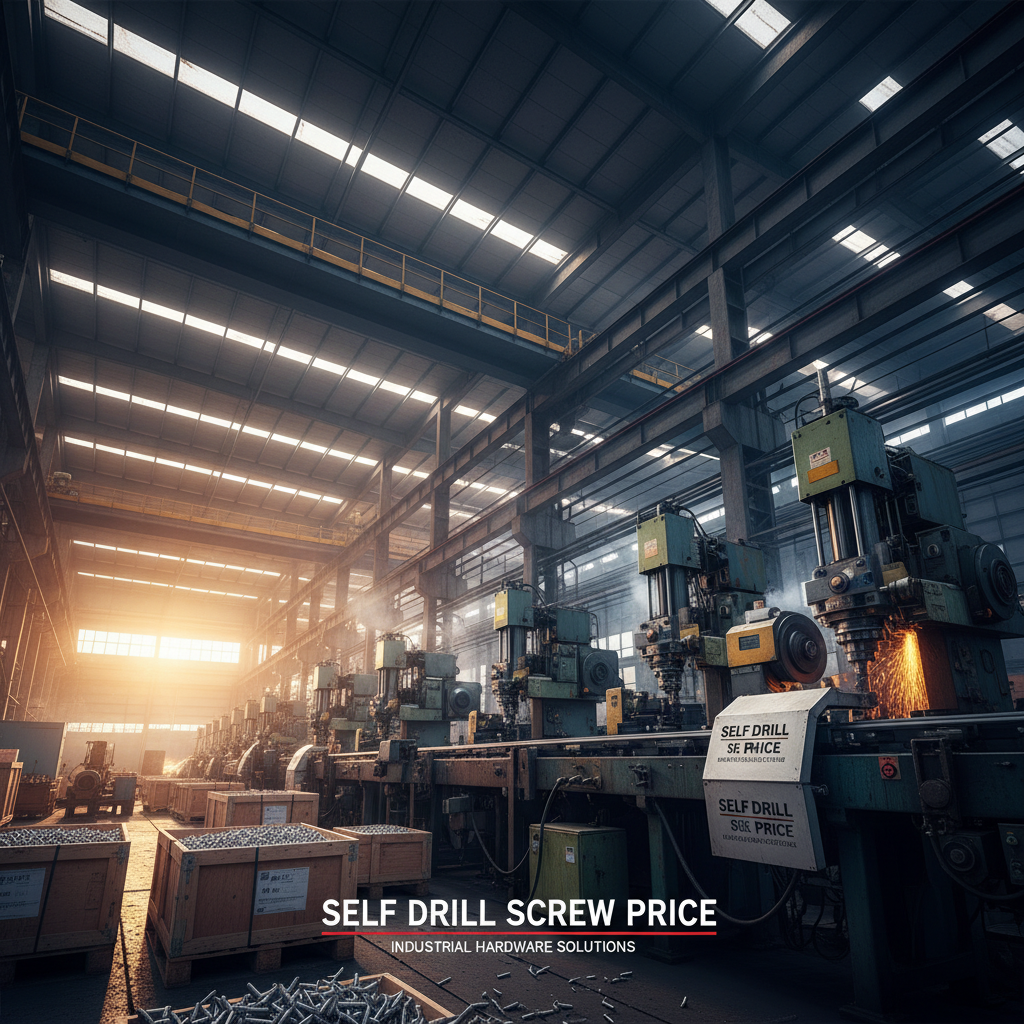
Industrial-scale chipboard screw manufacturers must integrate advanced cold-heading and thread-rolling technology to maintain dimensional stability. For companies like Hebei Xizhuo Fastener Co., Ltd., the focus is on integrating design, research, and production to ensure that every screw meets exacting specifications for the global construction market.
Precision in manufacturing is not merely about the final size but about the consistency of the thread profile. High-quality production facilities utilize professional quality testing equipment to monitor the hardness and resiliency of the steel, ensuring that the fasteners can withstand the high pressures of automated driving systems without deformation.
Core Technical Specifications for Chipboard Fasteners
The efficacy of a chipboard screw is determined by its ability to grip soft, porous materials without causing the substrate to fracture. This requires a specialized thread design—typically a coarse, deep thread—that maximizes the surface area contact between the metal and the wood fiber.
Material selection is equally vital. Using premium steel alloys ensures that the fastener possesses the necessary tensile strength to resist shearing forces. Furthermore, a precise head geometry (such as countersunk or flat heads) is required to ensure a flush finish, which is a non-negotiable requirement for professional cabinetry and commercial construction.
Application-Specific Selection Logic
Different substrates require different fastening strategies. For example, High-Density Fiberboard (HDF) requires a screw with a sharper cutting tip to reduce friction and heat build-up during installation, whereas standard particle board benefits from a wider thread pitch to prevent the material from "stripping" under load.
When selecting fasteners for exterior or humid environments, buyers must prioritize coating quality. Whether utilizing zinc plating or specialized anti-corrosion finishes, the goal is to prevent oxidation that could lead to rust streaks on the wood surface, thereby maintaining both the aesthetic and structural integrity of the assembly.
Performance Metrics by Thread Configuration
The relationship between thread depth and holding power is not linear. As illustrated in the conceptual framework below, varying the thread geometry significantly impacts the withdrawal force and the ease of installation. Manufacturers optimize these variables to cater to specific industry needs.
This illustrative data shows a normalized comparison of how different thread types perform across key metrics. While coarse threads offer maximum holding power in soft materials, fine threads are often preferred in denser composites to reduce the risk of splitting the material.
Risk Mitigation in Bulk Procurement
Procuring fasteners in high volumes introduces risks related to batch inconsistency. A professional procurement strategy involves requesting sample batches for destructive testing—specifically checking the torque-to-failure ratio—to ensure that the manufacturer's quality control is rigorous across the entire production run.
Buyers should also evaluate the manufacturer's logistical capabilities. Reliable suppliers provide transparent raw material sourcing and standardized packaging to prevent thread damage during transit. Choosing a partner that offers a broad range of construction fasteners, including self-drilling and anchor bolts, often indicates a more robust manufacturing infrastructure.
Common Integration Failures and Solutions
One of the most frequent failures in chipboard assembly is "head stripping," where the screwdriver slips out of the screw head. This is usually caused by poor tolerances in the drive recess or an inappropriate match between the driver bit and the screw head. The solution is to specify high-precision drive types (such as Torx or Pozidriv) that allow for higher torque transfer.
Another common issue is substrate splitting, which occurs when the screw diameter is too large for the pre-drilled hole or when the thread is too aggressive. Transitioning to a screw with a tapered shank or utilizing a manufacturer that provides precise sizing guidance can eliminate this failure point.
Supplier Evaluation Decision Matrix
When comparing different chipboard screw manufacturers, buyers should look beyond unit price and consider the total cost of ownership, which includes installation speed, failure rates, and delivery reliability. The following matrix provides a relative evaluation framework for different supplier types.
| Supplier Type | Technical Precision | Customization | Best Use Case |
|---|---|---|---|
| Specialized Manufacturer | High | Very High | High-end Custom Furniture |
| General Fastener Plant | Medium | Medium | General Construction |
| Bulk Commodity Supplier | Low | Low | Low-cost Disposable Fit-outs |
| Integrated Solutions Provider | High | High | Large Commercial Projects |
| Regional Distributor | Variable | Low | Small-scale DIY / Repairs |
| OEM Component Partner | Very High | High | Industrial Furniture Lines |
This qualitative comparison demonstrates that for projects requiring high structural reliability, an integrated manufacturer that handles design, research, and sales is the most secure choice to ensure end-to-end quality control.
Frequently Asked Questions
Chipboard screws feature a coarser thread and a larger pitch designed to grip the porous fibers of composite wood, whereas drywall screws have finer threads intended for gypsum board and metal studs.
To prevent splitting, use a screw with a sharp cutting tip and ensure you are using the correct diameter for the material thickness. Pre-drilling pilot holes is also recommended for denser boards.
Most professional manufacturers use high-carbon steel or alloy steel, which is heat-treated to balance hardness (to prevent head stripping) and ductility (to prevent snapping).
Torx (star) or Pozidriv drives are superior for high-torque applications as they provide better engagement with the driver bit, significantly reducing the risk of cam-out.
Perform random sampling to check for thread consistency, head flatness, and coating uniformity. Conducting a pull-out test on a sample of the actual substrate is the most accurate method.
While possible, they are not ideal. Hardwoods are much denser and may cause the coarser threads of a chipboard screw to snap. Wood screws with a smoother shank are better suited for hardwoods.
Conclusion
Selecting the right chipboard screw manufacturers requires a shift in focus from simple unit cost to a comprehensive evaluation of thread precision, material resiliency, and manufacturing consistency. For projects where structural integrity and professional finishing are paramount, partnering with an integrated manufacturer that controls the process from design to quality testing is the only way to ensure long-term reliability.
Buyers seeking high-performance construction fasteners can explore the technical capabilities and product range available at www.hbxzfastener.com to find solutions tailored to their specific architectural and industrial requirements.