
Understanding Chemical Anchors A Comprehensive Guide to Applications and Installation
What is a Chemical Anchor? A Comprehensive Guide
Chemical anchors provide a robust and reliable fastening solution for applications where traditional mechanical anchors are insufficient. Unlike mechanical anchors that rely on expansion force, chemical anchors utilize an adhesive to bond the anchor to the hole in the base material. This makes them ideal for cracked concrete, hollow brick, and other challenging substrates. Understanding chemical anchors, their types, applications, and proper installation is crucial for ensuring structural integrity and safety. In this guide, we will dive deep into this essential fastening technology.

How Do Chemical Anchors Work?
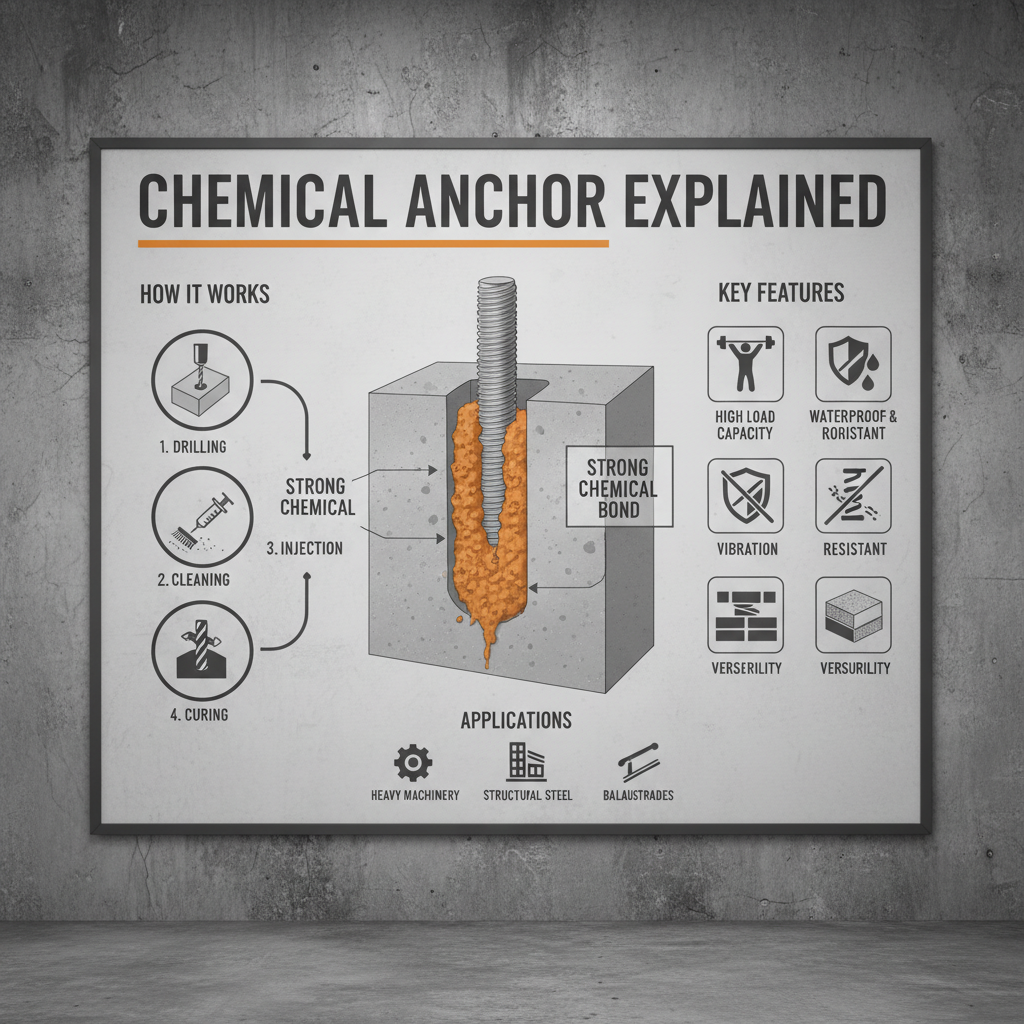
The working principle of a chemical anchor involves filling the annular space between the anchor element (threaded rod, rebar, etc.) and the drilled hole with a specialized adhesive resin. This resin chemically bonds to both the anchor and the base material (concrete, brick, stone), creating a strong, load-bearing connection. The adhesive fills voids and distributes the load evenly, making chemical anchors exceptionally effective in applications where high strength and reliability are paramount. Different resin formulations are available, catering to specific base materials, temperature ranges, and load requirements. Proper hole preparation, including cleaning to remove dust and debris, is vital for optimal adhesion.
Key Benefits: High load capacity, suitable for cracked concrete, excellent for hollow substrates, corrosion resistance, distributes load effectively.
Types of Chemical Anchor Resins
Several types of chemical anchor resins are available, each with unique properties and suitability for specific applications. The most common include:
- Epoxy Resins: Offer excellent strength, chemical resistance, and bonding performance. They are ideal for general-purpose applications and provide reliable performance across a broad range of temperatures.
- Vinylester Resins: Known for their superior chemical resistance, particularly to aggressive environments and saltwater. They are often used in marine applications and industrial settings.
- Polyester Resins: More cost-effective but generally offer lower strength and chemical resistance compared to epoxy and vinylester resins. They are suitable for lighter-duty applications.
- Hybrid Resins: Combine the benefits of different resin types, offering a balance of strength, chemical resistance, and cost-effectiveness.
Chemical Anchor Applications: Where Are They Used?
Chemical anchors are used in a wide array of construction and industrial applications, including:
- Structural Strengthening: Reinforcing existing concrete structures, such as beams, columns, and slabs.
- Machine Anchoring: Securing heavy machinery, equipment, and industrial installations to concrete floors or walls.
- Façade Fixing: Attaching precast concrete panels, stone cladding, and other façade elements to buildings.
- Guardrail and Barrier Installation: Securing safety barriers and guardrails along roads, bridges, and industrial sites.
- Rebar Dowelling: Extending reinforcing steel bars (rebar) into existing concrete structures.
Mechanical vs. Chemical Anchors: A Side-by-Side Comparison
Choosing between mechanical and chemical anchors depends on the specific application requirements. Here’s a comparison:
Proper Installation of Chemical Anchors
Correct installation is paramount for achieving the desired performance from chemical anchors. Key steps include:
- Drilling: Drill the hole to the specified diameter and depth, ensuring it is perpendicular to the base material.
- Cleaning: Thoroughly clean the hole to remove dust, debris, and loose particles. Use a brush, compressed air, or a specialized cleaning tool.
- Primer Application: Apply a primer to the hole surface to improve adhesion between the resin and the base material.
- Resin Injection: Inject the resin into the hole, filling it completely.
- Anchor Insertion: Insert the anchor element into the resin-filled hole, ensuring it reaches the bottom.
- Curing: Allow the resin to cure completely according to the manufacturer’s instructions before applying any load.
Conclusion: Choosing the Right Chemical Anchor Solution
Chemical anchors are a critical fastening technology offering superior strength and reliability in challenging applications. Selecting the appropriate resin type, ensuring proper installation, and adhering to manufacturer’s guidelines are crucial for maximizing performance and safety. For high-quality chemical anchors and expert advice, explore the range offered at HBXZ Fastener.
Frequently Asked Questions (FAQs)
What is the curing time for chemical anchors?
Curing time varies depending on the resin type, temperature, and hole diameter. Generally, most chemical anchor resins require a minimum of 24 hours to reach their full strength. Some faster-curing formulations may achieve significant strength within a few hours, but it’s always best to consult the manufacturer’s data sheet for specific curing times. Lower temperatures will extend the curing time, while higher temperatures may accelerate it. Ensure the anchor is not loaded until the specified curing time has elapsed to guarantee optimal performance and prevent premature failure.
Can chemical anchors be used in wet holes?
Generally, chemical anchors should not be installed in wet holes. The presence of water can significantly reduce the adhesive strength and compromise the integrity of the connection. However, certain specialized resins are designed for use in slightly damp conditions, but even then, it's crucial to minimize water ingress during installation. Always refer to the manufacturer’s guidelines to determine if a specific resin is suitable for damp environments and follow their recommended procedures. Thoroughly drying the hole as much as possible is always the best practice.
What is the shelf life of chemical anchor resins?
Chemical anchor resins have a limited shelf life, typically ranging from 12 to 24 months, depending on the formulation and storage conditions. It’s crucial to check the expiration date on the packaging before use. Expired resin may not cure properly or may have reduced strength. Store resins in a cool, dry place away from direct sunlight and extreme temperatures. Once opened, the resin should be used promptly to prevent it from reacting with moisture in the air.
-
Guide to High Quality Stainless Steel Expansion FastenersNewsApr.16,2026
-
Plastic Expanding Nut Guide for Applications and BenefitsNewsApr.16,2026
-
High Efficiency Fastening Guide for Plastic Expansion RivetsNewsApr.16,2026
-
Ultimate Guide to Industrial Sheet Metal Expansion AnchorsNewsApr.16,2026
-
Guide to Choosing and Installing the Right Metal Expansion ScrewNewsApr.16,2026
-
Metal Expansion Nut Guide for Industrial Strength and StabilityNewsApr.16,2026